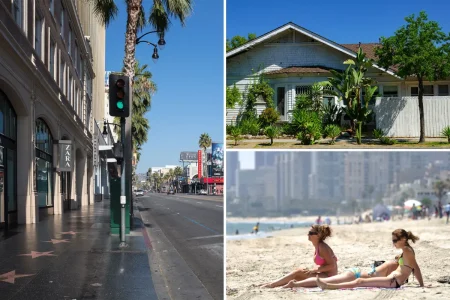






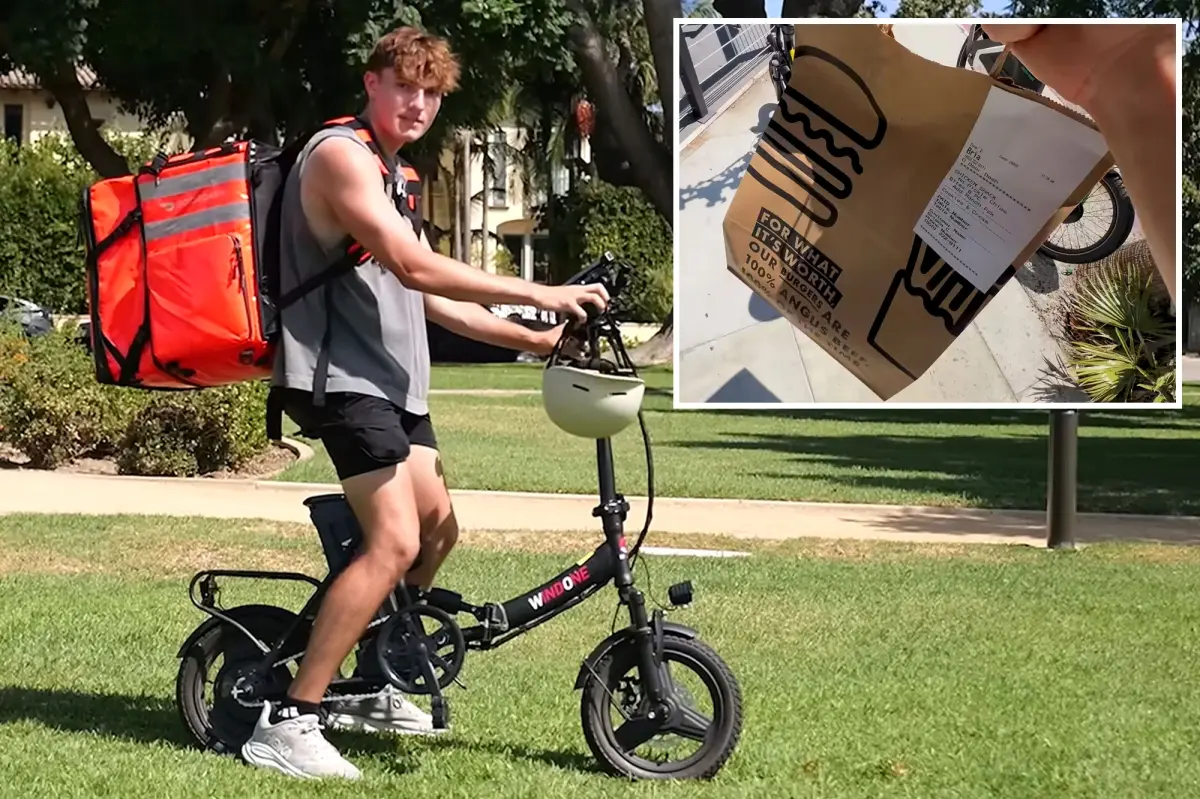
The allure of Beverly Hills, California, is globally synonymous with unbridled luxury, sprawling estates, and an almost mythical level of wealth. It is a place where towering palm trees stretch toward a pristine sky, manicured lawns look like green velvet, and the air itself seems to carry the scent of expensive perfume, exhaust from exotic sports cars, and ocean breeze. To the average outsider, the legendary 90210 zip code exists as a playground reserved strictly for Hollywood royalty, tech billionaires, international elites, and old-money dynasties. Yet, a young and ambitious YouTuber named iamBrandon decided to view this high-society fortress through a radically different, highly grounded lens: as a fertile testing ground for the modern gig economy. Armed with nothing but a bright delivery bag, a squeaky, heavily used, secondhand electric bicycle purchased for a modest one hundred and fifty dollars, and absolutely zero prior experience working for delivery giants like DoorDash or Uber Eats, Brandon set out on a fascinating economic quest. His objective was as straightforward as it was incredibly challenging: spend a single, grueling day delivering meals to the ultra-rich, aiming to earn enough cash in tips and base pay to afford the cheapest hotel room available in Beverly Hills that very night. This was not merely a lighthearted content creation stunt; it was a highly compelling social experiment designed to test the financial generosity—or perhaps the profound socioeconomic disconnect—of some of the wealthiest residents on Earth. By embedding himself in the daily flow of service labor within this elite enclave, Brandon sought to examine whether the table crumbs of the wealthy could actually sustain an ordinary worker trying to survive within their gates, bridging the massive cultural, social, and financial gulf between those who serve and those who are served in our modern, highly segmented society.
However, transitioning from a digital content creator to an active participant in the gig economy proved to be an immediate, sobering reality check for Brandon. Navigating two competing delivery platforms, DoorDash and Uber Eats, simultaneously required a chaotic level of multitasking, constant phone monitoring, and intense physical coordination. The early hours of his shift served as a harsh reminder of the cold indifference that frequently characterizes service work. His very first delivery of the day, executed with all the nervous enthusiasm and meticulous care of a hopeful rookie, yielded a soul-crushing, insulting tip of just fourteen cents. It was a psychological slap in the face that perfectly illustrated the bizarre, highly unpredictable nature of the service industry, where one’s physical effort is so often disconnected from actual financial compensation. As Brandon pedaled his squeaky e-bike down opulent boulevards, dodging an absolute parade of pristine Mercedes-Benz G-Wagons, rumbling Lamborghinis, and sleek luxury sedans, the contrast between his vulnerable position and his surrounding environment grew increasingly surreal. He was a low-wage laborer navigating a high-net-worth maze, hyper-aware of his status as an outsider looking in, with sweat dripping down his face while wealthy pedestrians passed by without a second glance. Every turn brought him face-to-face with mega-mansions, gated driveways, and world-renowned boutiques, yet his immediate, high-stress concerns were far humbler: keeping his footing on steep, unforgiving inclines, deciphering confusing digital navigation maps, and praying that his cheap, secondhand e-bike battery would not abandon him in the middle of a wealthy cul-de-sac. This stark juxtaposition between the effortless ease of the wealthy residents and the sheer, exhausting physical struggle of his own labor set a poignant, deeply reflective tone for the rest of his journey through the hills.
Fortunately, the tides of fortune in Beverly Hills are as volatile as they are extreme, and Brandon’s luck soon took a dramatic, almost cinematic turn for the better, demonstrating the wild financial variance of the area. The ultimate turning point of his shift arrived when an order pulled him into the driveway of an incredibly opulent residential building, a towering monument of white marble, gold accents, and high-security gates. After being vetted, scrutinized, and politely escorted to the elevator by private security guards, Brandon found himself holding his breath, wondering if this grand display of staggering wealth would actually translate into a meaningful reward for his physical labor. The notification chime on his smartphone answered with a resounding yes: a whopping thirty-five-dollar tip flashed on his screen, prompting an ecstatic, disbelief-fueled celebration right there in the luxury lobby. But the peak of sheer absurdity was yet to come. Later in the day, a single, unassuming bowl of soup became the vehicle for an eye-popping forty-three-dollar gratuity from another wealthy patron. It was an astonishing moment that left Brandon laughing in sheer bewilderment, joking to his camera that he had just delivered what might very well be the most expensive bowl of soup in human history. These massive, unexpected payouts offered a fascinating glimpse into the psychological landscape of the ultra-rich, individuals for whom a forty-dollar tip is mere pocket change, yet to a struggling gig worker, it represents validation, immense relief, and a massive step closer to achieving their goals. It showed that while some wealthy residents remain entirely oblivious to the struggles of service workers, others are willing to use their financial abundance to make a direct, positive impact on a stranger’s day, transforming a simple food delivery into a moment of genuine human connection.
However, the glamorous highs of high-tipping clients could not fully mask the grueling, unglamorous physical grind of a food delivery driver’s day under the Southern California sun. Navigating the sprawling, hilly topography of Beverly Hills on a rapidly deteriorating, cheap electric bicycle proved to be an exhausting battle of physical endurance and mechanical survival. At one point, a simple navigation error turned what should have been a breezy, straightforward two-mile cruise into a punishing, muscle-burning six-mile uphill slog, leaving Brandon thirty minutes late with a customer’s cooling food and his own anxiety levels spiking. To make matters worse, the sheer concentration of wealth in the area did not guarantee a continuous, reliable stream of orders; during the post-lunch slump, Brandon was forced to sit on the hot sidewalk for over an hour, watching in frustration as other, more seasoned drivers snatched up the few available deliveries while his own phone remained stubbornly silent. This agonizing downtime, which lasted for over an hour without a single delivery request coming in, served as a stark reminder of the precarity inherent in the gig economy, where independent contractors are entirely at the mercy of algorithms, fluctuating consumer demand, and pure luck, all while their physical energy and cheap equipment slowly degrade. The illusion of easy money in a wealthy neighborhood was quickly shattered by the grueling, unavoidable realities of traffic, wait times, mechanical failures, and the physical toll of manual labor. It highlighted the deep, persistent anxiety that gig workers face daily—not knowing if their next hour of work will yield a sustainable wage or simply result in wasted time, empty pockets, and a dead battery on the side of a beautifully landscaped, empty road.
As the intense afternoon heat gradually mellowed into a cool California evening, Brandon summoned his remaining reserves of energy for one final, desperate push during the highly anticipated dinner rush. It was a frantic race against both time and technology, as his secondhand e-bike’s battery began to critically drain, eventually sputtering out its last gasps of power just as the sun dipped below the horizon and painted the sky in shades of orange and purple. Despite the immense physical exhaustion threatening to overtake him, the relentless hustle paid off handsomely, bringing his grand final total for the day to an impressive three hundred and forty-six dollars—a hard-won sum composed of one hundred and forty-three dollars from his efforts on DoorDash and two hundred and three dollars from Uber Eats. Weary, sore, and thoroughly spent, Brandon immediately began hunting for a place to rest his head, quickly tracking down the absolute cheapest hotel lodging option in the entire upscale zip code: a modest, unpretentious hotel room that still demanded an eye-watering three hundred and ten dollars for a single night’s stay. After paying the incredibly steep toll of admission just to sleep in the neighborhood he had spent the entire day serving, he collapsed onto the bed with a mixture of relief and exhaustion, holding a meager thirty-six dollars left over. He had successfully proved that while it is possible to survive a day in Beverly Hills through sheer grit, the margins of success remain incredibly razor-thin. This financial breakdown perfectly encapsulated the modern working-class struggle, where even an incredibly lucrative day of hard work can be almost entirely swallowed up by the basic, inflated cost of shelter in the very same community where that wealth was generated.
Ultimately, Brandon’s whirlwind adventure through the gilded streets of the 90210 was much more than a successful YouTube stunt; it was a deeply humanizing, empathetic look at the sharp economic contrasts that define modern American life. By placing himself at the literal intersection of extreme wealth and gig-labor precarity, he highlighted the quiet, often invisible army of delivery workers who keep these luxury enclaves running smoothly, transforming high-end convenience into low-wage hustle. His journey demonstrated that behind every heavy gate of a multi-million-dollar estate lies a unique human story, sometimes defined by unexpected generosity like a forty-three-dollar soup tip, and other times by the casual indifference of a fourteen-cent gesture. As Brandon closed this exhausting chapter and teased his next destination—the ultra-exclusive, celebrity-filled gated community of Hidden Hills—he left his viewers with a profound appreciation for the hustle, a much clearer understanding of the economic divides that split our cities, and a powerful reminder to always tip the people who bring comfort directly to our doorsteps. His story serves as an inspiring testament to human resilience, proving that even with a cheap, secondhand bike and absolutely no prior experience, a person can navigate the wealthiest spaces on Earth, provided they are willing to pedal through the steep hills, endure the frustrating silence of the app, and embrace the unpredictable nature of human kindness. In a world increasingly divided by income, wealth, and physical access, his brief stint as a Beverly Hills courier reminds us of our shared humanity, showing that empathy, respect, and a little hard work can still cross the threshold of even the most exclusive gates in the country.