




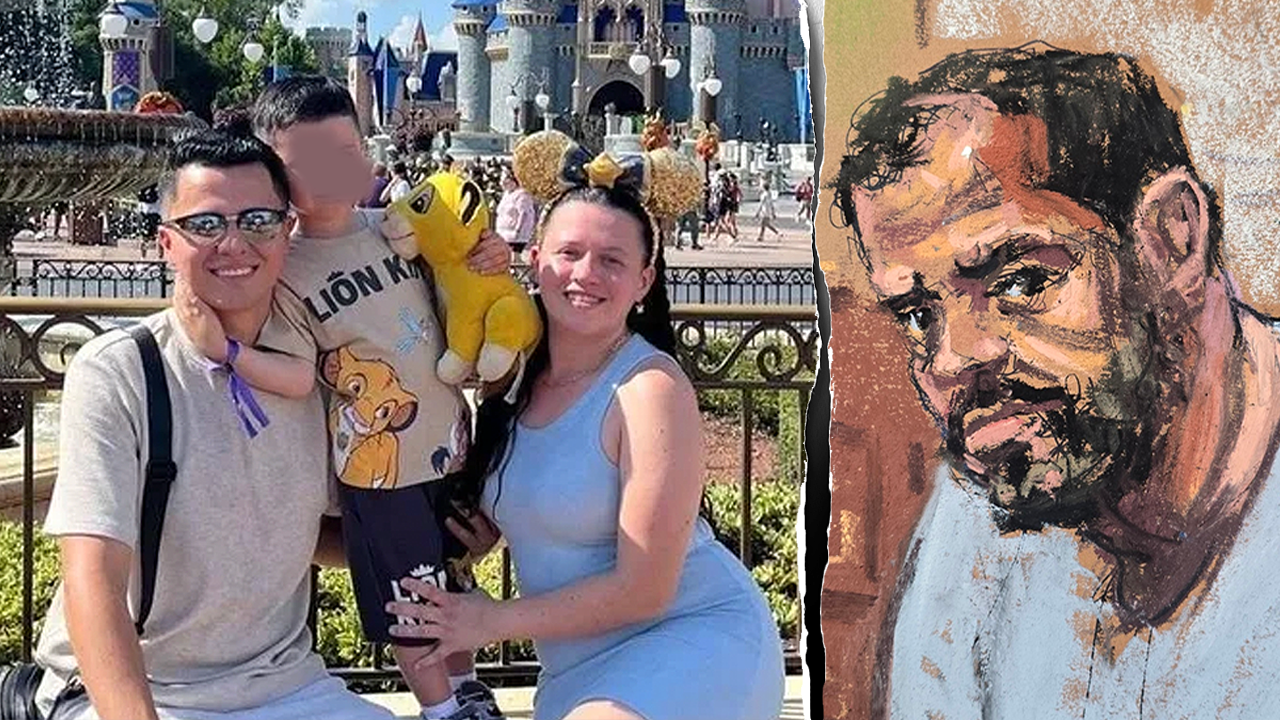
On a warm late-summer evening, New York Harbor is typically a place of breathtaking beauty, where the shimmering lights of the Manhattan skyline reflect off the dark water and the Statue of Liberty stands as a silent sentinel of hope. For twenty-seven-year-old Sara Sanchez and her partner, Andres Garcia, it was supposed to be a night of celebration and joy—a chance to escape the daily routine, breathe in the fresh sea air, and create beautiful, lasting memories with their five-month-old baby girl, Antonella. Like any young parents, they likely envisioned showing their daughter the glittering city lights from the deck of a boat, sharing quiet whispers of love and dreaming about the bright future that lay ahead for their growing family. Instead, this peaceful family excursion descended into an unimaginable nightmare of cold water, panic, and suffocating darkness. In a single, devastating moment, the lives of Sara and little Antonella were cut tragically short, leaving Andres to grapple with a lifetime of profound, agonizing grief. Now left to raise their six-year-old son, Salvador, in a home that has been suddenly and violently emptied of its warmth, Andres faces the daunting task of surviving a tragedy that should never have happened, a heartbreaking reminder of how quickly life’s most precious moments can be shattered when basic human safety is disregarded.
The man responsible for piloting the vessel into disaster was forty-six-year-old Manuel Hernandez of Manville, New Jersey, who now faces severe federal charges for his actions that fateful night. According to federal prosecutors, Hernandez was running an illegal, unlicensed charter operation, a business model that routinely sacrifices safety protocols in exchange for quick profits. On the night of the capsize, Hernandez’s own commercial vessel was sidelined due to mechanical issues, but rather than canceling the trip and refunding his paying customers, he chose to borrow a friend’s smaller boat—a Yamaha AR210. This substitution proved to be a fatal mistake, as the borrowed vessel was physically incapable of safely carrying the crowd Hernandez had assembled. Although the Yamaha AR210 has a strict maximum passenger capacity of ten people, Hernandez crammed fourteen individuals onto the boat, severely compromising its stability and leaving virtually no margin for error in the unpredictable currents of the harbor. Most chilling of all, however, was his deliberate decision to proceed with the tour despite knowing he lacked the most basic safety equipment for his youngest passenger. When Hernandez asked the parents if they had brought an infant-sized life jacket and they replied that they had not, he admitted that the boat did not have one either. Rather than canceling the excursion or returning to dock to secure proper gear, Hernandez allegedly instructed the young mother to wear an adult life vest and simply hold her five-month-old baby tight against her chest—a reckless directive that sealed the fate of the mother and child before the journey even began.
The fatal sequence of events unfolded approximately three hours and twenty minutes into the excursion, as the overcrowded boat navigated the busy, high-traffic waters near the Statue of Liberty. In a bustling maritime corridor shared by massive container ships, heavy commercial ferries, and rapid water taxis, the water is rarely calm, often churned into a chaotic maze of deep wakes and sudden swells. As Hernandez attempted to execute a sharp U-turn to head back, he steered the overloaded Yamaha directly into a significant swell, likely generated by the wake of a larger, passing vessel. Instead of slowing down to safely ride out the wave, Hernandez allegedly chose to accelerate through it—a maneuver that forced the bow of the compromised boat directly into the wall of water. The vessel was instantly swamped, losing its buoyancy in a matter of seconds and capsizing completely, tossing all fourteen passengers and crew into the dark, churning harbor. What followed was a scene of sheer terror as families fought to stay afloat in the pitch-black water, screaming for help and desperately searching for one another in the confusion. While eleven passengers and Hernandez eventually managed to scramble to safety or be pulled from the water, Sara Sanchez and her baby, Antonella, were recovered unresponsive from the harbor and later pronounced dead at a Brooklyn hospital, their lives cut short in a chaotic struggle beneath the waves.
In the wake of the tragedy, the legal and regulatory systems have moved swiftly to hold Hernandez accountable, exposing a deeply troubling history of unauthorized maritime operations. Charged with two counts of misconduct and neglect of a ship officer resulting in death, Hernandez made his initial appearance before U.S. Magistrate Judge Valerie Figueredo, facing a legal battle that carries a maximum penalty of up to ten years in prison for each count. The investigation quickly revealed that Hernandez was completely unlicensed to transport paying passengers, lacking both the required Merchant Mariner Credential and the Coast Guard Certificate of Inspection necessary to legally operate a commercial charter. During questioning, Hernandez allegedly admitted to investigators that this was far from his first time running illegal excursions, revealing that he had previously conducted at least two other commercial tours for the same unlicensed charter company using his own boat, pocketing approximately $1,000 for each trip. This pattern of behavior has drawn fierce condemnation from federal prosecutors, with U.S. Attorney Jamie McDonald publicly criticizing Hernandez for flouting the essential safety regulations that exist specifically to protect the public. McDonald emphasized that the captain’s decision to overcrowd a borrowed boat, navigate without appropriate licenses, and embark with a five-month-old infant passenger without a single infant life vest onboard was a direct catalyst for the double fatality.
This heartbreaking incident sheds a harsh light on the growing, dangerous underworld of illegal charter operations, a shadow industry that maritime authorities warn is actively “gambling with human life” for financial gain. Licensed commercial captains undergo rigorous training, medical screening, and drug testing, while their vessels are subjected to strict Coast Guard inspections to ensure they possess the necessary structural integrity, stability, and emergency equipment to handle hazardous conditions. Illegal operators, by contrast, bypass these expensive and demanding safeguards to maximize quick profits, often operating on social media platforms and online booking sites where unsuspecting tourists cannot distinguish them from legitimate, safe services. As Assistant Director of the Coast Guard Investigative Service Josh Packer noted, the rules governing commercial vessels are written in the lessons of past tragedies, and ignoring them invites disaster. When passengers step onto a vessel, they place their trust entirely in the captain’s hands, assuming that the individual at the helm is qualified to navigate them safely back to shore. When that trust is betrayed by an unlicensed operator who lacks both the credentials and the basic moral responsibility to ensure sufficient life safety gear is on board, the water becomes a trap rather than a place of recreation.
As the legal case against Hernandez proceeds through the federal court system, the focus of the community remains firmly on supporting the shattered family left behind in the wake of his negligence. A GoFundMe campaign organized by grieving friends and colleagues has laid bare the profound emotional and financial toll of this preventable tragedy, describing the deep void left by the loss of Sara and her baby girl. Andres Garcia is now left to navigate a world that has been utterly emptied of his partner and infant daughter, carrying the physical and emotional scars of surviving the capsizing while trying to provide a stable, loving environment for their young son, Salvador. NYPD Commissioner Jessica Tisch echoed the sentiments of a mourning city, stating that the tragedy was entirely preventable and pointing directly to Hernandez’s complete disregard for human life as the sole reason a family has been torn apart. Ultimately, no amount of legal prosecution, financial restitution, or community fundraising can restore what was lost on that dark night in New York Harbor. The memory of Sara Sanchez and little Antonella will live on in the hearts of those who loved them, serving as a solemn, tragic monument to the critical importance of safety, responsibility, and the sacred duty of care that must always guide those who venture out onto the water.