





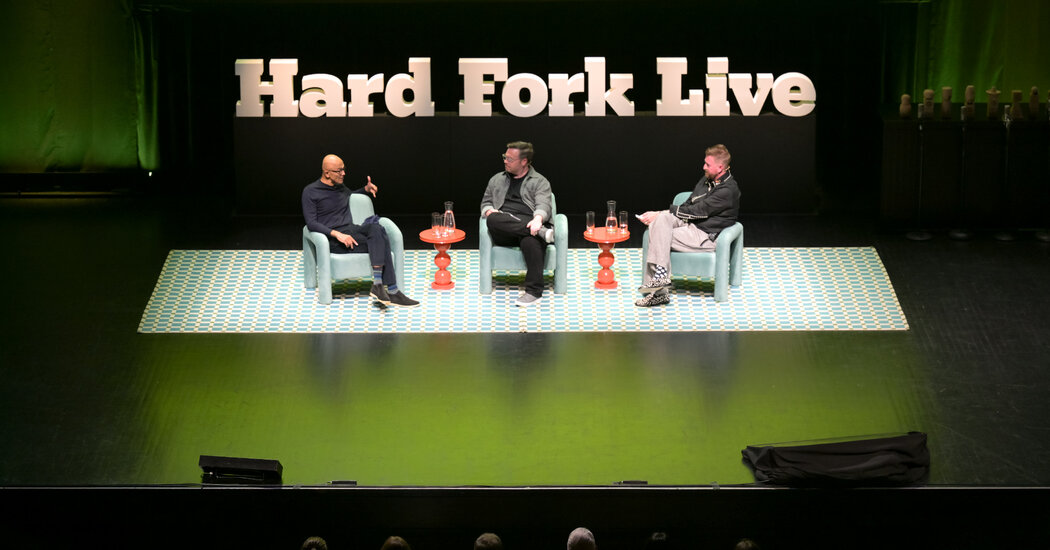
At a lively, high-stakes gathering in San Francisco on Wednesday, Satya Nadella, the fifty-eight-year-old chief executive officer of Microsoft, stepped onto the stage of “Hard Fork”—The New York Times’s widely followed technology podcast—to confront a room full of eager minds and a national landscape rife with growing anxiety over artificial intelligence. With a calm and measured demeanor that has characterized his decade-long tenure at the helm of one of the world’s most powerful corporate giants, Nadella did not shy away from the intense feelings of dread and skepticism currently sweeping through classrooms, offices, and kitchen tables across the country. He looked at the audience and delivered a remarkably candid assessment of the public mood, acknowledging without hesitation that “you can’t deny that the perception is terrible.” Behind this stark admission lies a profound understanding that the rapid rise of generative technology has triggered a deep, systemic wave of human anxiety. People are not merely questioning the technical architecture of these systems; they are deeply worried about their own futures, wondering whether the fruits of their hard-earned labor will be rendered obsolete by lines of code, and how their personal well-being will survive in an increasingly automated world. While Nadella readily admitted that the transition forward would inevitably cause painful job displacements, he sought to anchor the conversation in a more hopeful, human-centric vision, arguing passionately that this new technology has the intrinsic potential to elevate human labor, boost wages, and empower individuals. He painted a picture of a future where artificial intelligence does not act as a cold, replacement force, but rather as a collaborative companion that enhances human ingenuity, making the everyday worker more productive and better compensated.
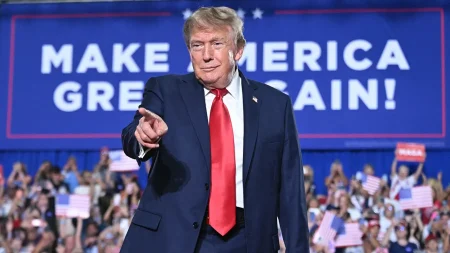
This philosophical clash between technological ambition and societal stability has quickly evolved into a massive, highly complex political debate, drawing in voices from every corner of the ideological spectrum. In an era marked by intense political polarization, the question of who actually profits from the artificial intelligence boom has managed to create some of the most surprising alignments in modern political history. Progressive Senator Bernie Sanders of Vermont has recently championed the idea that artificial intelligence should be categorized as a “public resource,” advocating for a system where ordinary American citizens possess a tangible stake and ownership in the immense wealth generated by these tech conglomerates. In a striking parallel, former President Donald Trump recently echoed this perspective for the second time in a week, suggesting that the unprecedented windfalls of these enterprises should be shared more broadly so that everyday Americans might have the opportunity to get rich from the transformation. Far from being defensive or retreating into corporate platitudes, Nadella expressed a welcoming attitude toward these radical economic concepts, stating that he is not at all opposed to sharing the vast wealth generated by AI platforms, declaring that “everyone is a stakeholder” in this new industrial revolution. This political dialogue is unfolding against a backdrop of deep grassroots resistance, as a diverse and growing coalition of parent groups, religious leaders, environmental advocates, and grassroots political activists unite to protest the physical presence of massive AI data centers springing up in quiet communities nationwide. These citizens are raising vital alarms about how these energy-guzzling facilities alter local landscapes, threaten national security by centralizing critical infrastructure, deplete local water and electricity grids, and deteriorate the mental health of a generation increasingly glued to algorithmic feeds.
The complex tightrope walk that Nadella occupies is the direct result of a hyper-competitive, multi-billion-dollar race that has consumed Silicon Valley’s titan class, including Google, Amazon, and Meta. To understand the gravity of Microsoft’s current position, one must look back to 2019, when Nadella made a quiet, highly calculated, and ultimately prescient gamble by investing deeply in a relatively obscure artificial intelligence research lab known as OpenAI. At the time, few could have predicted that this partnership would bear such explosive fruit, but in late 2022, the public release of ChatGPT took the world by storm, instantly shifting the global economic narrative and cementing Microsoft’s position at the absolute vanguard of the technological landscape. Recognizing the historic importance of this moment, Nadella steered Microsoft to invest an additional twelve billion dollars into OpenAI, forging an unprecedented alliance that allowed Microsoft to integrate cutting-edge machine learning tools into its legacy software, transforming everything from search engines to corporate spreadsheets overnight. It was a masterpiece of corporate vision and swift execution, but as the technology matured and competitors poured their own vast resources into building massive supercomputers, the dynamics of this high-profile partnership began to shift from starry-eyed collaboration to the cold, hard realities of corporate survival. Nadella realized that placing all of one’s eggs in a single startup’s basket was a recipe for vulnerability, forcing him to navigate the delicate human and strategic challenge of maintaining a historic alliance while charting a more independent path for his own massive enterprise.
The evolution of this partnership has recently culminated in Nadella actively renegotiating the framework of Microsoft’s relationship with OpenAI, a highly strategic maneuver designed to untangle their deep, mutual dependency and give both organizations the freedom to grow independently. While Microsoft remains the startup’s largest financial backer and holds a massive equity stake, the tech giant is now focusing heavily on diversifying its own internal research pipelines, creating its own proprietary systems, and ensuring that it does not rely solely on an external partner for its survival. This recalibration is particularly crucial because Microsoft is constantly forced to make incredibly difficult decisions regarding how it allocates its intensely scarce, highly expensive computing power. Nadella must constantly play the role of a meticulous resource coordinator, balancing the massive server capacity required to run OpenAI’s global operations, power Microsoft’s own rapidly expanding suite of consumer applications, and satisfy the cloud infrastructure needs of millions of corporate customers worldwide. Compounding these immense operational pressures is a high-profile legal battle with The New York Times, which has sued both OpenAI and Microsoft for copyright infringement, claiming that these systems were trained by absorbing millions of copyrighted articles without proper consent or compensation. While both tech companies have vigorously denied these legal allegations, the lawsuit itself serves as a powerful reminder of the deep tension between human creative workers who pour their souls into crafting narratives, and the algorithmic machines that digest those creations in seconds to generate automated text.
Even as Nadella navigates the high-altitude, philosophical debates surrounding artificial intelligence, he must also keep his feet firmly planted on the ground to manage the physical, highly tangible consumer divisions of his sprawling empire, most notably his company’s video game division. On the very Wednesday of his live interview, the newly appointed leadership of Xbox sent an internal memo to its workforce announcing a major corporate reset scheduled over the next one hundred days, signaling deep organizational shifts in how the legendary brand operates. Nadella addressed this corporate recalibration with clear-eyed realism, highlighting the heavy financial strain currently bearing down on the interactive entertainment industry as it struggles to monetize highly complex creative content in a post-pandemic economy. He candidly discussed the massive, human-centered challenges of building physical gaming consoles in a world plagued by volatile supply chains, where the severe scarcity of crucial materials like semiconductors and memory chips has driven manufacturing costs to unprecedented heights. The puzzle of Xbox is a reminder that even the most advanced, software-driven companies are ultimately bound by the rigid, physical realities of mineral mining, global shipping networks, and manufacturing plants. For Nadella, the goal is to transform Xbox from a highly volatile, expensive creative passion project into a resilient, sustainable, and highly profitable business model that can consistently deliver some of the finest entertainment experiences on earth without succumbing to the crushing weight of high production costs.
In stepping back to look at the broader landscape of Satya Nadella’s leadership during this historic era of transition, one sees a thoughtful executive who is actively striving to bridge the massive gap between raw technological capability and human societal needs. He represents a modern corporate philosophy that rejects the old Silicon Valley mantra of breaking things without regard for the social fabric, pointing out that technology only succeeds when the society around it is thriving, stable, and deeply invested in its progress. By openly discussing job losses, engaging in dialogues about wealth redistribution, advocating for higher working-class wages, and confronting the literal supply-chain bottlenecks of consumer electronics, Nadella is seeking to humanize a massive corporate machine that could easily feel distant and unfeeling to the average American. The ultimate success of Microsoft’s massive investments will not be measured solely by the peak height of its stock market valuation, the density of its server racks, or the raw processing speed of its artificial intelligence models. Rather, the true test of this era will lie in how effectively Nadella and his contemporaries can ensure that these incredibly powerful tools are deployed with a deep sense of social responsibility, elevating the physical and financial lives of everyday people, protecting the fragile ecosystems of local communities, and keeping humanity firmly at the center of the digital age.