



Paragraph 1
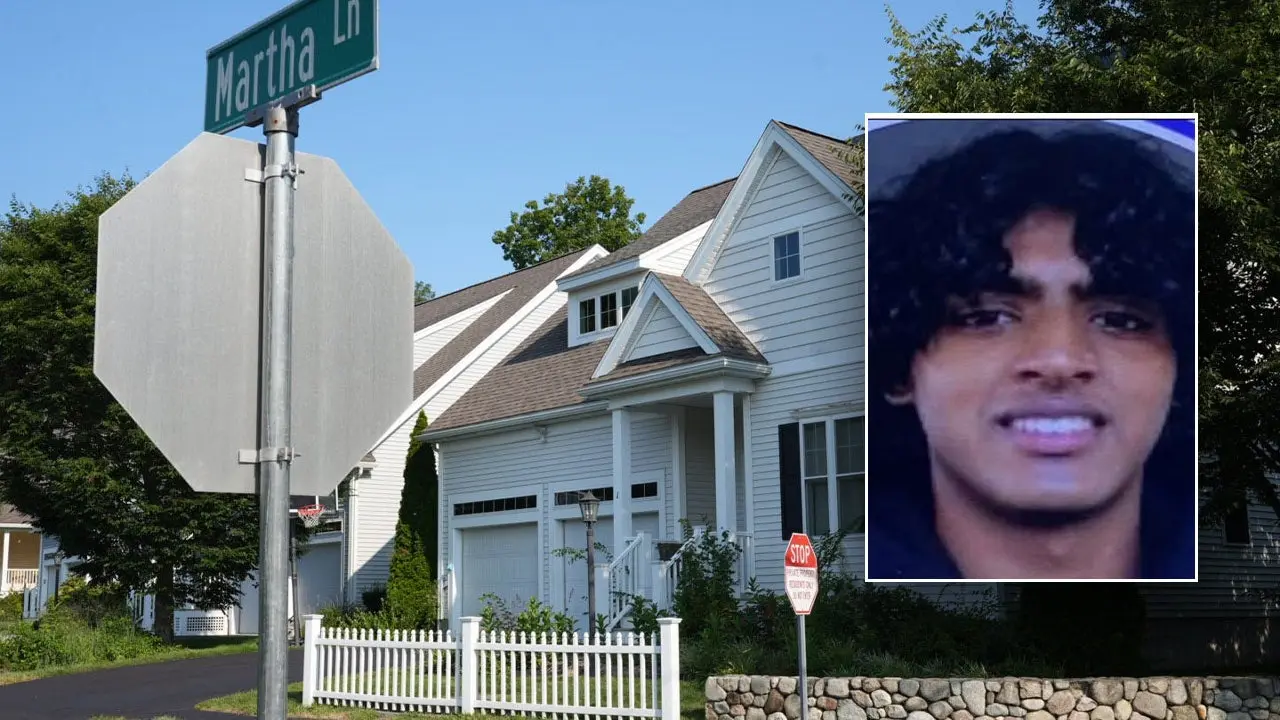
In the quiet, tree-lined streets of Acton, Massachusetts, a community known for its top-ranked schools and safe, family-friendly neighborhoods, a devastating tragedy has shattered the illusion of suburban peace. Arjun Aravind, a 17-year-old boy who had just begun to carve out his identity in a new town, now sits in custody, charged as an adult with the brutal murders of his own mother and younger brother. On Thursday, he appeared in Concord District Court, where a judge ordered him held without bail. His mother, Sudha Venkatesan, 45, and his 14-year-old brother, Siddharth Aravind, were found dead inside their Martha Lane home on Tuesday evening, their lives cut short in a sudden explosion of violence that has left investigators, neighbors, and even the boy’s own father struggling to comprehend what could have gone so terribly wrong. The family had recently relocated to Acton, a leafy suburb about thirty miles northwest of Boston, specifically for its exceptional school system and the support network it offered for the children. It was supposed to be a fresh start, a place where the boys could thrive. Instead, the home has become a crime scene, and the family’s dreams have been replaced by an unfathomable nightmare. As Arjun stood in the courtroom, his hand bandaged and his face inscrutable, the weight of two lives lost hung over every word spoken by prosecutors and defense attorneys alike. He pleaded not guilty to two counts of murder, as well as charges of assault and battery with a dangerous weapon and simple assault and battery. The Middlesex District Attorney’s Office confirmed the charges, but no official account can truly convey the depths of sorrow that have descended upon this family, nor the chilling questions that may never be fully answered. The teenage boy, once a student and sibling navigating the ordinary complexities of adolescence, now embodies a tragedy so profound that it forces a community to look inward and ask how such violence can bloom in the most familiar of places.
Paragraph 2
The roots of this tragedy, according to prosecutors, may lie in a digital world of dark speculation and artificial companionship. District Attorney Marian Ryan revealed that investigators uncovered what she called “concerning behavior” by Aravind in the days and hours leading up to the murders. That behavior included internet activity and, most disturbingly, the use of the artificial intelligence chatbot ChatGPT to explore theoretical or fictional scenarios involving the killing of his own family. Ryan said the teen allegedly used the AI platform “to make searches including for theoretical ideas or fantasies regarding killing his family.” This revelation has injected a chilling modern element into an already horrifying case: a teenage mind, perhaps already troubled, turning to an algorithm to test dangerous thoughts that should never be given space. It remains unclear how specific or detailed those conversations were, and OpenAI, the company behind ChatGPT, had not commented on the matter as of Thursday. The father of the family, whose name has not been publicly released, had reportedly grown increasingly worried about his elder son’s behavior in the days before the killings. According to court documents cited by CBS News Boston, the father had become so concerned about Arjun’s recent actions and internet use that he had begun hiding knives throughout the home, a desperate attempt to keep tools of harm away from a boy he evidently feared might use them. That image—of a father quietly removing kitchen knives, hoping to prevent a tragedy, only to lose a wife and younger son anyway—is one of the most heartbreaking details to emerge. On Tuesday, the father was at work, likely carrying the ordinary anxieties of a man trying to keep his family safe, when a tutor arrived at the house and found the doors locked and no one answering. The tutor could not get inside, and when repeated attempts to reach his wife and sons went unanswered, the father contacted police for a well-being check. It was a call that every parent hopes is just an overreaction, a momentary scare. It turned out to be the beginning of an ongoing nightmare.
Paragraph 3
Officers responding to the well-being check arrived at the Martha Lane home shortly after 6:30 p.m. on Tuesday. What they found inside was a scene of brutal, unmistakable violence. Siddharth Aravind, the 14-year-old younger brother, was discovered dead on the first floor. His mother, Sudha Venkatesan, was subsequently found dead in the finished basement. Prosecutors revealed on Thursday that investigators found evidence of a violent physical struggle throughout the home, with preliminary evidence indicating that both victims had suffered blunt-force trauma. The official causes of death remain pending the final determinations of the medical examiner, but the initial description suggests a chaotic, desperate encounter—the kind of scene that stays with first responders for the rest of their lives. The timeline of the victims’ final hours adds another layer of sorrow to the case. Venkatesan was last seen alive around 7 a.m. Tuesday, when her husband left for work. She was, in all likelihood, starting a normal day: planning meals, organizing schedules, looking after her two children. Siddharth, meanwhile, went to a recreational facility around 9 a.m., a place where he likely expected to spend a few ordinary hours with friends or teammates. He returned home shortly after noon. Within hours, both mother and son were dead, and the family’s home had become a crime scene. The violence that took their lives was not only fatal but visceral, leaving physical evidence of a struggle that speaks to the terror they must have experienced in their final moments. Neighbors have described the family as quiet and pleasant, hardly the kind of people you expect to see in a news headline. The fact that this occurred in an affluent, highly regarded community only magnifies the shock. For those who knew the family, the image of Sudha and Siddharth is now tragically intertwined with the raw elements of the investigation: the blood evidence, the overturned furniture, the unanswered questions that will linger long after the trial is over.
Paragraph 4
While investigators were absorbing the horror inside the home, they quickly noticed that Venkatesan’s green Honda Accord was missing from the residence. The discovery set off a search for the family’s 17-year-old son, who had become the primary suspect. Hours passed, and the community held its breath as law enforcement scrambled to locate him. At approximately 3:40 a.m. Wednesday, officers found Aravind inside his mother’s vehicle in a parking lot in the nearby town of Wayland, Massachusetts. He was taken into custody without incident, ending the immediate search but beginning an entirely new phase of the ordeal. When authorities searched the car, they recovered several items that they believed corresponded with evidence found at the scene. Prosecutors have not publicly identified what those items were, leaving the public to speculate about the gruesome connections between the vehicle and the violent deaths inside the family home. Aravind himself had been treated for injuries to his hand before his Thursday court appearance, an injury that may have been connected to the struggle or to some other aspect of the incident. He was medically cleared to attend court, but the bandaged hand served as a silent, physical reminder of the violence that had occurred. His appearance in the courtroom was closely watched by reporters, attorneys, and anyone seeking to understand the mind of a teenager accused of such an act. There were no dramatic outbursts, no visible emotions that could be easily interpreted. Instead, there was the quiet, procedural machinery of the justice system moving forward with the grim business of accountability. The father, who had already lost his wife and youngest son, now faced the reality that his surviving child is the one accused of taking their lives. It is impossible to imagine the devastation that father must feel—the weight of loss, of guilt, of unanswered questions, and of the horrifying knowledge that the son he helped raise may have committed an act beyond all reason.
Paragraph 5
Inside the courtroom, defense attorney Debra DeWitt made a critical request: that her client receive a mental health evaluation. The judge, seeking clarity on a matter with profound legal implications, asked whether the request concerned Aravind’s competency to stand trial or his potential criminal responsibility. DeWitt acknowledged that this had not yet been determined, leaving the door open for either or both considerations. This is a crucial distinction in the legal system. Competency relates to a defendant’s ability to understand the proceedings and participate in their own defense; criminal responsibility relates to whether, at the time of the alleged crime, the defendant was suffering from a mental disease or defect that made them unable to appreciate the wrongfulness of their actions. The fact that Aravind had reportedly been engaging with ChatGPT to explore violent fantasies suggests a mind that was at least somewhat aware of the wrongness of these thoughts, or at least curious about them, but it also hints at a deeper turbulence that may or may not rise to the level of legal insanity. For the family, and for the community, this raises uncomfortable questions: Was this a coldly premeditated act, or the explosive result of a young person unraveling into psychosis? The distinction matters, not just for Aravind’s fate but for the broader understanding of how such a tragedy could occur. For now, Aravind is being held without bail, charged as an adult under Massachusetts law. He has pleaded not guilty to all charges. The case will continue with a probable cause hearing scheduled for September 11, where prosecutors will have to present enough evidence to justify moving the case forward. Until then, the family, the community, and the legal system are left to grapple with the fragments of a once-intact household now divided by violence and grief.
Paragraph 6
This case has also ignited a broader conversation about the role of artificial intelligence in shaping vulnerable minds. The revelation that Aravind allegedly used ChatGPT to explore fantasies of killing his family has become a focal point of public discussion. Some will ask whether AI platforms bear some responsibility for failing to intervene when a user expresses violent ideation. Others will argue that such tools are simply reflections of the user’s own thoughts, no more culpable than a diary or a search engine. OpenAI, the creator of ChatGPT, has not yet provided a public response to the Fox News Digital request for comment, leaving many questions unanswered about the nature of the conversations and whether any warning signs were presented or ignored. But this case is ultimately about human beings, not just algorithms. It is about a mother who moved her family for a better life, a young boy who came home from a recreational outing expecting another ordinary afternoon, a father who hid knives in fear of the very thing he could not prevent, and a teenager whose inner darkness became something no one truly understood until it was too late. The Acton community, already grieving, must now find ways to support the father and the surviving friends of both victims. They must also confront their own sense of safety, knowing that violence can emerge from within a family just as easily as from outside. For those who knew Sudha Venkatesan, she will be remembered as a devoted mother who sought the best for her children. For Siddharth, just fourteen, a life of potential and promise was stolen in a way that is impossible to reconcile. And for Arjun, the boy who once sat in classrooms and dreamed of a future, the path ahead is now one of confinement, legal proceedings, and an unrelenting reckoning with the consequences of his actions. As the autumn approaches, and the September hearing draws nearer, there will be moments of quiet reflection in Acton. People will light candles, leave flowers, and share memories. But no amount of mourning can restore what was lost. The story of the Aravind family, once a hopeful chapter of new beginnings, has become a cautionary tale and a tragedy of heartbreaking depth. In the end, the true measure of this case may not be found in a courtroom or a prison cell, but in the lives that were stolen, the grief that remains, and the fragile hope that such pain might somehow teach us something about each other and ourselves.