


The political landscape has shifted dramatically in recent years, and few figures have navigated that change as strategically as Alexandria Ocasio-Cortez. A newly surfaced internal memo from her campaign committee, distributed to key allies, paints a portrait of a lawmaker who has deliberately transformed from a progressive firebrand into a formidable national political institution. The document, spanning five pages, is less a declaration of future ambitions and more a calculated argument for how she should be perceived: as one of the Democratic Party’s most effective messengers for the working class. Notably absent is any mention of a potential 2028 presidential or Senate bid. Instead, the memo urges stakeholders to view her record as a testament to her evolution, framing her not merely as a legislator but as a central architect of a new political strategy aimed at rebuilding the party’s foundation. It is a story of adaptation, one where the urgency of her early activism has been channeled into a disciplined, nationwide effort to reshape the Democratic message around economic populism and connect with voters who feel abandoned by the political establishment.
The genesis of this strategy, according to the memo, lies in the wake of President Donald Trump’s 2024 re-election victory. In the aftermath of that defeat, Ocasio-Cortez engaged in deep introspection, seeking to understand the forces that drove so many working-class voters, including some in her own district, to support a Republican candidate. Her conclusion was that a profound cross-partisan frustration existed with a system perceived as rigged by corporate billionaires at the expense of ordinary people. The memo underscores that her current path was shaped by crucial conversations with “Trump-AOC” split-ticket voters in New York, individuals who backed Trump for president but trusted her as their congresswoman. These voters, she found, were not driven by ideology but by a shared, visceral discontent with an economic and political order that seemed to only benefit the ultra-wealthy. This insight became the bedrock of her argument to the party: the only way for Democrats to win back the working class is to embrace a sharp economic populism that confronts concentrated wealth and power, while actively working to revitalize American democracy. It’s a message that pivots away from culture-war battles and focuses relentlessly on the anxieties of everyday financial survival.
This strategic pivot has been backed by an impressive and unprecedented fundraising operation. The memo details that Ocasio-Cortez has amassed over $38 million from more than two million individual contributions, boasting an average donation of just $17.56. This staggering figure demonstrates a grassroots base of small-dollar donors that is unmatched in the House and rivals the operation of Sen. Bernie Sanders. More than just building her own war chest, the memo highlights her role as a financial benefactor for the broader party, noting that over $3 million has been funneled to other Democratic candidates and state parties. In an era of big-money politics, this model represents a stark contrast to the high-dollar fundraising circuits traditionally relied upon, turning a vast network of everyday citizens into both a financial engine and a powerful political asset. This decentralized funding base gives her an independence that frees her from the influence of established donors and allows her to champion causes that might otherwise be considered too controversial, solidifying her reputation as a genuine advocate for the average citizen rather than a captive of special interests.
The memo argues that Ocasio-Cortez’s influence now extends far beyond her own district, citing her presence in key races across the country as “race-altering.” It points to her impactful endorsements in primaries and general elections from California to Pennsylvania, with central case studies in Michigan and Montana. The document highlights the campaign of Abdul El-Sayed in Michigan and the surprising congressional primary victory of Sam Forstag in the rural, conservative-leaning state of Montana. Forstag, who was trailing significantly in the polls, appeared on stage with Ocasio-Cortez and Bernie Sanders at their “Fighting Oligarchy” rally in Missoula. Following her endorsement and that public show of support, he was able to erase the deficit and secure the Democratic nomination. This anecdote is used to argue that her appeal is not limited to urban progressives, but that she can be an asset for candidates in rural districts and battleground seats, effectively countering the narrative that she is a polarizing figure who hurts the party in moderate areas. She is positioned as a powerful validator whose support can bring credibility, enthusiasm, and national attention to local races that might otherwise be overlooked.
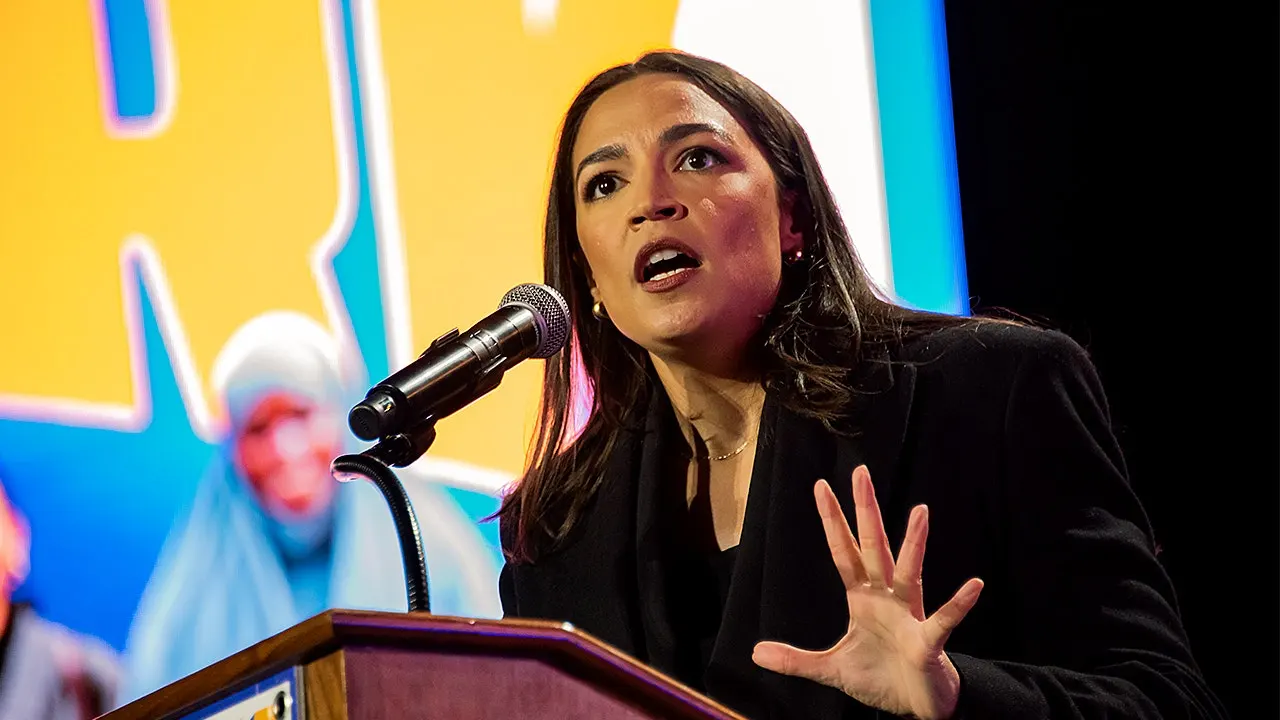
The memo suggests that this national strategy crystallized in response to her perceived defeats within the Washington establishment, specifically her unsuccessful bid for the ranking member position on the House Oversight Committee and the party leadership’s handling of a March 2025 budget standoff. Frustrated by the party’s willingness to accept concessions during federal shutdown negotiations, Ocasio-Cortez chose to bypass the traditional corridors of power and take her message directly to the people. The document recounts a rally in Idaho where she articulated the central thesis of her national tour, describing the constant pressure of modern life—the rising costs, the fear of speaking out, the bitter divisions, and the crumbling of rights—as the direct feeling of being governed by billionaires. This framing avoids abstract policy debates and instead speaks to a visceral, shared experience of economic precariousness. In the two years since, the memo notes, she has held large-scale rallies in purple, red, and blue states alike, bringing this message of economic justice to communities across the political spectrum and building a national movement for working families that operates outside the confines of the Washington beltway.
Ultimately, the internal memo is a powerful piece of political positioning that constructs a narrative of strategic growth and rising influence. It tells a story of a leader who learned from a seismic political defeat, adapted to the country’s mood, and built a formidable network of support rooted in small-dollar donations and authentic connections with voters. By highlighting her successful endorsements in rural and battleground districts, her unmatched fundraising base, and her refusal to be constrained by the established party machinery, it makes a compelling case for her relevance and power. While not explicitly stating future ambitions, the document lays the groundwork for any number of paths forward, from a continued role as a party kingmaker to a potential presidential or gubernatorial run. The “AOC” of 2025, according to this memo, is no longer just a symbol of a left-wing movement, but a sophisticated political operator who understands the anxieties of the American heartland and is positioning herself, and her brand of economic populism, as a central, unignorable force in the future of the Democratic Party. The firebrand has become a strategist, and her moves are being watched closely by allies and adversaries alike.