



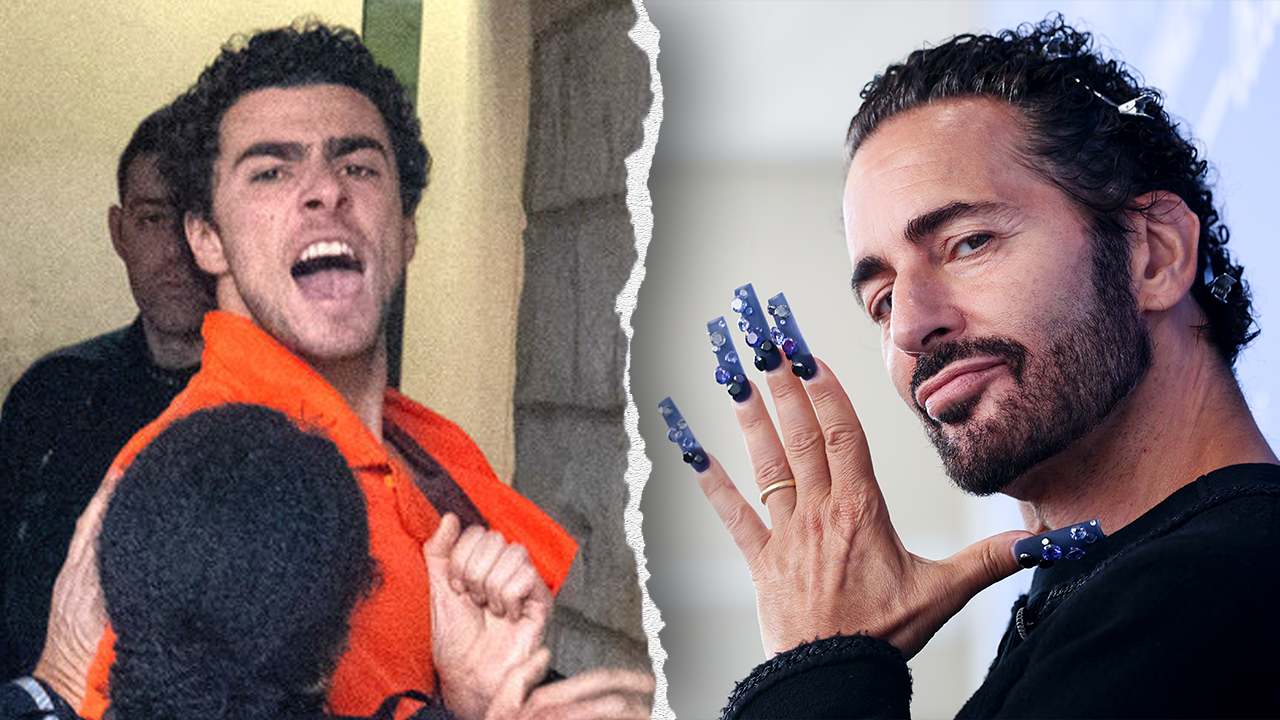
It began with a photograph and a laugh. In a recent episode of Vanity Fair’s Lie Detector Test podcast, fashion designer Marc Jacobs was shown a picture of Luigi Mangione—the man who has admitted to stalking and killing UnitedHealthcare CEO Brian Thompson on a New York City sidewalk in December 2024. The host, referencing a long history of celebrities wearing Jacobs’s designs during courtroom appearances, asked whether he would be open to styling Mangione for his trial. Jacobs, dressed in a simple black Lacoste shirt, glanced at the image, chuckled, and answered with a drawn-out, “Um… yes.” Then he added something that cut through the noise of the moment: “I think he looks pretty good the way he dresses, actually.” The exchange was brief, but it captured something larger than a fashion designer’s whimsy. It revealed the strange, uncomfortable place where crime, celebrity, style, and public sympathy now collide in American culture. Mangione, a 26-year-old Ivy League graduate from a prominent Maryland family, has become an unlikely icon to a segment of the public—a figure whose alleged violence has been recast by some as a form of rebellion against a hated healthcare system. And now, even the world of high fashion is paying attention, not to the victim, not to the tragedy, but to the way the accused killer presents himself in court.
The fascination with courtroom fashion is hardly new. It stretches back decades, from the impeccably tailored suits of O.J. Simpson during the so-called trial of the century in the mid-1990s to the carefully chosen outfits of defendants and lawyers alike in the years since. Trial attire has always been a form of silent testimony, a way of signaling respect, defiance, vulnerability, or power before a single word is spoken. Donna Rotunno, a criminal defense attorney and Fox News contributor, knows this intimately. She represented Harvey Weinstein during his sexual assault trial, and she has spoken openly about how the media’s treatment of Los Angeles Deputy District Attorney Marcia Clark during the Simpson trial shaped her own courtroom style choices. Clark was scrutinized relentlessly for her hair, her wardrobe, her demeanor—criticized for being too harsh, too soft, too something. That scrutiny taught a generation of legal professionals that what you wear in court is never neutral. It is a strategy, a shield, and sometimes a weapon. Rotunno, however, draws a hard line between strategic dressing and cultural glorification. Seeing a designer like Jacobs express openness to styling Mangione—an admitted killer—struck her as deeply sad. “I find it sad,” she said in an interview. “I find that sad that a designer would in any way, shape or form want to support that.” Her words carry the weight of someone who has spent her career inside the justice system, where the stakes are not about looking good but about life and liberty, where a jury’s perception can mean the difference between freedom and prison, and where the families of victims are left to watch the world turn their loved one’s murder into a fashion moment.
Mangione’s own fashion choices have been making headlines since the moment he allegedly dropped a high-end backpack in Central Park while fleeing the scene of the shooting. That backpack, a detail ripped from the pages of a crime novel, became the first thread in a tapestry of public fascination. Then came the courtroom appearances, each one dissected like a runway show. In March 2025, he arrived at a hearing wearing Rockport loafers with no socks—a seemingly small detail that a photographer captured in an image showing shackles around his bare ankles. The photo went viral, not because of the gravity of the charges, but because of the aesthetic. The bare ankles, the loafers, the casual defiance of it all—it was the kind of image that could launch a thousand think pieces. Later, prosecutors revealed that someone had slipped Mangione a pair of heart-shaped notes hidden inside a pair of socks sent to the court along with other clothes he wore for the hearing. One note was addressed to Mangione; the other was meant for someone named “Joan.” A court officer seized the notes but allowed Mangione to wear the socks. Yet, according to prosecutors, Mangione decided the socks “did not look good” and took them off. That detail is almost absurd in its specificity, and yet it is precisely the kind of humanizing, weird, contradictory moment that makes a story like this impossible to look away from. He is a man facing the rest of his life in prison, and he is worried about how his socks look. It is simultaneously petty and poignant, a reminder that even in the most dire circumstances, we remain creatures of vanity and habit.
Rotunno’s disappointment, though, goes deeper than the socks or the loafers or the red sweater that reportedly sold out at Nordstrom after Mangione wore it in court. It is about the moral calculus of public sympathy. Mangione has admitted to stalking Thompson, a 50-year-old father of two, from Minnesota to New York City, where he shot him in the back on Dec. 4, 2024. Thompson was a husband, a father, a colleague, a human being. His murder was not a political statement or a piece of performance art; it was a violent act that left a family shattered. And yet, in the months since, Mangione has been transformed in the public imagination—at least in some corners—into a folk hero, a “cult hero,” as Rotunno put it. He has become a character, a meme, a symbol onto which people project their frustrations with the healthcare industry, their anger at corporate greed, their sense of powerlessness in a system that often feels rigged. But symbols are not people. The real Luigi Mangione is a man accused of a cold-blooded killing, and the real Brian Thompson is a man who is no longer here. Rotunno’s sadness is rooted in that disconnect—the way a tragedy can be flattened into a trend, the way a murderer can be styled into a martyr. “He’s kind of become a character and this cult hero to some people, and it’s pretty sad to see,” she said. That sadness is not just about Mangione. It is about a culture that has become so addicted to spectacle that it sometimes forgets that the people at the center of these stories are not characters at all. They are flesh and blood, with families who will never be the same.
The legal reality, meanwhile, is far less glamorous than the headlines suggest. Mangione pleaded guilty to federal charges last week, a move that could fundamentally alter the course of his case. He faces a maximum punishment of life in prison at his sentencing on Dec. 18, though federal sentencing guidelines recommend around 25 to 30 years. Judge Margaret Garnett is not bound by those guidelines, which means the outcome is uncertain. At the same time, his defense team is pursuing a double jeopardy claim in his state case, arguing that he should not face trial again after being convicted in federal court. If that claim succeeds, the state case could come to an end without a trial. If it does not, Mangione could find himself back in a courtroom, once again choosing his outfit, once again becoming a subject of public fascination. Rotunno, who has defended some of the most vilified figures in recent memory, urged his defense team to walk a fine line. “I also think you have to be careful in front of juries,” she said. “You dress up Luigi Mangione too much, and maybe he loses some of the sympathy that people have for him.” It is a strange tightrope: too polished, and he looks like a man who does not take the proceedings seriously; too disheveled, and he looks like a man who has given up. The clothes, in other words, are never just clothes. They are arguments. And if Mangione ends up wearing a jail jumpsuit for the rest of his life, that final image—so different from the loafers and the red sweater—will be the one that endures. The jumpsuit is the great equalizer, stripping away the carefully curated persona and leaving only the fact of incarceration. It is a reminder that no matter how many designers might want to dress him, no matter how many fans he has inspired, he is still a prisoner, still a man who took another man’s life, still someone whose story will end not on a runway but in a cell.
In the end, the Marc Jacobs moment is less about fashion than about the strange, uncomfortable ways we process violence and fame in the twenty-first century. Jacobs, after all, was hooked up to a lie detector during the interview. When the host asked whether Mangione’s red sweater selling out made him a “trendsetter,” Jacobs said yes. When she asked whether he was offended that Gwyneth Paltrow did not wear any of his designs at her own eight-day trial in 2023—the ski accident lawsuit that captivated the internet—Jacobs said no. The polygrapher confirmed he was telling the truth. Those moments are light, almost silly, but they sit uneasily against the backdrop of a murder trial and a grieving family. There is something deeply human about our fascination with what people wear in moments of crisis. We want to know who they are, what they are thinking, whether they are scared or defiant or indifferent. Clothes are a language, and we are all fluent in it. But there is also something deeply troubling about turning an accused killer into a style icon, about letting the aesthetics of a crime overshadow its reality. Thompson’s family will never get him back. No amount of designer attention, no viral moment, no sold-out sweater can change that. As Rotunno said, the idea that a designer would want to support someone like Mangione is “pretty tone deaf.” It is a reminder that our culture’s obsession with celebrity—even the dark, accidental celebrity of a man accused of murder—can sometimes blind us to the human cost at the center of the story. We can be fascinated by the socks, the loafers, the notes, the courtroom glances, the whole strange theater of justice. But we should never forget that for the Thompson family, this is not entertainment. It is a nightmare that will never end. And no amount of fashion can dress that up.