


The Deaths Behind the Headline
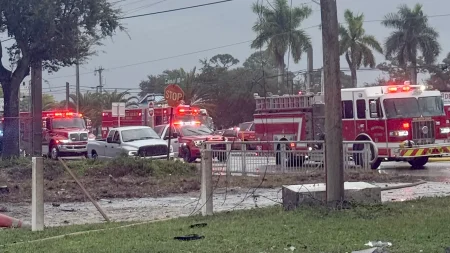
In the latest chapter of a long, brutal conflict, an attack aimed at a drug-trafficking group has left roughly two dozen people dead, according to a rights group monitoring the violence. At first glance, the news reads like just another afternoon of cartel warfare in Latin America—a place where violence often feels so routine that the outside world has learned to scroll past it. But the numbers represent something far more delicate than statistics. “About two dozen” means twenty-four or twenty-five separate heartbeats that suddenly stopped. It means dozens of mothers, fathers, sons, daughters, and friends torn out of the world in a flash of fire and steel. The rights group that reported the attack did not release names, faces, or eulogies. The dead are described only by their affiliation: they were part of a drug-trafficking organization, and therefore, in the logic of the war on narcotics, their deaths were perhaps considered acceptable. Yet no human being is reducible to a label. Some of those killed may have been armed combatants who had done terrible things; some may have been drivers, lookouts, cooks, or caretakers who had joined the group because the state offered no other way to survive. Some may have been people who never pulled a trigger and had no interest in the drug trade but simply lived in the wrong building, on the wrong street, or near the wrong warehouse when the attack came. The rights group’s terse statement does not say whether an investigation will follow. It does not say who ordered the strike, or how many families are now waking up to an empty room. What it does say is that the United States is simultaneously militarizing its fight against what it calls “narcoterrorism” in Latin America, adding a new layer of force to an already violent landscape. For the families of the dead, that policy is not an abstraction. It is the reason why their loved ones are gone.
The Forgotten Geography of the Drug War
To make sense of the attack, one must understand the geography and history of Latin America’s drug conflict. For decades, countries like Colombia, Mexico, Peru, and Bolivia have been battlegrounds in a war shaped heavily by the international demand for cocaine, heroin, and other narcotics—the overwhelming majority of which flows north toward the United States and Europe. Drug-trafficking organizations are not simple criminal enterprises; they function as parallel states, controlling territory, taxing everything from gas stations to farmland, maintaining their own intelligence networks, and brutally punishing anyone who crosses them. They have evolved into heavily armed paramilitary machines, often with ties to corrupt officials, police commanders, and military officers. In some regions, they are the only authority people know. They build roads, finance churches, fund local schools, and provide quick cash to impoverished farmers who have no other way to feed their families. When a rights group says an attack killed two dozen members of a trafficking group, it is describing a strike against a well-organized, dangerous adversary—but also against a social system that millions of Latin Americans live inside, whether they want to or not. The United States has long been a player in this war. Under the banner of “narcoterrorism,” Washington has increasingly blurred the line between counterterrorism and counter-narcotics, treating drug gangs as if they were terrorist cells. This is not a new development, but it has deepened over the past decade, with the expansion of special forces deployments, surveillance bases, drone operations, intelligence-sharing networks, and joint training exercises from the Caribbean coast to the Andean highlands. The language matters: “terrorism” transforms drug traffickers from criminals into existential enemies, justifying extraordinary military measures, fewer legal constraints, and a far higher tolerance for lethal force. In this framework, an attack that kills two dozen people can be framed as a victory, not a tragedy. But on the ground, the line between military operation and indiscriminate violence is often impossible to draw.
The Heavy Machinery of “Narcoterrorism”
The phrase “narcoterrorism” was coined to describe groups that both profit from drugs and use violence for political ends—but it has become a catch-all for almost any armed actor in the drug supply chain. In recent years, the United States has leaned into this designation with increasing assertiveness, providing Latin American governments with helicopters, radar systems, night-vision gear, and battlefield medical kits, along with teams of military advisers to train local forces in counterinsurgency tactics. These efforts are not always publicly acknowledged. American commandos have been quietly deployed to countries across the region, sometimes alongside local troops, sometimes operating in advisory roles, and occasionally conducting their own strikes. The official rationale is sound on its face: cartels have armies, so states need armies to defeat them. But the reality is far more complicated. When military force is applied to a criminal network, the violence tends to spread rather than disappear. Cartels adapt, shift their routes, switch leaders, and fragment into smaller, more violent cells. The attack that killed two dozen traffickers may remove a few mid-level bosses, but it also opens a vacuum that the next wave of ambitious young men will rush to fill. The rights group reporting the attack is hardly alone in condemning the approach; human rights organizations across the Americas have warned that the military focus is causing more harm than good. They point to forced disappearances, mass arrests of poor and dark-skinned civilians, deaths of bystanders during raids, and the militarization of policing, which turns entire communities into suspect populations. In many places, soldiers do not distinguish between a cartel lookout and a teenage boy buying groceries. The result is that residents live in a state of chronic anxiety, caught between armed criminals who kill for disobedience and armed soldiers who kill on suspicion.
The Human Price of a Deserved Label
One of the most dehumanizing aspects of the militarized drug war is the way it erases the individuality of the dead. When a rights group releases a statement saying “two dozen members of a drug-trafficking group were killed,” the public is invited to shrug. These were not civilians, the logic goes; they were criminals, deserving of what they got. But that binary ignores the messy humanity of those who die. Inside a trafficking organization, there is a hierarchy as rigid as any corporation. At the top sit wealthy financiers who rarely touch a gram of cocaine and even more rarely face combat. In the middle are managers who oversee shipments, negotiate with bribed officials, and settle disputes with hired killers. At the bottom are the expendable foot soldiers—often teenagers from dispossessed families, recruited with promises of money, status, and a way out of rural poverty. Many of them dream of leaving the life, but fear the cartel’s reach as much as they fear the state. When the attack came, it may well have killed people at the middle and lower levels. It probably killed a man who had been trying to save money to send his sister to university. It probably killed a woman who had fled an abusive home and found “work” as a caretaker at a safe house. It might have killed an informant caught in the wrong place at the wrong time, or a father who had been forced to drive a truck of cash at gunpoint. The concept of “deserving” death is a moral illusion. No one is reducible to their worst occupation, and no family greets a casket with relief because their loved one was technically a criminal. What they feel is an unbearable absence—and often, the terror of being too frightened to even ask about what happened. In the aftermath of the attack, family members may not dare hold a public funeral. They may bury their dead in silence, afraid that showing grief will make them guilty by association. Their losses are invisible, unrecorded, and uncompleted by any justice.
The Windowless Rooms of Impunity
Human rights groups have long documented the pattern that follows such attacks. First, there is a report, often by an anonymous official or a local nongovernmental organization. Then there is silence. Governments deny the details or argue that the dead were enemies of peace. Journalists who try to investigate are threatened. Families are bribed or bullied into staying quiet. Lawyers are afraid to file cases. The international community, meanwhile, is distracted by other crises, and the United States, the very power funding the militarized approach, has little interest in condemning a strike that might have relied on its own intelligence. The phrase “narcoterrorism” provides a kind of cover, a bureaucratic shield that minimizes the moral weight of killing. Dead “terrorists” do not provoke official inquiries. Their names do not make national news. Their families do not receive apologies or reparations. This impunity has corrosive effects. It teaches residents of these communities that the state can kill without accountability. It teaches American soldiers and local operatives that violence is acceptable as long as the target is branded with the right label. It also ignores the fundamental policy failure: if the goal is to weaken the drug trade, killing two dozen people may be futile, even counterproductive. Every death creates a new wound in a community, a new family hungry for revenge, a new group of orphans who may someday pick up a rifle. The cycle has repeated itself so many times in Latin America that one begins to understand why the region remains trapped in an endless spiral of violence. The drug trade is driven by consumer demand, not by the existence of individual traffickers. No military strike can eliminate the appetite that keeps so many cartels alive. By focusing on the “killers” rather than the roots of the crisis—poverty, corruption, inequality, weak institutions—the strategy of militarization guarantees an endless war with no definable victory.
Toward a Human Frontline
To humanize this story means to reject the comfortable simplicity of the “narcoterrorist” label and demand a different kind of response. The attack that killed two dozen people was a human event caused by human decisions, and it deserves human analysis. That means acknowledging that drug-trafficking groups are often brutal, exploitative, and responsible for immense suffering—but also acknowledging that the military response has failed in its stated goals. Every year, more weapons flow south, more operations are launched, more bodies are counted, and still the cocaine arrives. The real frontline is not in the jungle and it is not in the raids. It is in villages where farmers are offered a choice between growing coca or watching their children starve. It is in city slums where a paycheck from the cartel is more reliable than any government program. It is in overcrowded prisons where minor offenders are transformed into hardened criminals. Humanizing the fight means investing in health care, education, alternative livelihoods, and community-based justice rather than drone strikes. It means treating addiction as a public health issue, not simply a law enforcement problem. It means listening to the families left behind when a brother, a son, a neighbor is killed in a raid—and giving them the truth they deserve. There is no magical formula for ending the drug war overnight, but there is a moral obligation to stop pretending that military force is the solution. The dead in this latest attack will not return. Their names may never be known. But we can honor them by refusing to accept the rhetoric that strips them of their humanity. Before they were “drug traffickers,” they were people. They were born, they were loved, they had dreams that had nothing to do with violence. The least we can do is remember that—and to question every policy, every raid, and every war that treats human lives as expendable. The real security we seek will not come from dropping bombs. It will come from building a world where no one feels they have to join a criminal army to survive.