





A Prefecture Shattered: The First Crucial Hours After Kumamoto’s Powerful 6.8 Magnitude Earthquake
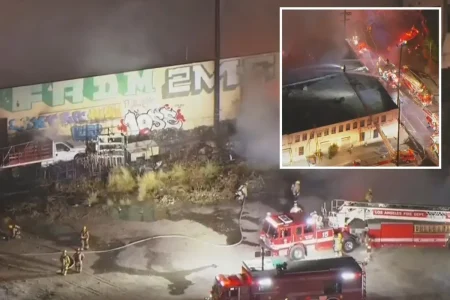
The ground did not merely shake beneath the southwestern prefecture of Kumamoto; it ruptured with a violent, vertical thrust that instantly severed the tranquility of the night, leaving a landscape of fractured concrete, collapsed historic rooftops, and a sky stained orange by spreading fires. Registering a formidable 6.8 magnitude, the shallow crustal earthquake struck with an intensity that violently jarred residents from their sleep, triggering automated early-warning alarms on millions of mobile phones mere seconds before the most destructive seismic waves arrived. Within minutes of the primary tremor, the air was thick with the scent of pulverized drywall, escaping natural gas, and the acrid smoke of localized blazes ignited by severed electrical lines and ruptured domestic gas mains. As power grids failed across the prefecture, plunging entire neighborhoods into absolute darkness, the only illumination came from the headlights of emergency vehicles maneuvering through debris-strewn streets and the rising flames of active fires. First responders, operating under the constant threat of violent aftershocks, immediately mobilized into the darkness, navigating buckled asphalt and shattered glass to establish command posts, assess structural collapses, and begin the desperate task of identifying where citizens remained trapped beneath the ruins of their own homes.
Inside the Ruins: Emergency Responders Battle Time and Rubble to Save Lives
  _.-'''''''-._
.'  ________   '.
/ / -+====+-\ \
| | | RI | | | [SEARCH & RESCUE ZONE]
| | |–==| | | Specialist teams deploying acoustic
\ \ /____\/ / sensors and canine units to locate
‘. ‘——–‘ .’ survivors beneath collapsed structures.
‘-.____.-‘
In the critical hours following a major seismic event, disaster response teams live by the immutable rule of the “golden seventy-two hours”—the window during which the probability of rescuing trapped survivors remains highest. Across Kumamoto, specialized search and rescue units, alongside reinforcement detachments from the Japan Self-Defense Forces (SDF) and local police, worked in highly coordinated patterns, utilizing thermal imaging cameras, acoustic listening devices, and highly trained search dogs to detect signs of life beneath flattened residences. The structural composition of Kumamoto’s older residential districts, dominated by traditional wooden houses with heavy clay-tile roofs designed to withstand typhoons but highly vulnerable to seismic pancake collapses, presented a perilous obstacle course for recovery teams. Rescuers were forced to manually stabilize teetering structures with wooden struts and hydraulic jacks before digging into the pockets of air beneath collapsed ceilings, knowing that even a minor, four-magnitude aftershock could cause the remaining ruins to slide and crush anyone inside. Every success, whether the extrication of an elderly resident trapped in a collapsed kitchen or the extraction of a frightened child, was met with quiet, focused determination, as exhaust crews immediately moved on to the next address listed on manifest sheets compiled by community leaders checking on missing neighbors.
Fighting the Flames: The Double Threat of Secondary Fires and Severed Utilities
Even as rescue crews clawed through the physical wreckage, local fire departments faced a secondary, equally deadly crisis in the form of multiple conflagrations sweeping through densely packed urban corridors. The violence of the 6.8 magnitude quake had instantly sheared municipal water mains, rendering fire hydrants useless across several districts and forcing firefighting units to deploy kilometer-long hoses to draw water directly from local rivers, agricultural canals, and school swimming pools. Compounding this challenge, the tight, narrow layout of Kumamoto’s older neighborhoods restricted the movement of large ladder trucks and heavy water tenders, forcing firefighters to advance on foot, hauling heavy equipment through alleys choked with fallen masonry and overhead power cables. In several locations, emergency workers had to form bucket brigades and employ portable chemical extinguishers to prevent residential fires from jumping across narrow streets and engulfing entire city blocks of dry, timber-frame buildings. The battle against the flames was a race against wind patterns and the clock, with incident commanders constantly forced to balance the allocation of personnel between active firefighting operations and urgent, life-saving search operations in adjacent, threatened structures.
Shadows of Displacement: How Local Communities Are Coping with Unexpected Devastation
====================================================================
SHELTER STATUS MAP
[ evacuees ] —-> ( Designated School Assembly Halls )
[ resources ] —> [ Food ] [ Clean Water ] [ Medical Dispatches ]
[ priority ] —-> Elderly populations & specialized pediatric care
As dawn broke over the battered prefecture, the human scale of the disaster became painfully visible as thousands of displaced residents sought refuge in hastily assembled evacuation centers set up in school gymnasiums, community halls, and municipal parks. For many elderly citizens of Kumamoto, a demographic that comprises a significant portion of this southwestern region, the sudden upheaval brought back harrowing memories of previous seismic events, compounding the physical exhaustion of displacement with deep psychological trauma. Inside the shelters, volunteers and municipal staff worked tirelessly to distribute emergency blankets, bottled water, and basic rations, prioritizing families with infants, pregnant women, and the elderly who required continuous access to prescription medications. Outside, the steady drone of disaster-relief helicopters hovered overhead, delivering critical medical supplies to rural areas cut off by landslides, while mobile communication units were rolled in to help survivors contact distant family members amid widespread cellular network outages. Despite the profound grief of losing homes, heirloom possessions, and in some cases, neighbors, the atmosphere in these communal spaces was defined by an orderly, quiet resilience, with evacuees immediately organizing themselves into clean-up committees and rationing coordinators to ensure the equitable distribution of scarce resources.
The Fault Lines Beneath: Analyzing Kumamoto’s Seismic Vulnerability and Japan’s Defensive Architecture
To understand the sheer kinetic power of the Kumamoto earthquake, seismologists point to the complex network of active fault lines running directly beneath the island of Kyushu, specifically the Futagawa-Hinagu fault zone, which has historically subjected the region to severe tectonic stress. This 6.8 magnitude event serves as an alarming reminder of the geological violence that occurs when horizontal strike-slip faults slip suddenly, releasing decades of accumulated strain in a matter of seconds. Yet, while the destruction of older, historical buildings and wooden homes was extensive, the performance of Kumamoto’s modern high-rise buildings and public infrastructure highlighted the immense value of Japan’s world-leading seismic building codes, which mandate advanced architectural technologies such as rubber base-isolation dampers and flexible steel joints. Engineering surveys immediately following the main shock revealed that while modern commercial centers shook violently, their core structures remained intact, preventing the catastrophic structural failures that typically claim thousands of lives in less prepared regions of the world. This stark divergence between surviving modern structures and collapsed traditional homes underscores the ongoing challenge facing Japanese policymakers: the urgent need to accelerate the seismic retrofitting of older, private residential structures in rural prefectures before the next inevitable rupture occurs along the nation’s highly active fault lines.
Rebuilding From the Rubble: The Long Path to Recovery and the Spirit of Resilience
                            _________
                         _.' _..---.._ '.
                       .'_.-'         '.'.
                      / /               \ \
                     | |   [ Kizuna ]    | |
                     | |  (Solidarity)  | |
                      \ \               / /
                       '.'-._         _.'_.'
                         '-._''---''__.-'
In the wake of the initial catastrophe, the focus of both local authorities and the national government in Tokyo is steadily expanding from immediate, life-saving rescue operations to the long-term, multi-billion-yen challenge of regional reconstruction. The Prime Minister’s office swiftly declared Kumamoto a disaster zone, unlocking emergency federal funding to rebuild severed transport links, repair damaged rail lines, and restore water, gas, and electricity to the hundreds of thousands of households currently living in darkened, dry conditions. Beyond the physical rebuilding of roads, bridges, and municipal infrastructure, there remains the delicate task of restoring Kumamoto’s cultural identity, symbolized by its historic architecture, local businesses, and agricultural cooperatives that form the economic backbone of the prefecture. National solidarity has already begun to manifest, with neighboring prefectures dispatching specialized utility repair crews, mobile water purification plants, and mental health professionals to help survivors navigate the long, emotionally challenging path ahead. Guided by the cultural concepts of Kizuna—the enduring bonds of community solidarity—and Ganbaru, the quiet determination to persevere through adversity, the people of Kumamoto are beginning the monumental task of clearing the debris, resolved to build a future that is not only recovered, but far more resilient than the past.