






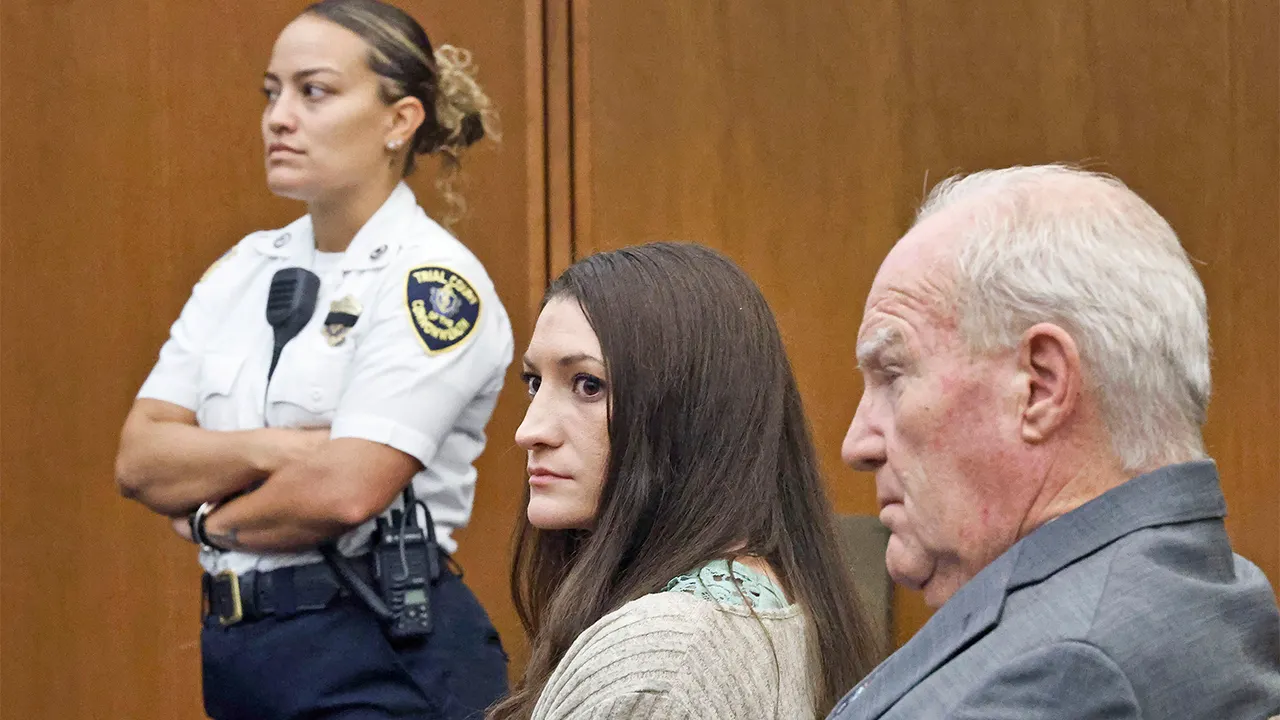
For the first time since the jury in the Lindsay Clancy murder trial was dismissed after a mistrial, three of its members have stepped forward to describe the painful, fractured deliberations that left a Massachusetts community, and the families at the center of the case, without a final answer. In interviews with NBC10 Boston, the jurors — including the foreperson — painted a stark picture of a panel that was on the cusp of a verdict, only to be halted by a single holdout who, by their account, admitted he had reasonable doubt but refused to vote to acquit on the grounds of insanity. The foreperson recalled the moment she thought the ordeal was over: “He admitted he had reasonable doubt and I started filling out the forms, I was so excited.” She had already begun signing the verdict paperwork, believing the jury had finally reached a unanimous decision, when the juror delivered a devastating follow-up: “But I’m still not going to say that she’s not guilty by reason of insanity.” It was a moment of whiplash, a sudden collapse of consensus that would ultimately lead a judge to declare a mistrial after days of tense and increasingly emotional discussions.
The case itself has been one of the most gut-wrenching and closely watched in recent Massachusetts history. Lindsay Clancy, a mother from Duxbury, was accused of killing her three young children — a daughter and two sons — in January 2023. She admitted to the killings but pleaded not guilty by reason of insanity, arguing that she was in the grip of a severe mental illness at the time of the tragedy. Prosecutors, however, maintained that she was criminally responsible for the deaths, and the trial became a heavy, painful accounting of both maternal love and unfathomable violence. For the jurors, the stakes were never abstract. They were asked to weigh evidence about her psychiatric state, her medications, her behavior in the days leading up to the deaths, and the legal definition of insanity in Massachusetts — a standard that requires a defendant to be unable to distinguish right from wrong or to understand the nature of their actions. The jury’s task was not to judge whether Clancy had committed the killings, but whether her mental state at the time absolved her of criminal responsibility. It was a distinction that would prove to be the heart of the conflict inside the deliberation room.
According to the three jurors, the holdout became the center of their frustration. They described him as arrogant and dismissive, someone who “really did not take anything that anybody said.” When other members of the panel, including nurses, tried to explain the effects of the medications Clancy had been taking and the toxicology reports from South Shore Hospital that had been admitted into evidence, the holdout reportedly disregarded their expertise and the documents. “There were nurses on the jury. Yes, they spoke to that specific thing,” one juror said. “That was a question that he had, and he just completely disregarded the information that they gave him.” The atmosphere in the room grew so tense that several jurors found themselves physically unable to sit still. “Every one of us in the hours of our frustration would get up and walk the room because you just couldn’t sit anymore,” another juror told the station. “He would not interact with us and try to understand.” The image is vivid: a group of ordinary citizens, summoned to perform an extraordinary civic duty, pacing in circles as they tried to break through a wall of stubbornness and moral resistance that seemed impenetrable.
Perhaps the most troubling part of the jurors’ account is their explanation of what lay beneath the holdout’s refusal. They said he repeatedly struggled to get past the gruesome nature of the crimes. “He had the hardest time getting over the fact that Lindsay viciously killed her children,” one juror noted. This is a powerful and humanizing insight, because it speaks to a fundamental conflict that often emerges in high-stakes insanity cases: the difference between a legal judgment and an emotional one. The juror apparently acknowledged having reasonable doubt — the very standard that should have led to a not-guilty-by-reason-of-insanity verdict under the judge’s instructions — but he could not bring himself to deliver that verdict. The jurors said they read the definition of reasonable doubt aloud to him on multiple occasions. “We read to him, on numerous occasions, the definition of reasonable doubt from Judge Sullivan’s instruction,” one juror said. Yet the holdout remained unmoved, not because he believed the prosecution had proven its case beyond a reasonable doubt, but because his own moral revulsion at the child killings outweighed what he had acknowledged as a legal reality. This distinction is a classic challenge for juries. The law asks for an intellectual and objective evaluation of evidence. But human beings are not computers, and some jurors find it nearly impossible to separate their visceral reaction to terrible facts from the disciplined application of legal standards.
The mistrial itself arrived after days of deliberations, when the jury informed the court that they were hopelessly deadlocked. Judge Sullivan declared a mistrial, and then granted the defense a one-hour stay for an appeal, suggesting that even the procedural details were fraught with emotion and uncertainty. It remains unclear whether prosecutors will seek a retrial, and for the families involved, the limbo is excruciating. The victims’ loved ones have already endured an unimaginable loss, and they now face the possibility of reliving the trauma in another courtroom. The holdout juror, identified only by the accounts of the others, has not responded to requests for comment. The three jurors who spoke to NBC10 Boston wanted to share their experience, perhaps to let the public understand that the mistrial was not a failure of the system, but rather a collision between the law’s requirements and one person’s inability to act on his own stated doubt. They bear the burden of those days, and their voices add a layer of human complexity to a story that could easily be reduced to a legal headline.
In the end, this case is not just about Lindsay Clancy, the children she lost, or the juror who refused to sign the verdict. It is about the excruciating weight that real people carry when they are asked to make impossible decisions. The jurors entered the courtroom as strangers, bound together by a summons, and left carrying a shared memory of frustration, heartbreak, and unresolved questions. They saw a mother’s life on the line, and they saw the ghosts of three children whose lives were cut short by violence. They tried to follow the law, but the law is a human invention, and humans are messy. The foreperson’s moment of excitement — the brief, glowing belief that they had reached an agreement — was shattered by a single sentence. That is the tragedy of the justice system: it depends on the consistency of human judgment, and human judgment is never consistent. As the legal process attempts to move forward, the public is left to wrestle with the same uncomfortable questions that divided the jury. What does justice look like when someone is both a killer and a patient? When does punishment end and mercy begin? How can anyone balance the horror of what happened with the fractured mind of the person who did it? The jurors cannot answer those questions, and neither can the courts, at least not yet. But in telling their story, they remind us that behind every verdict, every plea, and every mistrial, there are people trying their best to make sense of the senseless.