





-
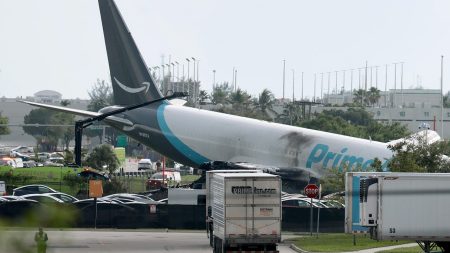
The sentence is small, but the weight behind it is enormous. The sequence of events detailed by National Transportation Safety Board investigators showed that the pilots lost crucial seconds before the plane ran off the runway in Miami. It is the kind of phrase that appears in dry reports, buried between technical descriptions of brake temperatures and cockpit voice recorder transcripts. But what it really describes is a very human moment, a moment when everything was moving fast and nothing was clear. The plane had been speeding down a Miami runway, full of passengers and crew, carrying ordinary people on ordinary journeys. The pilots, trained professionals with thousands of hours of experience, had every reason to expect a normal takeoff. And then something went wrong. Perhaps an alarm sounded. Perhaps an instrument reading did not match what the plane was doing. Perhaps the aircraft began to drift, or a system began to fail. In the seconds that followed, the pilots had to interpret what was happening, decide what it meant, and choose a course of action. That is an enormous amount of mental work. The NTSB’s report, in its careful and methodical way, shows that those choices were delayed, that the crew did not respond as quickly as they might have, that opportunities to stop the plane or correct its path slipped away. But for the people on board, there was no sentence. There was only the roar of engines, the tightening of seatbelts, the strange tension in the air. And then the plane left the runway. The fact that it ended without catastrophe does not diminish the terror of the moment. It only makes it easier to study, to understand, and to learn from.
-
To understand what it means to lose crucial seconds, imagine the cockpit as a place of carefully practiced order. Pilots spend their careers learning to manage emergencies, but no amount of training can fully prepare the mind for the strange, jolting realization that something is not right. In the Miami event, the investigation laid out the timeline: the plane was rolling, the crew was communicating, and at some point conditions began to deteriorate. What exactly happened is less important than the shape of the story. A problem appeared. The pilots were not ready for it, not because they were careless, but because the problem did not look like a clear and obvious emergency. It likely looked like a small thing, a nuisance, something to be worked through. The mind, when confronted with the unfamiliar, does not immediately scream danger. It tries to fit what it sees into known categories. It asks questions. Is that warning real? Is it the same as the test we did this morning? Should I wait one more second to see if it goes away? That internal conversation, conducted in milliseconds under the pressure of airspeed and runway distance, can be the most dangerous moment in the entire flight. The NTSB’s report revealed that the pilots did not use the available time to apply maximum braking or reject the takeoff in the earliest possible moment. Instead, they spent part of that time interpreting, confirming, and coordinating. In hindsight, the correct action looks simple. But from inside the cockpit, with the runway flashing by and the plane heavy with fuel and people, things are never simple.
-
The reasons pilots lose crucial seconds are deeply rooted in human psychology, and that is precisely why the NTSB spends so much time studying them. When something surprising happens in a highly trained environment, the brain often experiences what researchers call a startle effect. Attention narrows. Time seems to slow down. The mind can become locked onto one hypothesis, unable to step back and see the larger picture. This is not weakness. It is a natural response to threat. In aviation, it is also a known danger. Crews are trained to manage it, but training cannot erase biology. Another factor is the way modern aircraft are designed. Automated systems do much of the work, and pilots may have a less immediate feel for what the plane is doing. When automation suddenly behaves in an unexpected way, or when warnings compete for attention, the crew can spend vital energy just deciding what to trust. There is also the matter of coordination. A captain and a first officer form a team, but they are two separate minds. If the captain begins to act on one interpretation and the first officer sees it differently, communication takes time. One pilot may be cautious; the other may be more confident. Sorting out who is right, and who is in charge, can cost seconds. The NTSB report does not treat this as a moral failing. It treats it as a fact of human nature. But understanding the human factor is the first step toward designing systems that protect people from their own limits. When the board says the pilots lost crucial seconds, it is not only describing their failure. It is describing a failure of the system, of the procedures, of the tools, of all the layers that were supposed to help them see clearly and act decisively.
-
The aftermath of any incident like this one is a quiet revolution in aviation safety. The NTSB does not issue its reports simply to assign blame. It issues them so that the next crew will have just a little more knowledge, just a little more awareness, just a little more time. The Miami runway excursion, as investigators would call it, becomes a reference point. It is studied in training academies. It is used in cockpit simulations. New questions are asked. Could the warning system have been designed differently so that it demanded immediate action rather than interpretation? Could the crew have been trained to react to this specific scenario with a single, unambiguous response? Could the first officer have been empowered to take control more forcefully when the captain hesitated? Every one of these questions has the potential to save lives in the future. In the years since the incident, the industry has placed greater emphasis on scenario-based training, where crews are exposed to rare and ambiguous events in simulators, not to drill them in easy answers, but to teach them how to cope with surprise. There is also a stronger culture of assertiveness. The old cockpit, where the captain’s voice was final and the first officer was expected to be quiet, has given way to a model where every voice matters. That change, more than any single piece of technology, may be the most powerful answer to the problem of lost seconds. The incident in Miami was not the first time this lesson was learned, and it will not be the last. But it is a living example of the principle that safety is not about perfection. It is about continuous correction.
-
It is easy to read the NTSB’s account as a catalog of errors, but it is also a story about people who were doing their best in a situation that had suddenly turned dangerous. The pilots in Miami were not careless adventurers. They were professionals who had gone through years of training. They had families, histories, fears, and hopes. They had stepped into that cockpit believing they would perform well, and they almost certainly did perform well for the vast majority of the flight. But then came the crucial seconds, and they did not respond perfectly. That experience, the experience of having your instincts questioned by an investigation, is something we should not treat lightly. The pilots had to relive the event countless times. They had to answer questions that made it clear they could have done better. They had to live with the knowledge that their decisions were measured, studied, and held up as examples for others. There is humility in that. There is also courage. Every pilot who flies after such an event carries the memory of it, not as a weight, but as a reminder. The passengers on that Miami flight were fortunate. They were able to leave the plane, to call their families, to continue with their lives. The aircraft was damaged, perhaps, but no one was killed. That is not luck, entirely. It is the result of millions of safety improvements built over decades, many of them born from previous incidents that were far less forgiving. In that sense, the Miami incident is not an ending. It is another step in the long, slow climb toward a world where travel is safer than ever before, where even the loss of crucial seconds does not have to mean the loss of life.
-
For those of us who are not pilots, the story of the Miami runway contains a simpler, more universal lesson. Every human being has experienced a moment when time seemed to slip away, when we knew something was wrong but could not force our hands to move quickly enough. A driver who sees a hazard too late. A doctor who has a sudden thought that she has missed a symptom. A parent who hears the crash from the other room and races up the stairs. In all of these moments, the seconds feel both infinite and impossible, distended by fear and yet gone too soon. What separates the people who survive these moments is often not the speed of their reactions but the strength of their preparation. They have practiced, or they have seen others practice, or they have been taught to expect the unexpected. They have built habits so strong that the body moves even when the mind is still catching up. The NTSB report does not give us a reason to judge pilots. It gives us a reason to look at our own lives and ask what we are doing to prepare for the ambiguous, the rare, the sudden. It asks us to be humble about our own abilities, to build systems and relationships that help us act, to trust the first officer inside our own minds, the voice that says something is wrong. The phrase “lost crucial seconds” sounds like an ending. But in the world of aviation safety, it is a beginning. Those seconds are preserved in the report so that others can find them, study them, and use them to save their own seconds when the moment comes. In that way, the pilots who ran off the runway in Miami have left a gift. They have shown us how easy it is to hesitate, how natural it is to be slow, and how hard the work of being human really is. And they have shown us that even after the worst moments, there is still the chance to learn, to fly again, and to do better.
Amazon Cargo Jet Pilots Appeared to Try Aborting Landing, N.T.S.B. Investigation Indicates
Keep Reading