





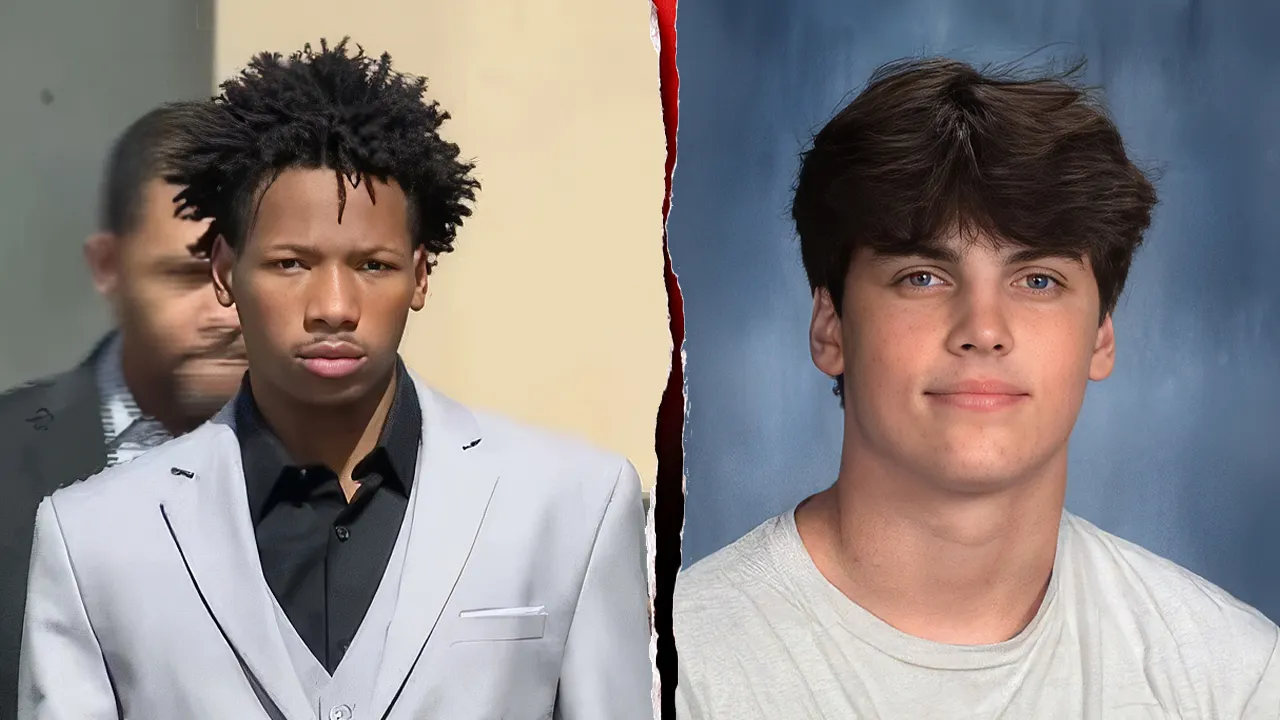
In the suburban heart of Frisco, Texas, a community known for its quiet streets and tight-knit neighborhoods, a vibrant high school track meet was transformed into the backdrop of an unimaginable tragedy. Rather than being remembered for athletic achievements and the spirited cheers of parents and classmates, the event became the site where seventeen-year-old Austin Metcalf’s life was abruptly and violently cut short. Austin was a typical teenager, full of potential and carrying all the hopes and dreams of a young person on the cusp of adulthood. His sudden death, resulting from a devastating knife attack during what should have been a safe and celebratory school gathering, sent shockwaves through the local community and left a permanent scar on his grieving family. The young man responsible for this violence, Karmelo Anthony, went from being a teenager among his peers to a convicted murderer, forcing everyone involved to grapple with the senseless destruction of a young life and the painful searching for answers that always follows such a sudden loss.
Following a highly charged trial that drew intense public scrutiny, the legal system finally delivered its judgment, shifting the reality of everyone involved in an instant. For the duration of the trial, Karmelo Anthony had remained free on bond, walking the streets as a free man while his destiny was argued in front of a jury. However, the moment the guilty verdict was read, his freedom vanished; he was immediately taken into custody and transitioned into the stark, lonely reality of incarceration. Initially held in complete isolation within the medical infirmary of the Collin County Jail, Anthony sat alone with the gravity of his actions as he prepared for the realization of a decades-long prison sentence. He was quickly transferred out of the county system and sent on his way to a state prison in Texas, where he will serve a thirty-five-year sentence. For a young person, the realization of spending thirty-five years behind bars is monumental, though the law dictates he will eventually be eligible to apply for parole after serving at least half of that time—seventeen and a half years—leaving him with a long, uncertain road ahead.
For the prosecution team, led by Collin County District Attorney Greg Willis and prosecutor Bill Wirskye, the trial was an exhausting emotional journey that culminated in a deep sense of professional and personal relief. In the high-stakes environment of a murder trial, even the most seasoned prosecutors carry a quiet, persistent burden of doubt until the jury returns with a decision, knowing that the victim’s family is relying on them entirely for a semblance of justice. After the verdict was delivered, both Willis and Wirskye expressed their profound relief, emphasizing that this was a straightforward case of murder rather than a complex narrative of self-defense or racial tension, as some had sought to frame it. The turning point in the courtroom came when the prosecutors presented video footage of the incident; the footage clearly showed a peaceful scene where teenagers were sitting quietly under a tent, looking at their mobile phones, completely undermining any claim that Anthony was cornered, threatened, or acting out of fear for his own safety.
A critical element that solidified the case for the jury was the courage and clarity of the witnesses who stepped forward, particularly a young classmate whose calm and collected testimony deeply moved those in the courtroom. It is never easy for a young person to take the stand in a murder trial, yet this second witness provided a chilling and pivotal perspective that helped the jury understand the underlying intent behind the tragedy. He testified that when he looked over at Karmelo Anthony just before the attack, Anthony was staring off into the distance with a cold, focused expression, looking precisely like a person who had a deliberate plan and was preparing to execute it. This observation spoke volumes to the jurors, stripping away any lingering doubts about whether the stabbing was a spontaneous, panicked reaction, and painting a portrait of a calculated act of violence that could not be justified by the circumstances of a high school gathering.
While the court’s decision brought a necessary sense of legal closure, the emotional aftermath continues to weigh heavily on the victim’s family, the prosecutors, and even those who sought Anthony’s conviction. District Attorney Greg Willis spoke of his relief primarily in terms of what it meant for Austin Metcalf’s family, who have had to endure the agonizing process of a public trial while mourning the loss of their son. At the same time, prosecutor Bill Wirskye reflected on the tragedy with a sense of perspective that went beyond mere punishment, expressing a sincere hope that one day, the psychological “light” will turn on for the young defendant. Wirskye voiced a desire that Anthony will eventually come to terms with the gravity of his actions, express genuine remorse, and find a way to live a productive, law-abiding life—whether that transformation happens inside the prison walls or in the distant future when he is eventually released back into society.
Yet, the story does not truly end with the reading of a verdict or the transfer of a prisoner, as the legal and social ripples of the tragedy continue to play out in the public eye. Almost immediately after his conviction, Anthony’s legal defense team filed a formal notice of appeal, signaling that a prolonged legal battle may still lie ahead as they challenge the trial’s outcome. Outside the courtroom doors, the deep divisions surrounding the case were made manifest by crowds of passionate supporters and community members who clashed with one another, showcasing the anger, grief, and unresolved tension that Anthony’s actions have stirred up. As Frisco, Texas, struggles to move forward and heal from a crime that shattered its peace, both families are left to navigate entirely altered realities: one family faced with the permanent, agonizing absence of a seventeen-year-old son, and another confronting the reality of a young life heavily defined by decades of isolation and confinement.