







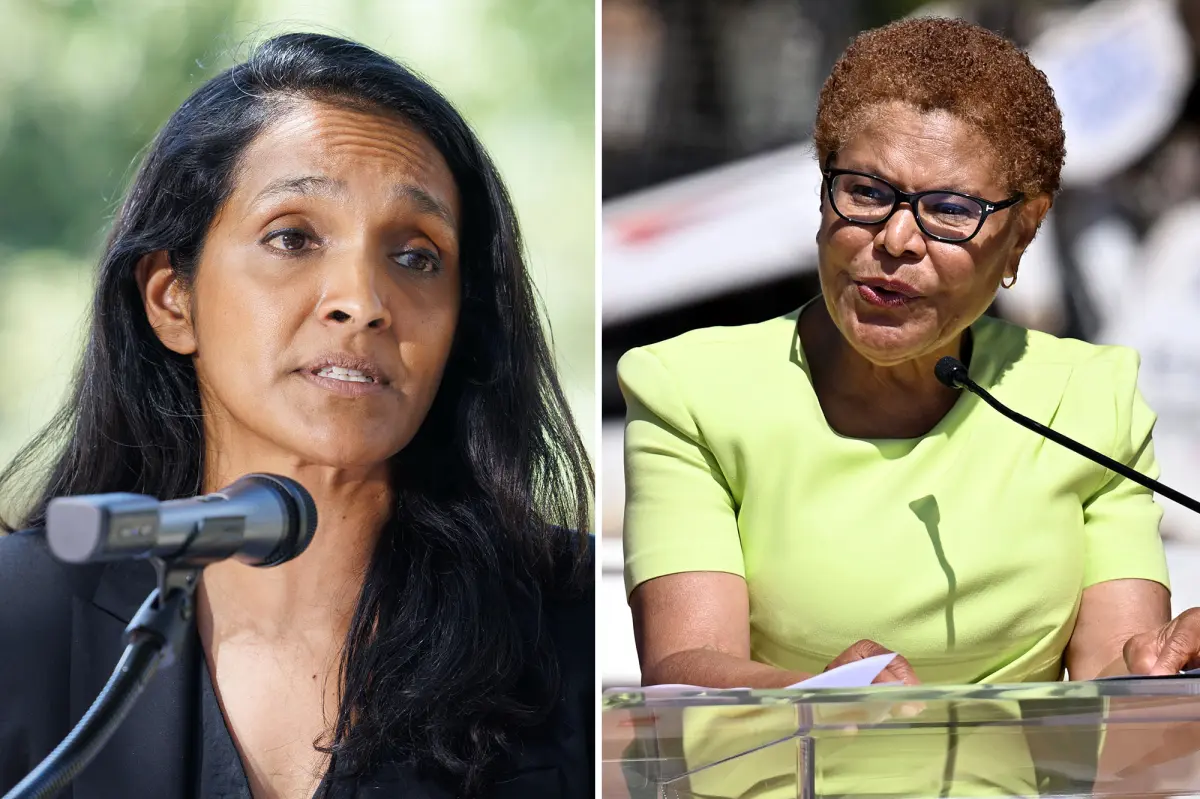
The atmosphere within Los Angeles Mayor Karen Bass’s political circle has grown thick with anxiety, as the formidable challenge from City Councilmember Nithya Raman transforms from a distant possibility into a very real and immediate threat. Conversations with several of the Mayor’s own allies and campaign insiders reveal a deep-seated worry that Raman, backed by the city’s most powerful labor unions, possesses the momentum and the grassroots energy necessary to unseat an incumbent who has been weakened by a series of crises. The initial confidence of the Bass camp has given way to a more somber and urgent assessment, with one supporter candidly admitting, “I think you have to give Nithya the advantage. I really do. I think we could turn that around but the energy is with Nithya, and it’s unfortunate.” This sentiment is not an isolated thought but rather a recurring theme, with another ally noting that the subject of Raman’s ascendancy is a constant topic of discussion, a source of worry that is being voiced “every 30 minutes.” The fear is palpable, and it signals a potential turning point in a race that many once assumed would be a relatively straightforward victory for the incumbent.
The cornerstone of this newfound anxiety is the powerful coalition of organized labor that has rallied behind Raman. The endorsements from the United Brotherhood of Carpenters and Joiners of America, and crucially, Unite Here Local 11—a union famed for its massive and highly effective field operation—have sent a clear message to the Bass campaign that they are facing a well-funded, highly organized opposition with the capacity to mobilize voters on a grand scale. These are not just symbolic endorsements; they represent a substantial injection of financial resources and, more importantly, a ground game of canvassers and phone-bankers that can dramatically alter the electoral landscape. For the Bass team, this development was jolting, a “bit surprising” as one ally noted, and it instantly shifted the calculus of the race from managing an expected victory to defending against a serious, well-resourced threat. The ability of Unite Here Local 11 to deploy its members in a coordinated effort could be the decisive factor in a low-turnout municipal election, and the Bass campaign is acutely aware that they are now playing catch-up in a game where their opponent has a distinct organizational advantage.
The dynamics of the November runoff are further complicated by the large bloc of voters who cast their ballots for third-place finisher Spencer Pratt in the June primary. With Bass securing roughly 34% of the vote and Raman close behind at 29%, the remaining 26% who went to Pratt represent a pivotal swing constituency that both campaigns must actively court. Political strategist Matt Klink has been emphatic about the importance of this group, particularly those residing in the San Fernando Valley, warning that the Bass campaign would be “making a mistake of epic proportions” if they fail to target them. The challenge is a delicate one: Pratt, a vocal critic of the Mayor, has been instrumental in shaping a negative narrative around her leadership, blaming her for the city’s most intractable problems. For Bass to win over these voters, she must not only defend her own record but also convince them that Raman’s vision would be far more detrimental to the city. Klink frames it starkly, stating, “A Bass defeat is still very possible. Bass needs to give Pratt voters a reason to vote against Raman. They need to fear Raman more than they dislike Bass.” The Mayor must therefore pivot from being the subject of criticism to being the messenger against her rival, a task made more difficult by the perception that her campaign has been slow to engage.
This perception of a low-energy, slow-moving campaign is a recurring critique from those observing the race. While the Bass team, led by chief strategist Julie Chavez Rodriguez, maintains that they always anticipated a close contest and have been strategically investing in their base, Klink and others suggest that their on-the-ground activity does not reflect the urgency of the moment. “The sentiment that Raman has the energy is real, due in large part to the fact that Karen Bass is running a low-activity campaign,” Klink observed. “While her campaign says they always knew the race would be close, they’re not engaging with voters like it is.” This contrast in momentum is visible on the streets, where Raman’s campaign is energized and vocal, while Bass’s operation appears more subdued, perhaps waiting for a specific moment to unleash its full force. With just fifty days until the election, the pressure is mounting for the Mayor’s campaign to prove they are not merely confident but actively fighting for every vote, transforming their internal awareness of a tight race into a public-facing, aggressive strategy.
In response to these escalating threats, the Bass campaign has begun to sharpen its attacks, attempting to define Raman and paint her as an ineffective legislator. They have launched a website and a social media operation branding her as “No Show Nithya,” highlighting her missed votes at the city council. This line of attack is designed to undermine Raman’s progressive credentials by questioning her basic competence and dedication. Furthermore, the campaign has amplified criticisms from Councilmember Traci Park, particularly regarding Raman’s record in the Pacific Palisades following the devastating 2025 wildfires. The aim is to pin a portion of the blame for the city’s inadequate response on Raman, shifting the focus away from Bass’s own well-documented missteps during that tragedy. However, these attacks are a double-edged sword, as they simultaneously keep the issue of the wildfires at the forefront of voters’ minds—a subject that is inherently damaging to the Mayor, who faced intense criticism for her absence during the initial outbreak and her subsequent clash with the former LAFD Chief. By making Raman a target in this area, Bass’s team risks re-opening old wounds and reminding voters of the very failures that are fueling their challenger’s rise.
The Mayor’s path to victory is further obstructed by the weight of her first term’s controversies, which extend beyond the fires. Her administration continues to grapple with ongoing scrutiny over homelessness spending and the operations of the Los Angeles Homeless Services Authority, a persistent and visible failure that has frustrated residents across the city. Just recently, Bass’s decision to skip a House Oversight subcommittee hearing examining federally funded homelessness programs, calling it politically motivated, has added another layer of criticism and made her appear evasive. Meanwhile, Raman has skillfully centered her entire campaign on these very issues—homelessness, housing, public services, and the fires—framing the election as a stark choice between failed leadership and a new direction. As Klink succinctly puts it, “If the election is a referendum on Bass’s leadership, Raman wins. If it’s a choice between two competing visions, Bass can win but she has to make that case. She’s not doing that now.” The Mayor’s campaign is thus at a critical juncture; she must rapidly reposition the race away from her own record and onto the perceived risks of her challenger, while simultaneously overcoming her campaign’s perceived inertia and the deep-seated anxieties of her own supporters. The clock is ticking, and the battle for Los Angeles’s future is far from decided, promising a contentious and unpredictable election in the weeks to come.