







Paragraph 1: The Unlikely Encounter and a Nightmarish Turn
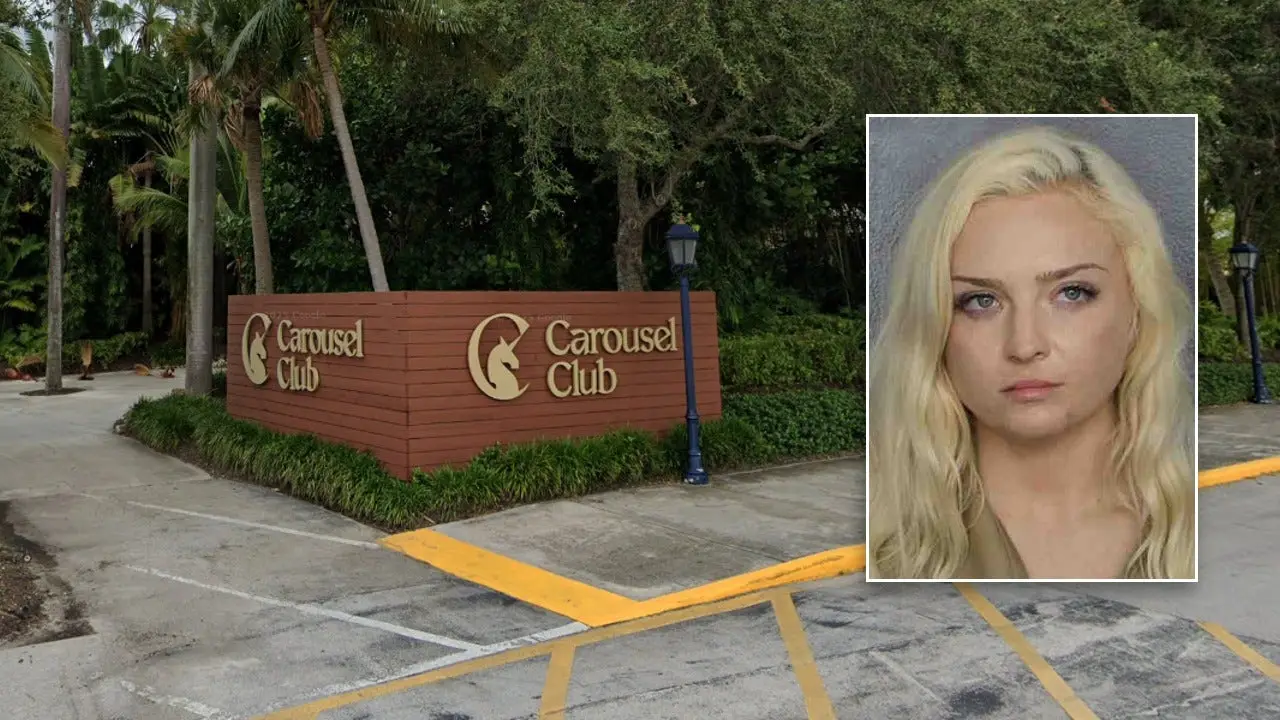
A seemingly chance meeting at a vibrant South Florida nightclub was supposed to be the start of a fun, flirtatious evening. For one unsuspecting man, however, that night in April would spiral into a disorienting nightmare of vulnerability, betrayal, and the theft of a timepiece worth nearly six figures. The woman at the center of this chilling story, 32-year-old Lynda Mae Crouse, was arrested months later, accused of leading the man on a dangerous and calculated dance. It began at the Carousel Club in Hallandale Beach, a popular spot where the drinks flow and strangers easily connect. The man, whose identity remains shielded by law enforcement, recalled striking up a conversation with Crouse around midnight. They exchanged Instagram usernames, a common currency in the digital age of modern dating, before going their separate ways. Little did he know that this simple exchange was the opening move in a meticulous, premeditated scheme that would leave him stripped of his prized possession and deeply shaken by the realization that his trust had been so brutally exploited. The encounter, once filled with the promise of a spontaneous connection, was instead a textbook predatory operation, one that police say was far from a first-time offense.
Paragraph 2: From Living Room to the Abyss: The Drugging
What followed was a series of events that read like a script from a psychological thriller. The man, likely feeling emboldened by the late-night connection, sent an Uber to Crouse’s home around 1:20 a.m., bringing her to his residence. This decision to invite a virtual stranger into his private space, the very sanctuary of his home, was the unfortunate pivot point of the entire evening. Once inside, the atmosphere seemed initially normal, even promising. The two shared several alcoholic drinks in the comfortable confines of his living room, the clinking of glasses and low murmur of conversation setting an intimate stage. However, the idyllic scene abruptly soured. The man told police that he began to feel “funny” and “extremely tired” after just a few drinks, a wave of exhaustion so profound it was more intense than any natural fatigue. He decided to retreat to his bedroom to change clothes, leaving his new guest alone in the living room. It was then that he heard a peculiar, distinctive “clapping sound,” a sound he couldn’t explain. When he returned, Crouse was acting differently, her demeanor abruptly shifting from friendly to detached. She announced she was leaving, claiming she had to go home. And then, just like a puff of smoke, she was gone. Within minutes of her departure, the man collapsed into a deep, unnatural sleep, a heavy fog of unconsciousness that would only lift hours later, leaving behind a lingering feeling of strange illness and a very real sense that something was terribly wrong.
Paragraph 3: The Aftermath: A Missing Treasure and a Growing Horror
When the man finally stirred from his drug-induced slumber, the disorientation was compounded by a creeping dread. He still felt strange, his mind thick and clouded, his limbs heavy. In a flash of lucid memory, he recalled the inexplicable clapping sound from the living room. A cold panic gripped him as he rushed to check a small jewelry box that housed his most prized possession: a gold 40-millimeter, diamond-bedazzled Rolex Presidential. The box was empty. His heart sank as the horrifying reality of his situation settled in. His Rolex, a symbol of success and a valuable asset appraised at a staggering $98,400, was gone. He had been robbed, but more insidiously, he had been poisoned, his trust and his body violated in the most personal way possible. He immediately contacted law enforcement, and through a photo lineup, he was quickly able to identify Crouse as the culprit. The investigation that followed painted a disturbing picture. This wasn’t just a random act of greed; it was a methodical, calculated scheme. The man provided police with the official appraisal documents, a paper trail that solidified the financial magnitude of his loss. The emotional toll, however, was immeasurable. He had been reduced to a victim in his own home, a place that should have been his safest refuge. The sting of betrayal cut deep, leaving him with not only the financial blow but also a lingering paranoia about the intentions of strangers, a suspicion that would be hard to shake.
Paragraph 4: A Pattern of Predation: The Similar Schemes
As the Broward County case against Crouse began to take shape, detectives made a chilling discovery. Her alleged modus operandi was eerily consistent, a signature of a professional confidence trickster. Law enforcement sources indicated that she was suspected in at least four other similar schemes in neighboring Miami-Dade County. The blueprint was the same: meet a man at a club or lounge, engage in charming conversation, establish a false sense of connection, and then steer the interaction back to a private setting where the prey was most vulnerable. The drug of choice would be administered discreetly, calculated to render the victim incapacitated while still allowing her to move about freely. This pattern is not just about stealing a watch; it’s about exploiting a person’s physical autonomy. The “clapping sound” heard by the first victim, for instance, could have been her hands grazing a bag or pocket, or possibly the subtle opening of a pill bottle or zipper, a small, innocent-sounding noise that masked a sinister act. The consistency of the accusations suggests a brazen, unrepentant predator who saw men as walking ATMs, their trust and their bank accounts connected to their expensive accessories. In each case, she allegedly left behind a trail of disoriented victims, their memories fragmented by powerful sedatives, unable to immediately piece together what had happened to them.
Paragraph 5: The Zolpidem Connection and the Physical Evidence
The case against Crouse gained a significant layer of evidentiary weight when authorities examined the investigations from the other alleged incidents. In one particular case investigated by the City of Miami police, the victim’s experience was tragically familiar. Crouse was accused of drugging this individual with zolpidem, a prescription sleep aid commonly known by the brand name Ambien. Unlike the victim in the Broward County case, this particular person was savvy enough to undergo toxicology testing at a hospital. The results came back positive for zolpidem, conclusively confirming that a drug had been secretly administered. This medical evidence is crucial because it transforms the case from a he-said-she-said dispute over a stolen watch into a documented instance of chemical assault. Zolpidem is a sedative-hypnotic that can induce memory loss, confusion, and extreme drowsiness, making it a perfect tool for a criminal seeking to disable a victim while they are awake. The presence of the drug in a victim’s system provides a direct physical link to the malicious intent of the perpetrator. It shifts the narrative from a simple property crime to a violent act, because to rob someone while drugging them is no less a crime against their person than a physical beating. It demonstrates a complete disregard for the victim’s health and safety, and the long-term psychological damage of being unknowingly drugged is immeasurable.
Paragraph 6: The Arrest, the Bail, and the Human Cost
Months after the alleged crime, the long arm of the law finally caught up with Crouse. She was arrested on a Friday, September 11, by Seminole police officers and transported to Broward County Jail. The arrest warrant, signed by a judge, charged her with second-degree grand theft, a felony in the state of Florida. However, in a twist that surprises few who follow the criminal justice system, she was released the very next day after posting a remarkably low bond of $2,500. This modest sum, a fraction of the value of the stolen watch, is a stark reminder of how difficult it can be for even accused criminals to be held in detention pending trial. While the courts have established that she must be presumed innocent until proven guilty, the accusation alone is a serious matter. For the victims, her release is a source of immense anxiety. They must now look over their shoulders, knowing that the woman who allegedly robbed them is walking the streets again. The story of Lynda Mae Crouse serves as a harrowing cautionary tale, a modern fable about the hidden dangers that can lurk behind a charming smile and a friendly conversation in the digital age. It highlights a disturbing trend of drug-facilitated property crime, where predators use the most intimate and vulnerable moments of human connection to prey on others. More than just a story about a stolen Rolex, it is a story about the theft of a fundamental human sense of safety, leaving behind a trail of shattered trust that no luxury watch can ever replace. The legal process will now play out, but the scars from those nights, both physical and emotional, will linger long after the headlines fade.