




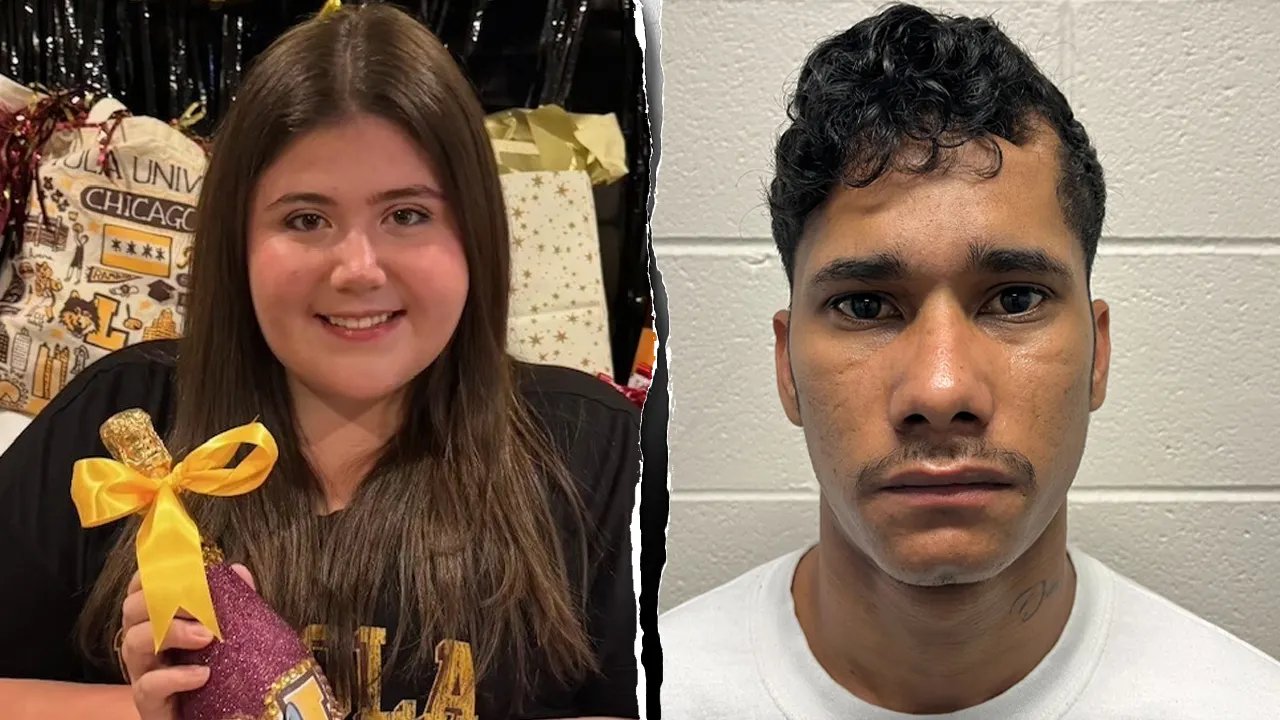
The tragic story of Sheridan Gorman’s untimely death has shaken a Chicago community still reeling from violence and immigration debates, revealing the fragility of young lives in an unpredictable world. In the heart of Rogers Park, a historic pier that should have been a place for laughter and dreams turned into a scene of horror on March 19. Shelby, a bright 18-year-old Loyola University student with a passion for painting and a future brimming with promise, was murdered—shot point-blank by Jose Medina-Medina, a 25-year-old Venezuelan national who had crossed into the U.S. illegally. As the March air turned colder that fateful evening, Sheridan’s family and friends gathered for her funeral services, a somber event filled with tears and unanswered questions. They mourned not just her loss but the senselessness of it all, wondering how a young woman full of life could be cut short by a stranger’s hand. Mourners described Sheridan as a vibrant soul—someone who volunteered at local shelters, painted murals to brighten up neighborhood walls, and dreamed of becoming an art therapist to help others heal emotionally. Her absence is felt profoundly, leaving a void in her family home where holiday meals now carry a shadow of grief. Meanwhile, Medina-Medina, who limped into court on Wednesday, offers a stark contrast: a man whose journey from Venezuela to the U.S. border under perilous conditions speaks to the desperation many migrants face, yet his actions have ignited outrage over border policies. As he stood before judges, shackled and silent, it’s hard not to ponder the human stories behind the headlines—the fear that drove him across deserts and rivers, only to lead to this devastating point. Prosecutors paint him as a dangerous individual who shouldn’t have been wandering the streets with a gun, while others argue broader failures in immigration enforcement allowed this to happen. The courtroom became a microcosm of America’s struggles: compassion versus accountability, second chances versus public safety. Sheridan’s mother, weeping openly at the service, pleaded for justice not as revenge but to honor her daughter’s memory, reminding everyone that behind every statistic is a heartbroken family.
In this deeply personal narrative, the court’s proceedings on Wednesday highlighted the cold mechanics of justice intersecting with human vulnerability. Jose Medina-Medina appeared before a judge, his body bearing the scars of the incident—a bullet fragment lodged in his nasal cavity from what authorities believe was a self-inflicted wound during the confrontation at the pier. He hobbled in, a far cry from the imposing figure the headlines sometimes depict, and faced federal charges of illegally possessing a firearm, punishable by up to 10 years behind bars. On top of that, state prosecutors leveled heavier accusations: first-degree murder for Sheridan’s death, attempted murder for allegedly targeting another youth nearby, aggravated assault, and illegal weapon possession without proper licensing. The atmosphere in the courtroom was tense, with Medina-Medina’s public defender arguing fiercely against the state’s request for a DNA sample to tie him conclusively to the crime scene. The defender invoked privacy rights, suggesting that forcing blood or saliva swabs invaded his client’s dignity, but the judge, after careful deliberation, ruled in favor of the request, acknowledging the undeniable link to Sheridan’s case. It was a procedural victory for the prosecution, ensuring that scientific evidence could corroborate witness accounts and shell casings found at the pier. Yet, as Medina-Medina watched, one could imagine the weight of his choices pressing down—a young man from Caracas who fled gang violence only to become entangled in it himself, his expression stoic but eyes revealing perhaps a flicker of regret. The approved collection of his medical records from unnamed hospitals added another layer of human complexity; these documents might reveal past injuries or mental health struggles, painting a fuller picture of a defendant who, per reports, had no fixed address in the U.S. and relied on charity systems for survival. Sheridan’s father, in interviews outside the courthouse, expressed frustration that such details mattered, emphasizing instead the irreplaceable pain of losing a child to what he called preventable tragedy.
Delving deeper into Medina-Medina’s background brings to light the broader saga of migration and its human toll, making this not just a single act of violence but a reflection of systemic challenges. Caught at the southern border in 2023, Medina-Medina was flagged as a flight risk by authorities—someone whose life story, filled with loss and uncertainty, led him to push for asylum despite lacking sufficient documentation. Under the Biden administration’s policies, he was processed and released into the U.S. without a verifiable address or contacts, a decision critics argue exemplifies lax enforcement that endangers communities. His release came at a time when overwhelmed shelters and foster care systems in places like Texas were turning away migrants, pushing many into invisible corners of society. Medina-Medina reportedly had no valid U.S. ID, no family to anchor him, and worked odd jobs as best he could, but records suggest a pattern of instability that culminated in the pier shooting. Humanizing his plight doesn’t excuse the crime—it was he who allegedly fired the shots that stole Sheridan’s future—but it underscores the desperation that drives people to risk everything for a new start. Venezuelan migrants, fleeing hyperinflation and political unrest, often endure harrowing journeys, crossing treacherous paths where death lurks from dehydration or cartels. Some arrive broken, seeking stability, but without robust support networks, they can slip into cycles of hardship. Sheridan’s friends, in eulogies, spoke of her empathy for underprivileged youth, including migrants, and how she once organized aid drives for refugee children—it’s a heartbreaking irony that her life ended at the hands of someone from the very demographic she sought to help. Society wrestles with this duality: compassion for the abused and ambitious, yet vigilance against those who exploit open doors for harm.
The judicial path ahead for Medina-Medina promises more intricacies, blending legal rigor with emotional stakes that affect real lives. His next significant court date looms—the arraignment on April 29, where formal pleas will be entered and trial preparations ramped up. Defense attorneys, in the meanwhile, have already begun motions for healthcare accommodations, spotlighting the bullet in his nose that complicates daily living. Medical experts might need to operate, and the court-granted orders ensure hospitals provide records detailing treatments that could impact his cognitive state or even his defense strategy. Claims of mental health issues or prior trauma could come into play, potentially mitigating but not erasing the gravity of the charges. For Sheridan’s loved ones, this prolongs their agony, as every delay feels like another obstacle to closure. The family has set up memorial funds and vigils, channeling grief into advocacy for better gun control and stricter immigration vetting. Mayor Brandon Johnson’s recent comments during Sheridan’s funeral, blasting “assaults against immigrants” while honoring her, highlight the polarized climate—prioritizing empathy for migrants without downplaying the loss of a young victim. Paired with Pennsylvania Senator John Fetterman’s call for a tougher stance on border issues, the case has ignited national discourse, humanizing policy debates through personal loss. Medina-Medina’s story, too, invites reflection: was his release a misstep, or a missed opportunity to offer rehabilitation? As the clock ticks toward court, communities grapple with uniting against crime while addressing root causes of migration.
In the tapestry of this unfolding drama, the victims’ families emerge as beacons of resilience, their humanity a counterpoint to the despair. Sheridan’s parents, pillars of strength at her wake, described her as their “light” — a girl who skateboarded through city parks, sketched portraits at coffee shops, and planned study abroad trips to track wildlife. Eulogies painted her as quintessentially optimistic, the type who texted encouragements to strangers she met volunteering. Yet, the bullet that claimed her life also wounded Medina-Medina, whose medical needs now intersect with the justice system. If convicted on all counts, he faces decades in prison, a fate that might stir debates over rehabilitation for young offenders whose paths were paved by circumstance rather than choice. Immigrant advocacy groups have voiced concerns that high-profile cases like this fuel xenophobia, urging empathy for the underdogs—Venezuelans escaping persecution—who arrive traumatized. But Sheridan’s friends counter that justice must prevail, sharing stories of her kindness to deter anyone from using her memory to justify blanket fears. As court filings reveal more about Medina-Medina’s deportation proceedings halted by releases, the narrative widens: was this a systemic failure, or an outlier in a broader wave of arrivals? Human stories like these remind us that policies affect individuals—Sheridan’s premature end versus Medina-Medina’s perilous crossing—urging a balanced approach to security and humanity.
Ultimately, the case of Sheridan Gorman and Jose Medina-Medina encapsulates the raw edges of American society, where dreams collide with harsh realities, and justice seeks to mend what violence shatters. As arraignment draws near, closure remains elusive for those left grieving, while Medina-Medina faces a future defined by bars or reform. Sheridan’s legacy, through art and activism, inspires calls for change—stricter firearm laws, improved migrant integration programs. Meanwhile, Medina-Medina’s impending trial prompts reflection on mercy for the troubled. In Rogers Park, where the pier echoes with memories, communities unite in loss, pushing for a world where tragedies like this become lessons rather than repetitions. The human cost is profound, but in storytelling their stories, we find paths to prevention and healing. Sheridan’s voice, silenced, resonates in demands for accountability, while Medina-Medina’s ordeal underscores the need for compassionate yet vigilant systems. As April 29 nears, this narrative evolves, reminding all that behind every headline lies a tapestry of lives forever altered by one fateful encounter.