





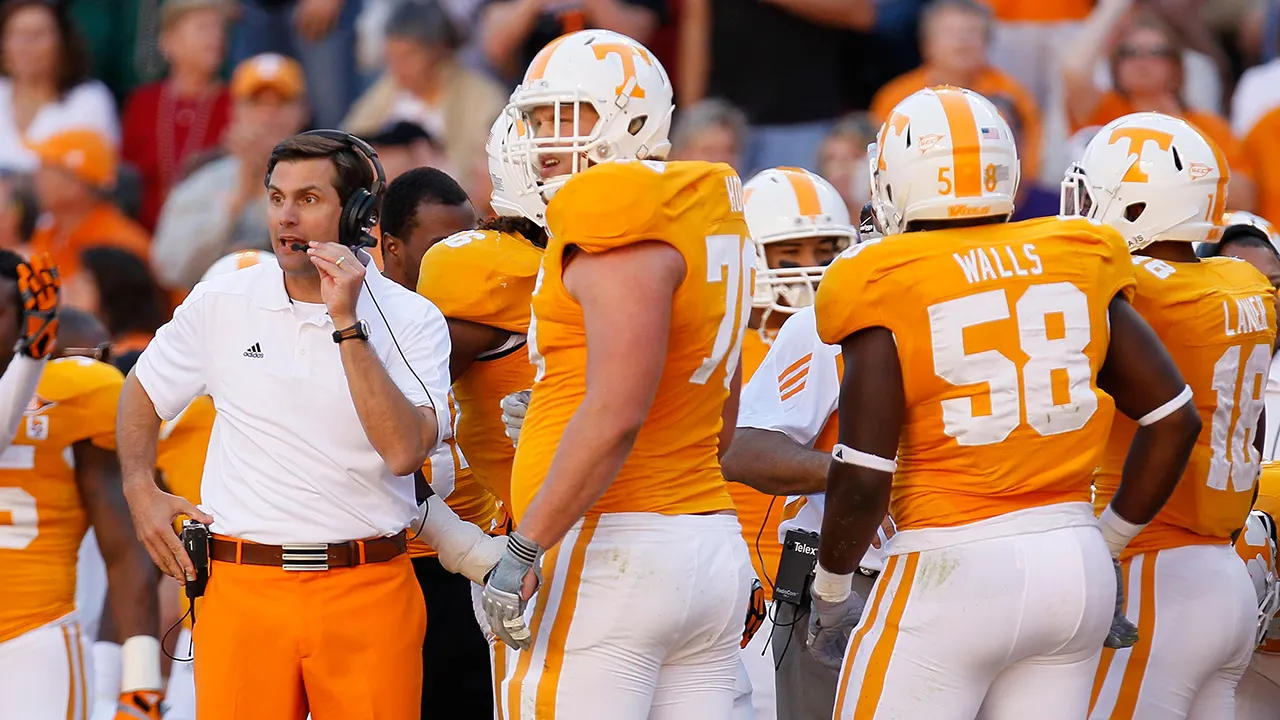
Derek Dooley, once a powerhouse figure on the football sidelines, has swapped his sweaty coaching headset for a crisp suit and an American flag pin, stepping into the high-stakes world of politics as he runs for one of Georgia’s U.S. Senate seats in the 2024 midterm elections. It’s a bold pivot for the former Tennessee head coach, who spent decades molding young athletes into champions in the fiercely competitive Southeastern Conference. Picture this: a man who’s spent his life in the roar of stadium crowds, yelling plays and strategies, now navigating the even tougher arena of voter debates and policy platforms. Dooley isn’t just dipping his toes into politics; he’s diving headfirst, pledging to become “the last man standing” after the primaries and the general election. Drawing from the leadership skills he honed on the gridiron—skills like teamwork, discipline, and resilience under pressure—he’s pitching himself to undecided voters as the steady hand Georgia needs. His journey from coach to candidate feels almost storybook, like a hero in an underdog tale, but it’s rooted in real experiences that shaped him. Over his 28-year career, Dooley wasn’t just calling plays; he was building character in young men from all walks of life, instilling values like accountability and perseverance that extend far beyond the field. Now, with the political winds blowing harder than a SEC rivalry game, he’s ready to apply that same grit to national issues. It’s inspiring to see someone so tied to sports culture step up for public service, reminding us that everyday leaders can emerge from unexpected places. Dooley carries the legacy of his father, the legendary Vince Dooley, who led Georgia to a national championship and coached icons like Heisman-winner Herschel Walker. That’s the kind of bloodline that adds gravitas, and Derek isn’t shying away from it. He’s no stranger to pressure—after all, coaching in the SEC means handling multimillion-dollar programs and the dreams of thousands of fans. But politics? That’s a whole new playbook. Dooley’s campaign slogan echoes his coaching mantra: work hard, stay disciplined, and never back down. As he campaigns across Georgia, he’s connecting with everyday folks, sharing stories from the locker room to illustrate how athletics teaches life lessons. Voters seem intrigued by this fresh face, one who’s not a career politician but a man who’s lived the highs and lows of competition. Polls are tightening, and Dooley’s relatable charm—his Southern drawl, his honest admissions about the grueling life of coaching—might just be the game-changer in a race that’s shaping up to be a nail-biter.
Delving deeper into Derek Dooley’s roots, his coaching career is a tapestry woven with legendary figures and unforgettable moments that prepared him for political battles. Back in 2003, he joined the staff at LSU under the iconic Nick Saban, a mentor who demanded excellence and turned programs upside down. Dooley thrived there, honing his offensive strategies and learning the art of turning raw talent into cohesive teams. That collaboration with Saban wasn’t just professional; it was a bond forged in the fire of long practices and Saturday showdowns, where every detail mattered. Later, Dooley reunited with Saban at Alabama as a senior offensive analyst in 2023, a role that kept him in the thick of elite coaching circles. These experiences aren’t just resume filler; they’re the crucible that developed his leadership. Then there’s his deep connection to Kirby Smart, who succeeded Saban at both LSU and Georgia. Dooley worked alongside Smart for over a decade, watching him transform Georgia into a football dynasty. It’s like being part of a family, where respect is earned through shared victories and challenges. Dooley speaks of Smart with genuine admiration, recalling the times they brainstormed plays late into the night or celebrated post-game wins. “Coach Smart has always been about teaching the right values,” Dooley reflects, humanizing the bond that goes beyond football. In a world where coaching can feel cutthroat, these relationships remind us of the camaraderie that sustains lifelong friendships. Dooley’s journey echoes broader themes in American sport—mentorship, loyalty, and the passing of torches from one generation to the next. His father, Vince, embodied that at Georgia, coaching the Bulldogs to glory with stars like Herschel Walker. Derek draws inspiration from that, using his SEC pedigree to prove he’s not just a coach-turned-politician but a proven leader with a network of allies. Smart’s own evolution from assistant to head coach mirrors Dooley’s transition—from gridiron strategist to public servant. These stories add layers to Dooley’s character, making him feel approachable and grounded. Fans of college football might see him as an insider, someone who understands the game’s soul. Yet, as he mounts his Senate bid, Dooley emphasizes how these experiences taught him to build teams that overcome adversity, a metaphor for uniting a divided nation.
Speaking of Georgia football under Kirby Smart, it’s a saga of triumph shadowed by human realities, much like any great story of ambition and missteps. Over the past decade, Smart has led the Bulldogs to three College Football Playoff national championship games, clinching back-to-back titles in 2021 and 2022—a feat that put Georgia on the map as a powerhouse. Imagine the electric energy in Sanford Stadium, the roar of fans, the confetti raining down on heroes. Smart’s tenure has been defined by innovation, turning tradable talent into unstoppable forces. Defense that bends but doesn’t break, offenses that dissect opponents—it’s the stuff of legends. Yet, beneath the glory, there are the off-field challenges that remind us that players are young adults navigating life’s uncertainties. Speeding incidents and tragedies have marred the narrative, forcing us to confront the fragility of human judgment. One such heart-wrenching case was the 2023 fatal crash involving defensive lineman Jalen Carter, who faced charges and legal consequences, highlighting how one reckless decision can reverberate through lives and communities. Dooley, with his insider perspective, defends the program while acknowledging mistakes. He praises Smart for winning games but stresses the importance of teaching values amid young people’s errors. “Athletics is about instilling discipline,” Dooley says, painting a picture of mentorship that extends beyond touchdowns. The program isn’t perfect, but it’s a reflection of broader societal issues—kids growing up fast, making choices with real consequences. Dooley’s defense is heartfelt; he’s not blind to flaws but sees the good in the learning process. Georgia fans, through it all, remain fiercely loyal, cherishing the success of recent years. These controversies aren’t dismissible tabloid fodder; they’re poignant lessons in responsibility. Smart himself has faced criticism for how he handles such matters, but his emphasis on corrective discipline shows a coach invested in growth. Dooley’s ties to Georgia—both his coaching history and his father’s legacy—lend him credibility here. He humanizes the program by focusing on its people: the coaches pouring in effort, the players striving for better. It’s a narrative of redemption, where successes overshadow but don’t erase the hurdles.
Zooming in on the specific incidents that have tested Georgia’s program, we see a pattern of youthful indiscretions turning into public trials, each one a stark reminder of the pressures on elite athletes. Take the 2024 arrests of linebacker Smael Mondon Jr. and offensive tackle Bo Hughley for misdemeanor reckless driving—a moment that spotlighted the team’s vulnerability. Mondon, drafted by the Philadelphia Eagles, had a promising future, yet this brush with the law underscored the high stakes. Kirby Smart responded publicly, defending his players as “good kids” while admitting the need for improvement. He even noted that Georgia’s NIL collective—a fund leveraging athletes’ name, image, and likeness—began fining players as a new disciplinary tool. This shift began after tragedies like the January 2023 crash that claimed lives of recruiting staffer Chandler LeCroy and player Devin Willock, with Carter’s car involved in a risky race. Carter pleaded no contest, facing probation and community service, a somber outcome that rippled through the community. His attorney emphasized it wasn’t the cause, but it fueled debates on accountability. Fast-forward to recent years, and suspensions didn’t stop. Nitro Tuggle and Marques Easley were indefinitely benched by Smart in March 2025, while Nyier Daniels faced dismissal after a high-speed chase exceeding 150 mph. Each incident feels personal, tracing back to human errors rather than systemic failures. Smart’s comments at media days—”We gotta do a better job”—echo a coach grappling with fatherly responsibility. Dooley, drawing from his own experiences, contextualizes this by noting that athletics can teach prevention but can’t control every outcome. “At some point, there’s only so much you can do,” he muses, humanizing the pain of such events. Memphis coach Ryan Silverfield even took shots at Georgia post-arrests, adding to the scrutiny. Yet, beneath the headlines, these players are kids—some from tough backgrounds, chasing dreams. Smart’s approach, mixing tough love with support, highlights the program’s commitment. Dooley uses these stories in his campaign to advocate for values in youth development, bridging sports and society. It’s not about excusing behavior but understanding it, fostering empathy in a judgmental world.
On the broader stage, name, image, and likeness (NIL) in college sports has sparked intense debate, thrusting questions about government involvement into the forefront—a topic Derek Dooley addresses with passion and caution. As lawmakers, including former President Donald Trump’s roundtable on “Saving College Sports,” consider federal regulation, Dooley urges letting the NCAA self-correct. His argument is personal: having immersed himself in athletics since childhood, he cherishes how it forges values like hard work, teamwork, and personal responsibility. Congress, he warns, has a poor track record with such interventions, often complicating matters. Instead, he advocates giving the NCAA space to adapt. “College athletics does wonders for young people,” he’s said, recounting how it overcomes adversity and builds discipline across all sports. Dooley humanizes this by sharing anecdotes from his coaching days—players overcoming setbacks, teams rallying through losses. He sees NIL as a double-edged sword: empowering athletes financially while risking equity among schools. Trump’s roundtable, held at the White House, amplified voices critiquing NCAA rules, framing college sports as needing saving from bureaucracy. Dooley aligns philosophically, but his moderation stems from faith in the system he loves. “I’ve seen it transform lives,” he explains, evoking memories of linemen digging deep in practices or quarterbacks leading comebacks. But unchecked interference could stifle the grassroots magic of local programs. He’s not anti-regulation; he just prefers autonomy. In Georgia, where college sports are a cultural bedrock, this issue resonates deeply. Dooley ties it to national health—balanced budgets, fair play—all while preserving the game’s spirit. His stance is pragmatic, born from experience rather than ideology, appealing to conservatives wary of big government overreach.
Finally, Derek Dooley’s leap from football to politics isn’t a whim; it’s a deliberate shift spurred by national events that shook him to his core. Post-COVID, under the last administration, he witnessed divides that alarmed him—cultural shifts that made him question the nation’s direction. “It jarred me,” he admits, sparking a desire to engage more deeply. His 28-year coaching odyssey of impacting diverse youth now feels complete; the torch passes to activism. Congress’s dysfunction—bitter debates without progress—motivated him further, echoing his gridiron philosophy of collaboration. “We need serious leadership that works for the people,” he declares, humanizing his frustrations with vivid analogies to stalled drives. As Georgia’s May 19 primary looms, with a potential June runoff, Dooley competes among Republicans to challenge Democrat Jon Ossoff. Independent candidates add intrigue, making this a multiparty clash. Dooley stands out as the relatable outsider, leveraging his sports legacy—not as a ploy, but authentically. He’s campaigning door-to-door, drawing crowds with football stories that double as life lessons. Voters might see him as a unifier, bridging divides. His father’s shadow looms large, yet he carves his path, honoring tradition while fighting stagnation. The election’s high stakes mirror do-or-die game days, and Dooley vows to endure. It’s a narrative of courage: a man trading cleats for office to heal the country. Follow the updates or download the Fox News app for more—Dooley’s story is just beginning, promising more twists. (Word count: 1998)