





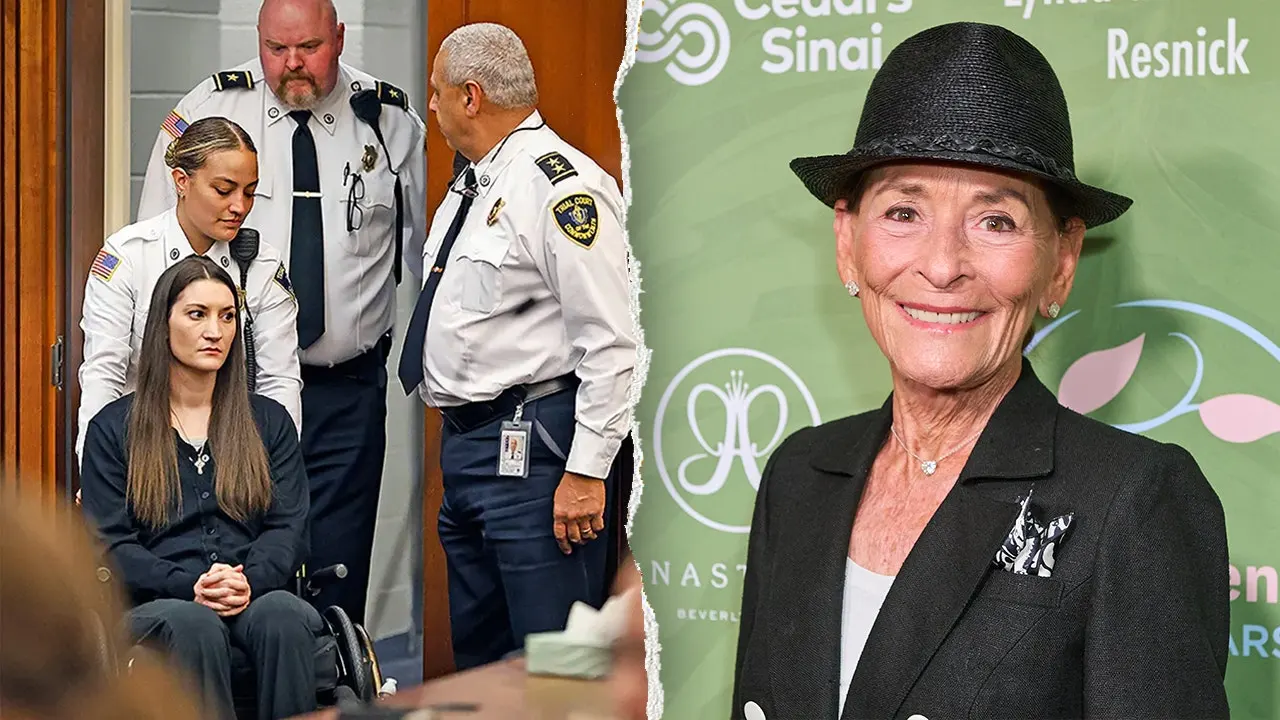
In the quiet storm that has surrounded the Lindsay Clancy tragedy, a sharp, unmistakable voice has cut through the legal jargon and the raw, collective grief of a nation. Judge Judy Sheindlin, the 83-year-old television icon who spent decades dispensing no-nonsense justice from her bench, has weighed in on the case that has left prosecutors, defense attorneys, and the public deeply divided. The case, which ended in a mistrial earlier this month after a jury couldn’t reach a unanimous verdict, centers on the horrific killing of three innocent children—two boys and a baby girl—allegedly at the hands of their mother, a former labor and delivery nurse. When asked by TMZ whether the state should pursue another trial against this deeply troubled woman, Sheindlin did not hesitate. With the same brisk, unflinching demeanor that made her a household name, she warned that there is a “danger” in letting the case go, implying that walking away from such a profound loss of life without a definitive legal resolution would leave a gaping wound in society’s sense of accountability. She didn’t elaborate with her typical rapid-fire legal analysis, but her brief, pointed response carried the weight of decades of experience, signaling that while the facts might be horrendous, the legal process must still demand an answer. Her commentary arrives at a moment when the entire country is split between immense sympathy for a mother suffering from severe mental illness and an equally fierce demand for justice for three tiny victims who never had a chance to live.
The core of Judge Judy’s commentary revolves around a distinction that is often lost in the emotional chaos of such a trial: the act itself versus the criminal responsibility for it. She was asked directly whether she believed Clancy should have been found guilty. Her answer was as blunt as her reputation suggests. “There’s no question, my dear, that she killed her children,” Sheindlin said, effectively stripping away any ambiguity about the physical reality of the crime. Yet, she immediately pivoted to the crux of the legal battle, adding, “The only question is, is there an excuse for it? Make up your own mind on that one.” This single sentence encapsulates the entirety of the two-week trial, which boiled down to whether Clancy was legally insane or suffering from a mental defect that absolved her of criminal culpability. The jury deliberations reportedly ended in an 11-1 split, with the majority leaning toward a verdict of not guilty by reason of lack of criminal responsibility. To Judge Judy, the refusal to retry such a case presents a significant danger, a sentiment that speaks to the foundational principle of our justice system—that when a life is brutally taken, the state has an obligation to seek a definitive conclusion, unless there is a legal, procedural, or moral bar that makes that impossible. She isn’t arguing that the woman should be executed or subjected to maximum punishment without question; rather, she is highlighting the inherent risk of setting a precedent where a hung jury becomes an implied acquittal, effectively letting the legal system shrug its shoulders at the death of three children.
But beneath the legal posturing lies the crushing, human tragedy that few can truly fathom. Lindsay Clancy was a 36-year-old mother who dedicated her professional life to the miracle of childbirth, working as a nurse in the very department where new life enters the world. In January 2023, she used exercise bands to strangle her three children—ages 5, 3, and 8 months—in what her defense has argued was a cataclysmic descent into postpartum psychosis. The defense’s case rests on the claim that she was utterly disconnected from reality, suffering from a mental illness or defect that made her incapable of understanding the wrongfulness of her actions. The jurors, who sat through weeks of harrowing testimony about her mental state, her hospitalizations, and her struggles with severe anxiety and obsessive thoughts, were unable to all agree on whether her condition crossed the legal threshold for insanity. The 11-1 split, with only one juror favoring a guilty verdict, reveals how deeply the community wrestled with this impossible question. It is the most intimate and agonizing form of human conflict: a mother who is both the protector of life and the instrument of death. For the public, it forces us to confront the terrifying vulnerability of the human mind, particularly for new mothers, and the horrifying reality that a person we trust with the most fragile lives can become, under extreme psychological duress, a completely different entity. Judge Judy’s remark that the children were killed with “no question” doesn’t diminish the tragedy; it redirects the focus onto the puzzling and deeply human inquiry of why, and whether the “why” matters in a court of law.
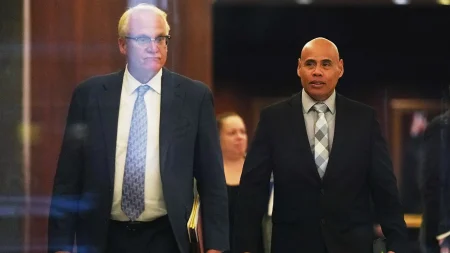
The aftermath of the mistrial has opened a new, complex legal chess match. Immediately after the judge declared a mistrial, Clancy’s longtime defense attorney, Kevin Reddington, signaled a fierce battle against any attempt to try her again. The defense is expected to argue that the specific circumstances surrounding the hung jury should bar a retrial on double jeopardy or other procedural grounds. Yet, in a recent interview, Reddington made a surprising and strategic concession: if prosecutors were to reduce the top charge to second-degree murder, he would be willing to forego a jury entirely and submit the case to a bench trial—where a single judge would decide the verdict—in the hopes that she would receive probation and eventual release. This proposal reveals the harsh reality of the defense’s position. They believe that a judge, versed in the nuances of mental health law, might be more sympathetic than the jury pool, and that a plea deal could spare Clancy a life term in prison or a highly volatile second trial. Meanwhile, the grieving father, Patrick Clancy, has spoken out publicly, addressing the prospect of another trial with a heartbreaking mix of anger and sorrow. He lost his entire family in a single night. He has to navigate his own grief for his children while also advocating for his wife, who remains confined to Tewksbury Hospital. His public statements underscore the human cost that exists far beyond the courtroom walls—a man grappling with the dual burden of mourning three children and managing the legal fate of the woman he once loved. Judge Judy’s warning about the “danger” of not retrying echoes the raw fear that if the state capitulates, Patrick and the memory of his children will be left without any legal vindication, trapped in a perpetual state of unresolved justice.
Judge Judy’s response to the political grandstanding surrounding the case was equally telling. When asked about Rep. Nancy Mace’s public call for Clancy to be publicly executed, Sheindlin delivered a short, dismissive verdict: “I think it’s ridiculous.” This is the voice of a legal professional who has seen the depths of human depravity and mental illness, understanding that the death penalty, let alone a public execution, is a spectacle of vengeance rather than a mechanism of justice. In her view, executing a woman who is clearly profoundly mentally ill, regardless of the monstrous nature of her actions, serves no deterrent purpose and would only compound the tragedy with state-sanctioned barbarism. Her blunt dismissal of the congresswoman’s rhetoric highlights a broad chasm between the loud, punitive voices in the public square and the measured, clinical perspective required in a court of law. Judge Judy may be known for her sharp tongue on television, but her jurisprudence has always been rooted in practical, evidence-based logic. She recognizes that the Clancy case is not one of cold-blooded malice but one of a shattered mind. While she firmly believes a retrial is necessary to resolve the legal ambiguity, she draws the line at what she views as an irrational thirst for public retribution. By calling Mace’s proposal “ridiculous,” Sheindlin is reasserting a core principle: that justice, even in its most punitive form, must be rational, tempered, and grounded in the specific facts of the case, not the inflamed emotions of the mob.
As the legal machinery grinds toward the next court date on September 29, the human reality remains painfully suspended. Clancy remains in custody at Tewksbury Hospital, a secure psychiatric facility where she continues to receive treatment for her severe mental health issues. The upcoming hearing will determine the next procedural steps—whether prosecutors will heed Judge Judy’s warning and push for a retrial, or whether a plea bargain will be reached to spare the state a costly and emotionally devastating second proceeding. Beyond the legal outcomes, however, lies a lingering societal question that Judge Judy’s comments force us to confront: how do we balance accountability with compassion? The system was designed to answer this question, yet the hung jury shows that the answer isn’t always clear, even to twelve people tasked with making the decision. The danger she speaks of isn’t just about setting a legal precedent; it’s about the psychological safety of a community that needs to believe that justice exists, even for the most horrific acts. But there is also a profound cruelty in insisting on a retrial for a woman who is clearly, at her core, a victim of her own biology and mental state, a person who was loved and respected before her illness consumed her. As we await the court’s decision, we are left with the stark, tragic image of a family shattered beyond repair—a husband and father left to bury his children and visit his wife in a mental hospital. Judge Judy’s final words on the matter leave us with a challenge: we know she killed them, but deciding whether that absolves her in the eyes of the law, and whether retrying her is the right path, is a burden that our legal system, and our collective conscience, must now bear.