





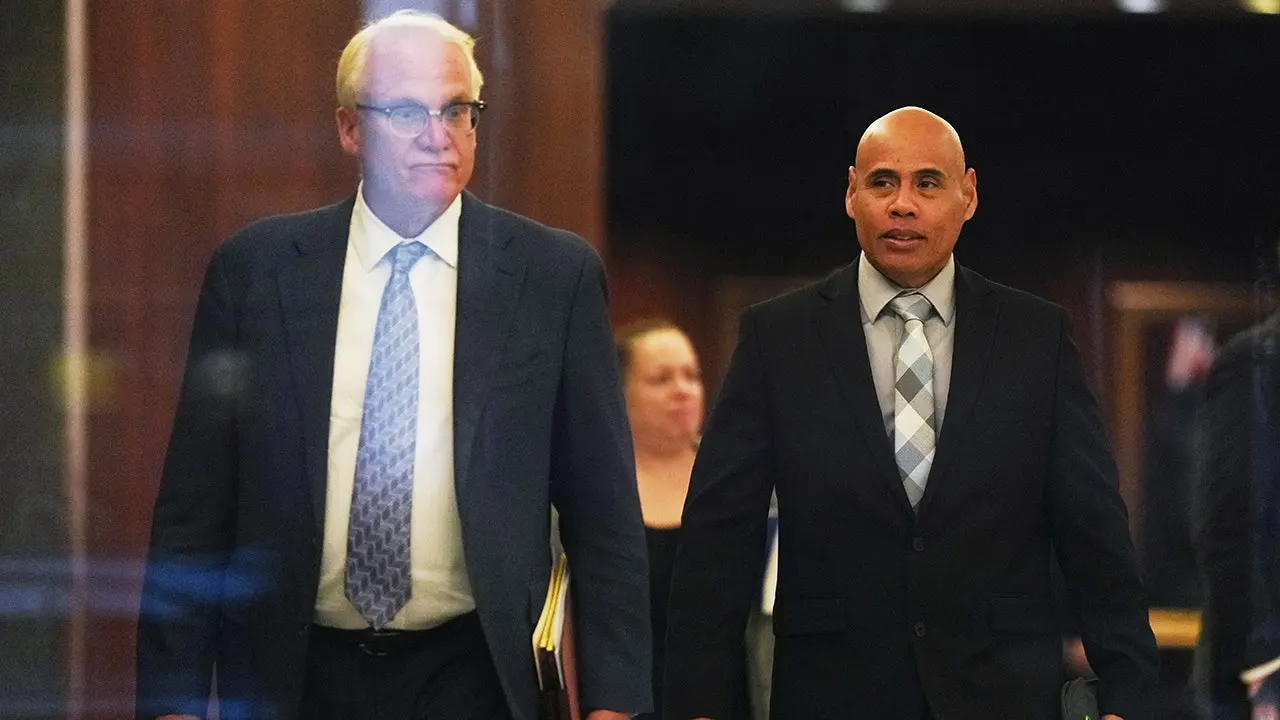
The sterile atmosphere of a federal courtroom in St. Paul, Minnesota, became the stage for a dramatic legal confrontation on Friday, as a U.S. Immigration and Customs Enforcement officer entered a plea of not guilty to serious federal charges. Christian Castro, a 52-year-old agent, stands accused of making false statements to the FBI, a charge that carries significant weight given the circumstances surrounding a January shooting in Minneapolis. The case has evolved into a complex legal and political flashpoint, touching on issues of federal authority, immigration enforcement, and the use of lethal force. As Castro stood before the judge, wearing an ankle monitor, the weight of the proceedings was palpable, a stark contrast to the routine nature of a typical court appearance. The judge’s instructions were clear and restrictive: Castro’s movements are now limited to the corridors between Minnesota and South Texas, and any interaction with law enforcement, no matter how minor, must be reported within 72 hours. After these conditions were laid out, he was released, stepping back into a world where his freedom, while physically intact, is now heavily circumscribed by the legal machinery set in motion against him.
The core of the accusation against Castro is a narrative that has shifted under the scrutiny of investigators. Prosecutors allege that Castro shot 24-year-old Julio Cesar Sosa-Celis in the leg, firing through the front door of a Minneapolis residence. The incident occurred during “Operation Metro Surge,” a Trump administration initiative that deployed thousands of federal agents to Minnesota as part of a broader crackdown on illegal immigration. In his initial account to investigators, Castro claimed he was under attack, asserting that he was being assailed with a broom and a shovel before he discharged his weapon. This version of events painted a picture of an officer in imminent danger, forced to defend himself against a violent confrontation. However, the prosecution’s case rests on a starkly different reality, one they argue is captured on surveillance footage. According to their evidence, the video contradicts Castro’s account, suggesting that the shooting was not a response to an immediate physical threat as he described. This discrepancy between the officer’s testimony and the recorded evidence forms the bedrock of the false statement charges, transforming a potential self-defense claim into an allegation of deliberate deception.
The legal journey leading to this courtroom appearance has been anything but straightforward, marked by a high-stakes standoff between state and federal authorities. Castro, a Texas resident, was held in custody in his home state for approximately 90 days before being transferred to Minnesota. This prolonged detention was not merely a matter of bureaucratic delay; it was the result of a direct political confrontation. Texas Governor Greg Abbott refused to sign an extradition warrant, a move that effectively blocked Minnesota authorities from taking custody of Castro. This refusal was a deliberate act of defiance, signaling a deep rift between the state and the federal government over the handling of the case. Governor Abbott’s stance was a powerful statement, suggesting that he believed the federal government, not Minnesota, should have primary jurisdiction. This political maneuvering delayed the legal process and added a layer of tension to an already volatile situation, highlighting how a single incident can become a proxy for larger battles over power and authority. Upon his release in Texas, Castro was fitted with the ankle monitor he wore in court, and was also required to surrender his passport and any firearms, a clear indication of the seriousness with which authorities view him.
The shooting of Julio Cesar Sosa-Celis did not occur in a vacuum; it was a direct consequence of a large-scale federal operation that had a profound impact on the Minneapolis community. Operation Metro Surge was part of a national effort to intensify immigration enforcement, sending a visible and formidable federal presence into cities across the country. In Minnesota, this operation resulted in sweeping arrests, but it also led to tragic outcomes, including the fatal shootings of two U.S. citizens. The operation’s aggressive tactics and its consequences have been a source of intense controversy, drawing criticism from local officials and community leaders who argued that federal agents were overstepping their bounds and creating an atmosphere of fear. The case against Castro, therefore, is not just about one officer’s alleged misconduct; it is a lens through which the broader consequences of such federal operations are examined. The presence of these agents, the arrests they made, and the violence that occurred all contribute to a narrative of a federal crackdown that some see as necessary for national security and others view as an overreach with devastating human costs.
The legal confrontation between Minnesota authorities and the Trump administration over who should handle Castro’s case underscores a fundamental constitutional question about the limits of federal power. Minnesota officials have argued that they have a clear right to prosecute Castro under state law for the shooting, which occurred within their jurisdiction. The administration, however, has contended that only federal authorities have jurisdiction over the case, a position that effectively seeks to shield the officer from state-level prosecution. This battle is not merely a procedural dispute; it is a clash over the very nature of federalism. The administration’s stance suggests a view that federal officers are answerable only to federal law, while state officials argue that no one is above the law of the state where a crime is committed. This dispute has drawn attention from legal experts and politicians alike, with Governor Abbott’s fiery rhetoric and refusal to cooperate serving as a rallying point for those who believe the federal government is overstepping its constitutional bounds. The resolution of this jurisdictional fight will have significant implications for how similar cases are handled in the future, setting a precedent for the accountability of federal agents.
Ultimately, the case of Christian Castro is a deeply human story, one that involves not just legal arguments but the lives of real people. On one side is Castro, a federal officer whose career and freedom are now in jeopardy, facing the daunting prospect of a trial on multiple counts that could result in significant prison time. On the other side is Sosa-Celis, a young Venezuelan man whose life was irrevocably altered by a bullet fired through his own front door. The case raises profound questions about the use of force, the credibility of law enforcement, and the lengths to which officers will go to protect their version of events. It also highlights the intense pressure and volatile environment in which federal agents operated during these immigration sweeps. As Castro navigates his restricted life, traveling only between two states under the watchful eye of an ankle monitor, the broader community watches and waits. The trial will not only determine his fate but will also serve as a test of whether the justice system can hold even those in power accountable for their actions. The story is a reminder that behind every headline about policy and politics, there are individuals whose lives are caught in the crossfire, their futures hanging in the balance of a legal process that is as much about human fallibility as it is about the rule of law.