






The Sassanian Shadow: How Tehran Frames a Fragile Truce as a Historic Triumph Over Washington
1. The Heritage of Defiance and the Modern Geopolitical Stage
As rumors of an impending diplomatic breakthrough between Washington and Tehran began to circulate through the corridors of international power, the Iranian foreign ministry chose to articulate its position not through the sterile language of modern diplomacy, but through the evocative imagery of ancient empire. Esmail Baghaei, the official spokesman for the ministry, took to social media to share a photograph of the monumental rock relief at Naqsh-e Rostam—an archaeological treasure carved into the cliffs of Fars province that depicts the Roman Emperor Valerian kneeling in abject surrender before the Sassanian King Shapur I. Alongside this potent historical visual, Baghaei penned a message that was clearly directed at the political and military establishment in Washington: “In the Roman mind, Rome was the undisputed center of the world. The Iranians shattered that illusion.” This deliberate invocation of antique triumph serves as a vivid window into the psychological framework of Iran’s leadership, who are aggressively casting the emerging parameters of a tentative cease-fire with the United States and Israel as a monumental strategic victory rather than a desperate retreat. Despite having endured a devastating economic chokehold and intensive military bombardment that threatened the structural integrity of its regional alliance network, Tehran is actively reshaping the narrative, presenting the halt in active combat operations not as a capitulation to Western pressure, but as a historic validation of their long-standing resistance against foreign hegemony. By comparing the contemporary military and economic might of the United States to the hubristic expansionism of ancient Rome, the Islamic Republic aims to bolster its domestic legitimacy and project an image of unyielding strength to its regional allies, signaling that even the most formidable global superpower could not force them to bend the knee.
2. The Mechanics of a Fragile Diplomatic Accord
The geopolitical landscape underwent a tectonic shift on Saturday when American and Iranian officials unexpectedly announced that a preliminary framework to end the devastating regional conflict had been largely negotiated, though both sides hastened to add that a final accord remains elusive. While the precise terms of this highly sensitive diplomatic document remain shielded behind closed doors, President Donald Trump offered a critical glimpse into the negotiations via a social media post, revealing that the reopening and safeguarding of the Strait of Hormuz—the vital maritime artery through which one-fifth of the world’s petroleum shipments pass—formed a foundational pillar of the tentative agreement. This development represents a startling evolution in the Trump administration’s foreign policy agenda, which only weeks prior was defined by uncompromising rhetoric demanding nothing less than the “unconditional surrender” of the clerical regime in Tehran. Instead of the total collapse of the Iranian state, Washington has been forced by the realities of dynamic warfare to engage with Tehran on a bilateral basis, tacitly acknowledging the Islamic Republic’s oft-repeated axiom that the volatile security architecture of the Middle East can only be stabilized through mutual negotiations rather than unilateral force. While critics of the administration argue that this represents a profound retreat from Washington’s maximalist goals, proponents of the deal suggest it is a pragmatic adjustment designed to prevent a catastrophic global energy shock and extract the United States from another open-ended conflict, even as the ultimate efficacy of the agreement remains contingent on how the final status issues are codified in the coming weeks.
3. Cultivating the Underdog Narrative in a War of Attrition
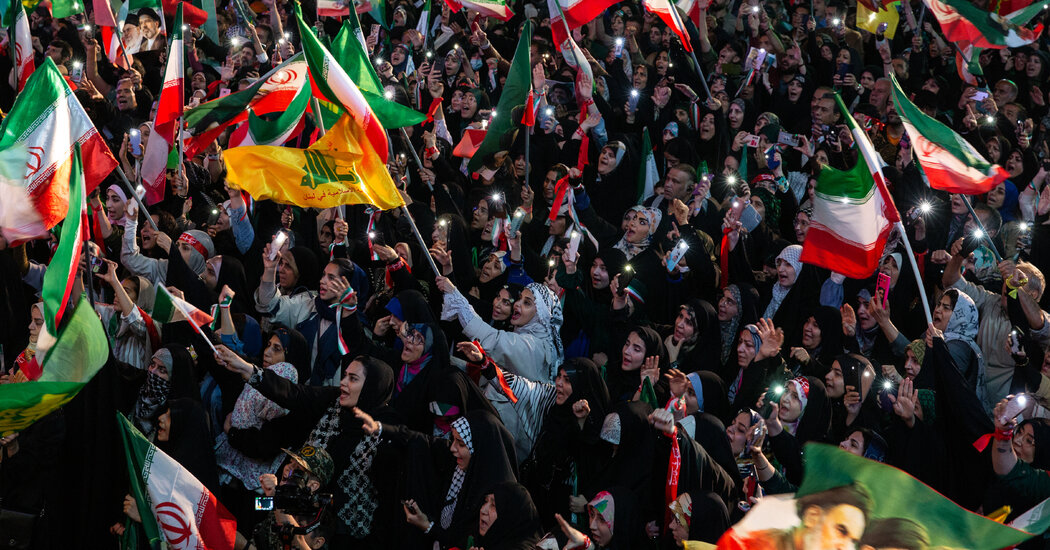
To understand how Iran plans to market this diplomatic detente to its citizens and regional proxies, observers must look to the deeply ingrained cultural narrative of defensive martyrdom and asymmetric defiance that has long sustained the Islamic Republic through decades of international isolation. According to Ellie Geranmayeh, a prominent geopolitical analyst and author of the European Council on Foreign Relations’ Iran Nuclear Monitor, the clerical leadership has a remarkably strong hand to play in portraying the outcome of this conflict as a definitive success to its domestic constituency. Geranmayeh points out that, from the perspective of Iran’s political base, the country successfully cast itself as the ultimate regional underdog—a isolated, sanctioned nation that nevertheless possessed the resolve to directly confront two nuclear-armed adversaries in the United States and Israel. Throughout the escalating crisis, Tehran consistently rejected President Trump’s maximalist demands to completely dismantle its nuclear infrastructure and dismantle its regional defense doctrine, demonstrating a willingness to bring the entire region to the absolute brink of total war on two separate occasions rather than succumb to bully diplomacy. This display of ideological endurance and military resilience has frustrated the loftiest ambitions of American and Israeli strategists, who had openly predicted that a sustained campaign of targeted assassinations—which succeeded in neutralizing much of Iran’s top military brass and its supreme leadership—would inevitably trigger the rapid collapse of the country’s clerical power structure.
4. Strategic Deterrence and the Deferred Nuclear Question
Perhaps the most striking aspect of the negotiated framework is what it fails to address, revealing the significant leverage Tehran managed to retain despite suffering immense tactical losses on the battlefield. Conspicuously absent from the reported terms of the preliminary agreement are any enforceable restrictions on Iran’s sophisticated ballistic missile programs, nor does the document lay out a concrete plan to dismantle the sprawling network of allied regional militias—collectively known as the Axis of Resistance—that continue to threaten Western interests across the Levant and the Arabian Peninsula. Furthermore, the highly contentious issue of Iran’s nuclear enrichment capabilities and its burgeoning stockpile of near-weapons-grade uranium appears to have been deliberately bypassed in this initial phase of diplomacy. Analysts like Ellie Geranmayeh suggest that some drafts of the diplomatic plan have systematically deferred these critical national security guarantees to a hypothetical “second phase” of negotiations, effectively allowing Tehran to preserve its nuclear hedging capabilities for the foreseeable future. In the maritime domain, this strategic ambiguity operates as a powerful mechanism of deterrence; as Farzan Sabet, an expert on weapons systems at the Geneva Graduate Institute, observes, Iran will continue to hold the metaphorical sword of Damocles over the global economy through its demonstrated capability to disrupt transit through the Strait of Hormuz. Sabet emphasizes that, in the short to medium term, the credible threat of launching sophisticated drone swarms or anti-ship cruise missiles against commercial vessels remains Iran’s primary geopolitical shield, ensuring that any perceived Western violation of the truce can be met with immediate, asymmetrical retaliation at sea.
5. Industrial Ruins and the Economic Calculus of Survival
Behind the triumphant state-sponsored propaganda and the defiant social media posts of its diplomats, however, lies an domestic reality of profound economic desperation that ultimately forced Tehran to the negotiating table. The Iranian economy, already hollowed out by years of suffocating international sanctions, has been pushed to the absolute edge of collapse by systematic military airstrikes that targeted the country’s vital industrial heartland, reducing state-of-the-art steel manufacturing plants, power grids, and sprawling petrochemical facilities to smoking ruins. These heavily bombarded industries represent the dual-use backbone of the Iranian state, driving both civilian employment and the supply chains necessary to sustain its conventional defense sector. Under these punishing circumstances, the potential acquisition of even temporary economic sanctions relief, targeted oil export waivers, or the unfreezing of billions of dollars in foreign bank assets represents a critical lifeline for the survival of the regime. Farzan Sabet notes that if the clerical leadership can successfully secure these vital financial concessions, they can easily package the economic relief to a war-weary public as a hard-won concession extracted from a retreating Western empire, thereby stabilizing the highly volatile domestic political situation and dampening widespread public discontent over hyperinflation and infrastructure collapse.
6. The Illusion of Victory in a Lose-Lose Paradigm
Ultimately, the true measure of this tentative diplomatic accord will depend on whether both nations can transition from a reactive cessation of hostilities to a sustainable, comprehensive treaty—a prospect that many seasoned analysts view with deep skepticism. Ali Vaez, the Iran Project Director at the International Crisis Group, warns against adopting a simplistic framework that categorizes the preliminary agreement as a clean victory for Tehran or a humiliating defeat for Washington, arguing instead that the prolonged conflict had descended into a destructive, lose-lose spiral for all parties involved. Vaez remains pessimistic about the feasibility of a second phase of negotiations, noting that the political polarization within both Washington and Tehran makes the hard compromises required for a permanent nuclear and regional security deal almost impossible to achieve. In this light, the current understanding is less of a triumphant peace and more of a highly volatile armed truce, one that leaves the core structural drivers of the US-Iranian rivalry entirely unresolved while merely hitting pause on an devastating war of attrition. While Iran’s state apparatus continues to project the image of Shapur I conquering Rome to justify its immense sacrifices, the blackened ruins of its industrial sectors and the unresolved nuclear threat suggest that any claims of absolute victory are merely a political mirage masking a deeply precarious stalemate.