






State Under Siege: The Abduction of a Chief of Staff and the Fractured Soul of Haiti
An Audacious Assault on State Authority: The Kidnapping of James Boyard
In a stark and terrifying demonstration of the complete breakdown of security in Haiti’s capital, James Boyard—a prominent police inspector general, celebrated academic, and newly appointed chief of staff to the Minister of Defense—was brazenly abducted on Thursday in Port-au-Prince alongside his wife and their six-year-old daughter, a United States citizen. The abduction occurred in broad daylight, catching the attention of both domestic authorities and international diplomats, with two sources close to the development confirming that the captors have already issued a substantial ransom demand for the family’s safe release. As a highly respected intellectual, professor of political science at the State University of Haiti, and the author of two definitive books on national security and sovereign defense, Boyard’s elevation to the inner circle of newly appointed Minister of Defense Mario Andrésol was widely seen as a rare glimmer of hope for a country attempting to rebuild its shattered administrative capacities. Yet, this brazen tactical strike by armed criminals directly against a high-ranking state official tasked with formulating the nation’s defense strategy demonstrates that the boundaries of immunity have completely dissolved in the capital. The targeting of a foreign national child—Boyard’s young daughter—adds a highly sensitive diplomatic dimension to the crisis, instantly drawing the interest of Washington and raising the geopolitical stakes of an already delicate security operation. For a metropolitan area long accustomed to systemic lawlessness, the kidnapping of the very individual charged with drafting the blueprint for gang eradication serves as a grim and undeniable signal that no level of state authority, academic prestige, or diplomatic proximity can offer a shield against the pervasive criminal enterprise holding the island nation hostage.
The Iron Grip of Ti Bwa: Inside the Criminal Empire of Christ-Roi Chéry
Haitian law enforcement officials have pointed the finger of blame directly at Christ-Roi Chéry—familiarly known in the underworld as “Chrisla”—the notorious commander of the heavily armed Ti Bwa gang, who is currently operating under stringent sanctions from both the European Union and regional bodies. While a spokesperson for the Haitian National Police formally stated that the department could not immediately disclose open investigation details, intelligence networks have long mapped Chéry’s sophisticated operational sphere, which dominates strategic transit pipelines on the southern outskirts of Port-au-Prince. The Ti Bwa gang has elevated extortion from localized street-level crime into a highly structured, parallel system of municipal administration, maintaining its vast arsenal and mercenary salaries by operating armed bypasses, imposing illegal tolls on commercial shipping, and taxing the movement of basic goods. For years, Chéry has wielded absolute, violent sovereignty over vital transport corridors, effectively cutting off the capital from the southern peninsula of the country and leaving the civilian population to navigate a landscape of terror and economic exploitation. The kidnapping of James Boyard and his family by a group of this caliber is not merely a crime of financial opportunity; rather, it represents a deliberate display of unchecked power designed to humiliate the state, demonstrating that these armed syndicates can capture, hold, and trade high-level public officials with complete impunity.
A Republic in Ruins: The Long Descent Into Sovereign Chaos
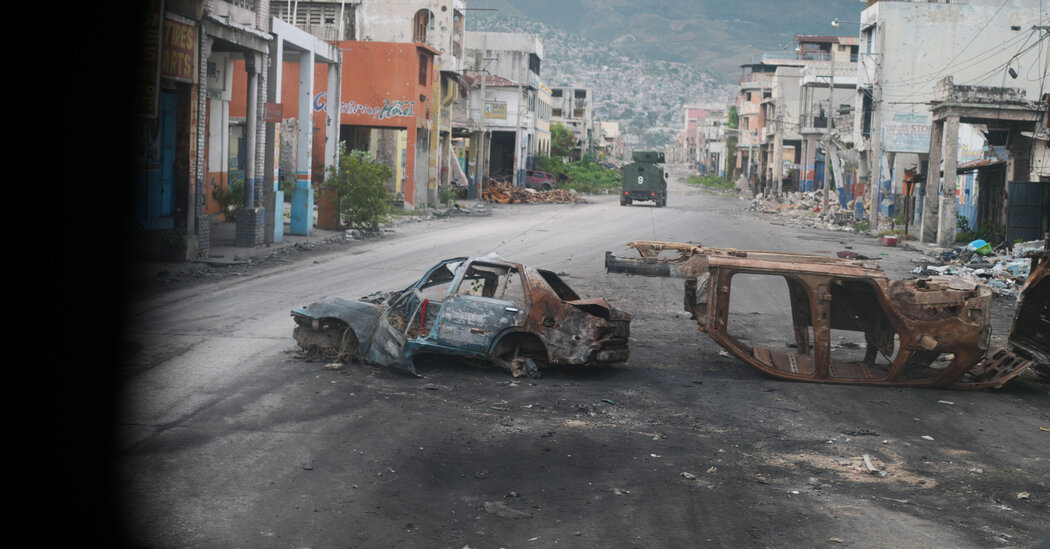
To comprehend the sheer audacity of Boyard’s abduction, one must trace the tragic trajectory of Haiti’s systemic collapse, which accelerated dramatically following the July 2021 assassination of President Jovenel Moïse inside his private residence. The vacuum left by Moïse’s death triggered an unprecedented power scramble among heavily armed federations, transforming Port-au-Prince into a patchwork of battlegrounds where coordinate gang coalitions now exert control over more than eighty percent of the municipal territory. The capital has transformed into a war zone: strategic highways are severed, critical maritime ports are blocked, and the main international runway has been forced into prolonged closures that cut off vital lifelines of humanitarian assistance. According to alarming reports compiled by the United Nations, this relentless gang warfare has resulted in the violent deaths of over 16,000 citizens since 2022, while forcing nearly 1.5 million internally displaced people to abandon their homes and seek refuge in squalid, makeshift camps. This unprecedented humanitarian crisis has systematically hollowed out the middle class, paralyzed the domestic economy, and turned once-vibrant urban communities into abandoned ruins, leaving the state without the human capital or institutional framework required to mount a sustainable defense.
The Kidnapping Industry: Human Lives as Capital in a Lawless Capital
In contemporary Port-au-Prince, the practice of kidnapping has evolved from a sporadic criminal venture into a highly sophisticated, multi-million-dollar industry that serves as the economic lifeblood for dominant street coalitions. According to United Nations data, at least 647 individuals, including young children and vulnerable women, were officially reported abducted last year alone, though the actual number is believed to be significantly higher due to widespread underreporting driven by public distrust of law enforcement. Armed syndicates routinely pull victims from public transportation, private vehicles, and suburban homes, calculating ransom demands on a variable scale determined by the victim’s socioeconomic status, political ties, or foreign citizenship. The targeting of high-profile foreign nationals and humanitarian staff is a common tactic, highlighted by the high-profile three-week captivity of five UNICEF employees last year, illustrating that gangs view international organizations and diplomatic passports as high-value assets. By capturing James Boyard’s family and leveraging his child’s U.S. citizenship, the Ti Bwa leadership is utilizing a high-risk, high-reward strategy designed to maximize their economic payout while sending a clear signal to both domestic reformers and foreign observers.
A Fractured Response: The Limitations of International Intervention
As the internal security apparatus of Haiti continues to struggle under the weight of this crisis, the international community, led by the United States, has faced immense challenges in designing and executing an effective response. Washington recently invested substantial diplomatic capital and material aid into organizing an elite, specialized gang suppression force, which is envisioned to eventually scale to a robust 5,500-person international security support mission comprised of military and police personnel from partner nations worldwide. However, the deployment of this international mission, primarily spearheaded by a contingent of Kenyan police officers, has run into significant logistical bottlenecks, funding shortages, and critical equipment deficits, leaving local security forces outgunned on the ground. This international force must operate in a highly complex urban environment, where gang networks are deeply embedded within local populations and possess intimate knowledge of the terrain, making traditional policing operations incredibly high-risk. The capture of James Boyard—the theoretical mastermind behind the integration of international support with the Ministry of Defense—severely disrupts the operational continuity of this security mission, exposing the deep vulnerabilities within the nation’s highest command centers.
The Death of Representation: How Violence Has Canceled Haiti’s Democratic Future
The ongoing campaign of violence has stalled any hope of restoring democratic governance through the ballot box, forcing transition administrators to indefinitely postpone general elections that had been tentatively scheduled for the end of this summer. State planners and international observers widely agree that conducting free, fair, and safe elections is impossible in a country where voters, poll workers, and candidates cannot travel past armed checkpoints without facing potential death or abduction. Consequently, Haiti finds itself locked in a destructive cycle: a lack of democratic mandate weakens the transitional government’s legitimacy, while the security vacuum prevents the administration from establishing the stability required to hold a credible vote. The abduction of Boyard, his wife, and his young daughter highlights the difficult path forward for the transitional government, underscoring that until basic security is restored, any plans for political reform will remain out of reach. Rebuilding the country will require more than just technical fixes; it demands a deep commitment to reclaiming public spaces, restoring the rule of law, and protecting the citizens who represent the nation’s future.