





A Tragedy in Mapleton: Five Children Lost in Devastating Rural Ontario Collision
The Anatomy of a Crucial Intersection: Friday Night Reconstruction
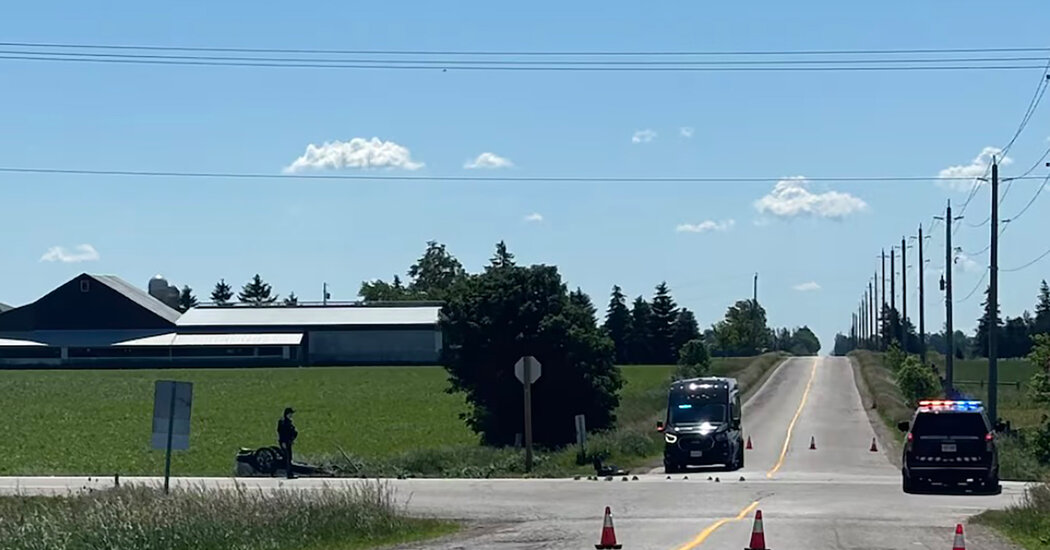
The quiet, agricultural landscape of Mapleton Township was shattered on Friday evening when a catastrophic collision at a rural intersection claimed the lives of five young children, casting a profound shadow of grief over Southwestern Ontario. At approximately 7:30 p.m., amid the deepening twilight of late autumn, emergency crews were dispatched to the crossing of 4th Line and Wellington Road 12, a rural crossing surrounded by flat, open farmland. A sport utility vehicle (SUV), occupied solely by its driver, collided with a passenger van carrying ten occupants, sending shockwaves through the local community and initiating a massive, multi-jurisdictional emergency response. Paramedics, volunteer firefighters, and provincial police officers found a scene of utter devastation, with both vehicles showing severe structural damage from the force of the impact. The suddenness and sheer scale of the wreck turned a routine transit into an immediate mass-casualty incident, demanding the mobilization of critical care air ambulances and heavy rescue equipment to extricate those trapped inside the mangled frames of the vehicles.
The Heartbreaking Human Cost: A Community Mourns the Youngest Victims
The true gravity of the crash became painfully clear during a Saturday afternoon media briefing, as authorities confirmed that five children—four girls and one boy, ranging in age from 4 to 12—had perished as a result of the impact. All five were passengers in the van, which was carrying a total of ten passengers when the collision occurred. In addition to the five young lives cut short, an infant and four adults who were riding in the same vehicle sustained critical injuries and were rushed to regional trauma centers, where they remain hospitalized in serious condition. The lone driver of the SUV was also transported to a medical facility with severe injuries. While the identities of the deceased children and the injured survivors have not been publicly disclosed out of respect for familial privacy, the scale of pediatric loss has sent shockwaves through the community, as families, first responders, and municipal leaders struggle to comprehend the sheer scale of the loss.
Understanding the Investigation: OPP Forensic Teams Seek Answers
[4th Line] (Minor Road / Stop Sign Control)
|
| Collision Zone
——-*——– [Wellington Road 12] (High-Speed Arterial)
|
|
In the wake of the collision, the Ontario Provincial Police (OPP) immediately secured the area, closing the intersection of 4th Line and Wellington Road 12 for over twelve hours to facilitate an exhaustive forensic investigation. Led by specialized Collision Reconstructionists and members of the Traffic Incident Management and Enforcement (TIME) team, investigators spent the night measuring tire marks, mapping physical debris fields, and analyzing the structural deformation of both vehicles to determine speed and point of impact. Dwight Thib, Chief Superintendent of the OPP’s West Region, expressed the collective heartache of the force at a press conference, calling the incident “an unimaginable loss” for the families involved and the broader community. Investigators are looking closely at environmental factors, including visibility levels at dusk, road conditions, and whether any mechanical failures or driver distractions contributed to the crash. Because rural crossroads often feature a mix of stopped and high-speed arterial yielding patterns, determining which vehicle had the right-of-way and whether stop signs were observed remains a primary focus of the official inquiry.
The Perils of Rural Infrastructure: The Battle for Safer Country Crossroads
This latest tragedy highlights a growing concern among traffic safety advocates regarding the design and safety of rural intersections across Ontario. Unlike urban grids, which utilize lower speed limits, streetlighting, and signalized intersections, rural highways like Wellington Road 12 are high-speed arterials where cars routinely travel at 80 km/h or higher, often intersecting with quieter side concessions controlled only by stop signs. At dusk, changing light conditions, combined with minimal municipal lighting and the potential obstruction of sightlines by roadside foliage or agricultural structures, significantly increase the risk of T-bone and high-velocity angle collisions. Safety experts emphasize that side-impact collisions at high speeds are exceptionally lethal because passenger vehicles have less structural reinforcement on their sides to absorb impact forces compared to front or rear bumper zones. This incident has reignited long-standing municipal discussions about the need for infrastructure upgrades on heavily traveled regional routes, including the installation of flashing warning beacons, larger stop signs, rumble strips on approach paths, or even modern roundabouts designed to naturally lower vehicle speeds.
The Psychological Toll on First Responders and the Caring Community
The emotional aftermath of this incident extends far beyond the immediate families of the victims, deeply affecting the first responders who were the first to arrive on the scene. Paramedics, volunteer firefighters, and OPP personnel from Wellington County faced a highly traumatic scene, working tirelessly under extreme stress to stabilize the injured infant and adults while realizing that five children could not be saved. Recognizing the deep psychological impact of such events, the OPP and local emergency service branches have activated Critical Incident Stress Management (CISM) teams to provide counseling and mental health support to these workers. Meanwhile, the close-knit agricultural community of Mapleton has begun to come together in quiet solidarity, offering community-led support, organizing vigils, and preparing resources to assist the grieving families. Local leaders have emphasized that healing from a tragedy of this magnitude will require long-term community support, peer-to-peer counseling, and a shared dedication to helping survivors through a challenging recovery process.
Looking Ahead: The Search for Accountability and Future Prevention
As the Ontario Provincial Police continue their meticulous investigation, regional leaders are calling for patience while safety investigators piece together the final seconds leading up to the crash. The final report, which will incorporate data from vehicle event data recorders, mechanical inspections, and witness testimonies, is expected to take several weeks to compile. Depending on the findings of the reconstruction teams, the investigation could result in serious traffic charges, mechanical safety mandates, or formal recommendations to the Ministry of Transportation regarding regional road upgrades. For Mapleton Township and the wider Wellington County district, the structural lessons learned from this intersection will influence local road safety initiatives for years to come. Yet, as road signs are evaluated and policy discussions begin, the primary focus remains on the five young lives lost, serving as a solemn reminder of the vital importance of driver vigilance and proactive highway safety measures on Canada’s rural roads.