

Missing person cases have a special kind of cruelty: they turn ordinary details—a missed call, an empty bed, a pair of shoes left by the door—into sources of unbearable worry. For Rebecca Smith, that cruelty began when her daughter, Alyssa Smith, disappeared after a trip to Chicago. Alyssa, a 24-year-old Chipotle Mexican Grill worker from Palatine, Illinois, was reported missing on Sept. 30, according to Palatine police. She had last been in contact with her mother three days earlier, on Sept. 27, and had traveled roughly 30 miles from her hometown to the Windy City with her boyfriend, Jacob Ray Caso. What should have been a short trip, the kind of spontaneous outing many young couples take for granted, turned into a nightmare when Caso returned home alone on Oct. 1. There was no dramatic argument, no warning sign, no clear explanation. Just a missing woman, a town holding its breath, and a family desperate for answers. In a statement that captures the raw anguish of her situation, Rebecca Smith wrote, “Until Alyssa is physically located and can speak for herself and tell authorities and her family that she is safe and does not wish to return home or have contact, we will continue to consider her missing and continue looking for her.” Those words are not just a procedural note; they are a promise from a mother who cannot and will not close the door on her daughter’s return. Every day that passes without news makes that promise harder to keep, but also more fierce, more determined, and more rooted in the hope that Alyssa will walk back into her life the same way she left it.
The small details released by police and relatives are now being studied like clues to a puzzle no one wanted to solve. Alyssa was last seen somewhere in Chicago’s 11th district, in an area described as “somewhere between Cicero, Pulaski and Madison.” It is a busy, crowded part of the city, full of traffic and foot traffic and the general noise of everyday life, and yet she vanished there without a trace. At the time of her disappearance, she was wearing a gray hooded sweatshirt, light khaki-colored pants, and white Adidas shoes. She also had a distinctive Pennywise clown tattoo on her shoulder—a detail that stands out sharply and may prompt someone to remember seeing her. Her mother’s last contact with her was on Sept. 27, and in the days that followed, the silence from Alyssa’s phone became a constant presence in the family’s life. They checked their screens, replayed old messages, and imagined every possible scenario, from the most hopeful to the most terrifying. Palatine police have said they received reports that Alyssa may have been spotted in Grant Park in downtown Chicago and also on Chicago’s West Side. These possible sightings offered brief flares of hope, but none have led to Alyssa. For a family already enduring too many uncertain days, each false start is another small heartbreak. They cling to the image of a young woman in a gray sweatshirt and light khaki pants, a woman who was not dressed for a life of headlines or mystery. She was simply living her life, unaware that the world would soon be searching for her, and that a simple trip to the city would change everything.
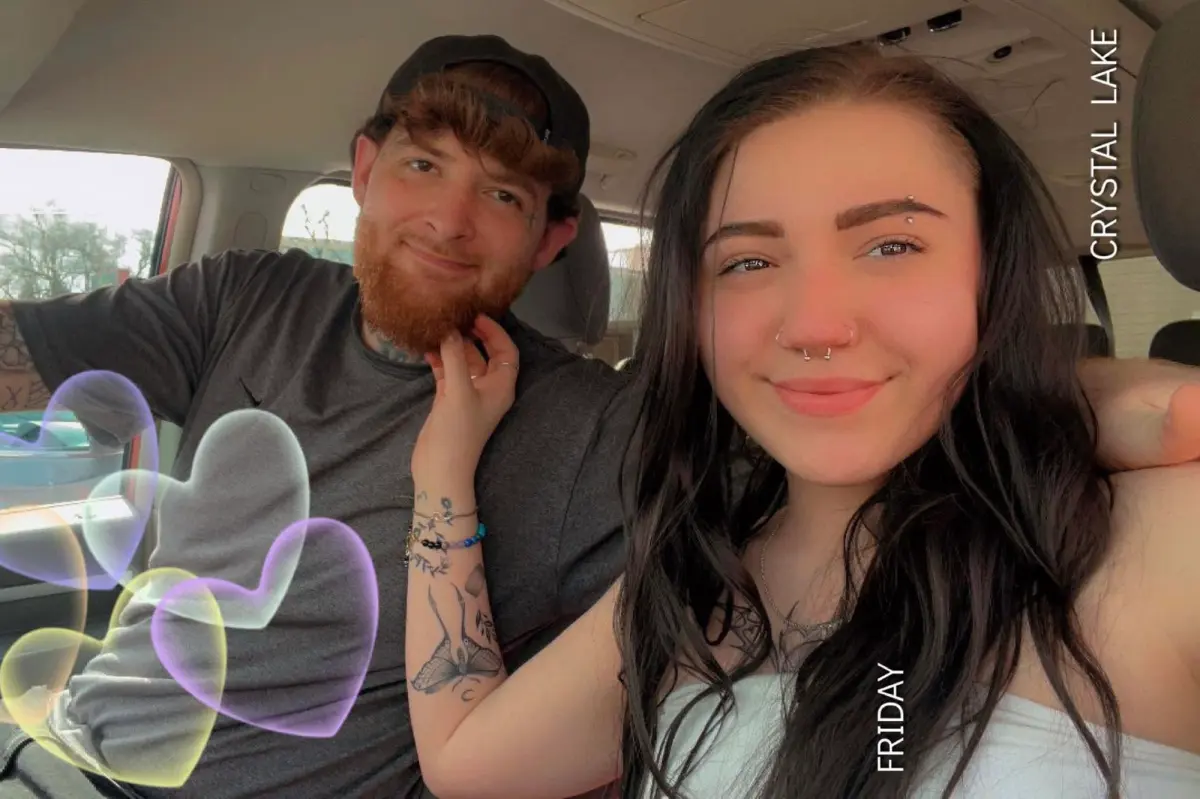
At the center of the story is Jacob Ray Caso, Alyssa’s boyfriend of roughly 20 months and a tattoo artist from Crystal Lake. According to Alyssa’s mother, Caso returned home without her on Oct. 1 and then searched the area where she was last seen. His social media activity has been an agonizing window into the wait. In one Facebook post, he wrote, “Time to come home b. No one is mad at you.” The sentiment is at once loving and helpless, the kind of message one sends into a void while hoping it reaches the person it is meant for. Caso has shared missing person posters and claimed that Alyssa was identified in a TikTok video, though he did not provide additional context. He also shared a post about an anonymous tip that Alyssa had been found alive, but Palatine police have not confirmed that information. The relationship between Caso and Alyssa has naturally become a subject of speculation, and police have not named anyone as a suspect. Still, the family’s own missing person poster included the unsettling detail that Alyssa may have had a “possible black eye,” though authorities have not confirmed the marking. That phrase has haunted many readers and has invited assumptions about Caso’s role in her disappearance. But the family has explicitly urged the public to stop debating the circumstances in online comments. They understand that the internet wants answers, but they know that theories can obscure the truth just as easily as they can reveal it. What they need is not armchair investigation; what they need is information, a credible sighting, a clue that will lead them to Alyssa.
The search, now in its second week, has become a strange mix of hope and noise. Online communities have rallied around Alyssa’s case, sharing her photo and trying to identify her from blurry stills and screen recordings. Some posts have claimed to know exactly what happened, while others have insisted that Alyssa has already been found. One post claimed an anonymous tip indicated she was alive, but no official source has verified it. Another post, shared by Caso, claimed Alyssa had been recognized in a TikTok video, but again, no clear evidence was provided. Palatine Police have offered no further update, leaving anxious family members and friends to sift through unsupported rumors and well-intentioned but unhelpful chatter. For Alyssa’s mother, this swirl of speculation has been painful to watch. In a heartfelt appeal, she asked social media users to stop debating the circumstances in the comments and to focus instead on finding her daughter. “Until Alyssa herself is found and her safety is confirmed, we will keep looking,” she wrote. The statement has become a kind of mantra for everyone involved in the search. It is a gentle rebuke to the rumor-mongering and a reminder that a missing person is not a topic for idle conversation. Behind every post, every share, every hashtag is a woman whose mother is waiting by the phone, whose friends are printing new flyers, whose co-workers are wondering if she will walk back through the doors of the Chipotle where she works and smile the way she always did. The uncertainty is the hardest part of all. Not knowing whether to grieve or to hope is an emotional exhaustion that no family should have to endure.
In the middle of the fear and confusion, the people who love Alyssa are trying to hold onto the person behind the missing person poster. She is not just a face on a flyer or a statistic in a news article. She is a 24-year-old woman with a job, a hometown, and a future that was supposed to be filled with ordinary moments. She had a quirky Pennywise clown tattoo on her shoulder, a detail that has become a kind of identifier but also a reminder of her personality. She wore gray hooded sweatshirts and white Adidas sneakers, the everyday uniform of someone who was not trying to be noticed, just to live her life. Her relationship with Caso, which had lasted about 20 months, included its own shared history. The couple had celebrated their first anniversary with love and laughter, and in a Feb. 2 Instagram post Alyssa wrote, “I can’t believe I’ve been with this old guy for a year now. I love you so much and I can’t wait to see what the future brings us.” The post is a snapshot of young love, full of affection and a little bit of playful teasing. It is also a reminder that Alyssa had plans, hopes, and dreams. She was not supposed to disappear. She was supposed to be at work, rolling burritos and smiling at customers, or at home scrolling through her phone, or with Caso planning their next date. Instead, her family is left to wonder what happened on that trip to Chicago, and whether they will ever get the chance to see her smile again in person, to hear her voice, or to simply know that she is safe.
As the search continues, the case of Alyssa Smith remains open and unresolved. Her family has refused to give up, and their resilience is both heartbreaking and inspiring. They have shared missing person posters, spoken to the media, and pleaded with the public to help bring Alyssa home. The authorities, for their part, have followed up on the reported sightings and anonymous tips, but they have not made any arrests or announced any breakthroughs. The public can still make a difference. Anyone who saw Alyssa in Chicago—near Cicero, Pulaski, or Madison, in Grant Park, or on the West Side—has a piece of the puzzle. Anyone who recognizes her gray hooded sweatshirt, her light khaki pants, or her Pennywise tattoo might know something that could lead to her. The family’s message is simple: do not argue in the comments; look at the pictures, think about the details, and call the police if you know anything. A young woman’s life is hanging in the balance, and every moment matters. Her mother’s words continue to echo: “Until Alyssa herself is found and her safety is confirmed, we will keep looking.” It is a vow that refuses to be broken by fear or fatigue, a testament to a mother’s love and a community’s compassion. In the end, this is not just a story about a disappearance. It is a story about the people who refuse to let that disappearance be the final word. They are still looking. They are still hoping. And they will not stop until Alyssa Smith is home, safe, and able to tell her own story.