






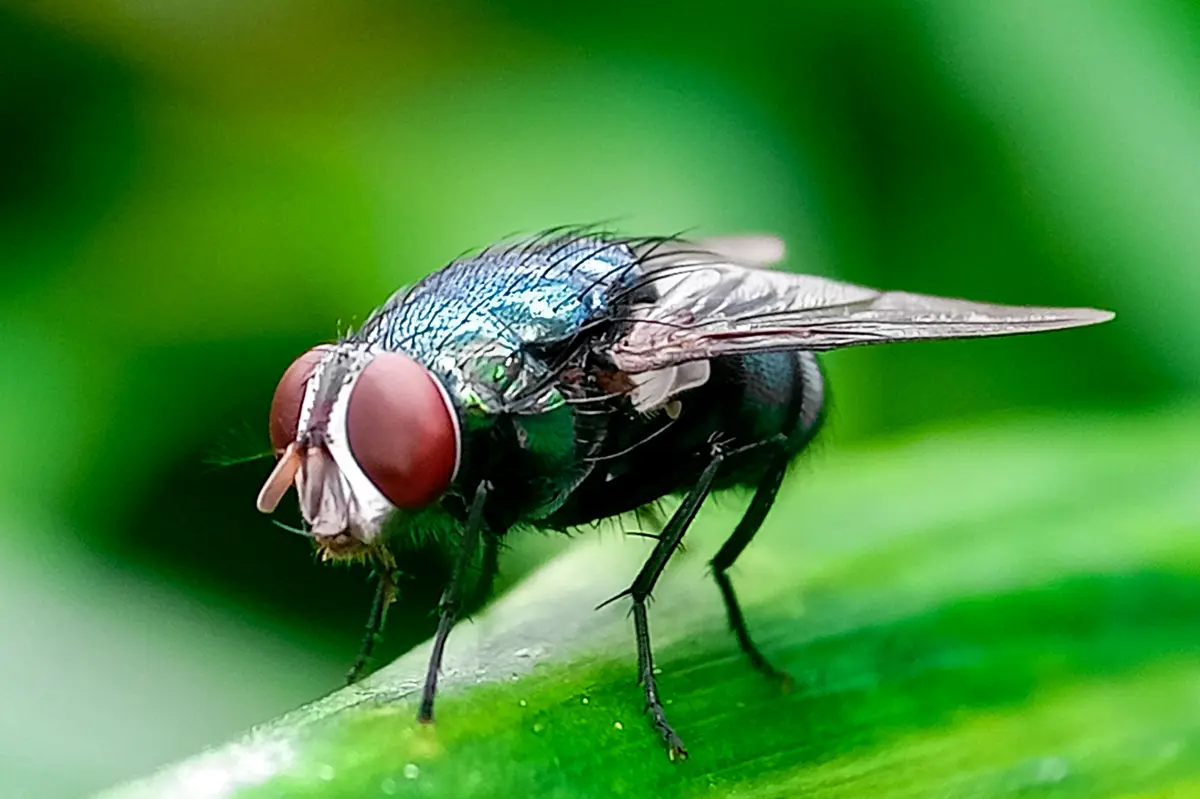
Deep in the brush country of Zavala County, Texas, where the relentless sun bakes the clay soil and generations of families raise livestock, an unsettling discovery has shattered the peace of the ranching community. It began during a routine morning inspection when a rancher noticed a vulnerable, three-week-old calf acting strangely, its mother hovering nearby with an anxious instinct. Upon closer inspection of the newborn calf’s umbilical area—which should have been healing clean and dry—the rancher discovered an active, writhing cluster of invasive larvae buried deep within the tender, living tissue. The horrific scene was reported to state authorities, and the United States Department of Agriculture (USDA) confirmed the community’s worst fears: the dreaded New World screwworm had officially breached the Lone Star State. This parasitic threat is not just another minor inconvenience; it is a living biological horror story driven by an invasive fly whose larvae possess an insatiable appetite for the living flesh of warm-blooded animals. To those who work the land, the confirmation of even a single case of Cochliomyia hominivorax feels like a sudden strike of dread. For decades, the screwworm had been kept at bay through intense international containment efforts, but its sudden reappearance in a defenseless calf serves as a stark, chilling reminder of nature’s relentless capacity to invade and destroy. The atmosphere across South Texas has shifted overnight from quiet productivity to high alert, as families who depend on livestock realize that a microscopic enemy has returned to their pastures, threatening to unravel their livelihoods with devastating speed. This is no longer a theoretical threat; it is an active, terrifying reality unfolding on the plains of Texas, demanding an immediate, aggressive, and highly coordinated response from both local communities and federal agencies who must work together to contain the outbreak before it gains a permanent, destructive foothold.
To truly understand the visceral panic surging through the agricultural community, one must look closely at the uniquely gruesome and unrelenting biology of the New World screwworm. Unlike the common blowflies and maggots that consume dead, decaying organic matter, the screwworm is an aggressive predator of the living. The female fly, drawn by the scent of fresh blood, seeks out virtually any open wound on a warm-blooded animal, whether it is a minor scratch from a barbed-wire fence, a tick bite, or the raw umbilical cord of a newborn calf. Once she locates a companion host, she deposits hundreds of eggs along the edge of the wound. Within hours, these eggs hatch into ravenous larvae equipped with circular rows of backward-facing spines that resemble a wood screw—a physical characteristic that gives them their name and allows them to anchor themselves firmly within the muscle tissue. They then begin to feed aggressively, burrowing deep into the living muscle and blood vessels. As they eat, they release enzymes that liquefy the surrounding flesh, pocketing deeper and deeper into the animal’s body while leaving only a deceptively small, weeping opening on the surface of the skin. If left untreated, this relentless internal consumption causes excruciating physical pain, systemic bacterial infections, and a slow, agonizing death for the host animal. The psychological impact on the ranchers who witness this suffering is profound, transforming animal husbandry into a tense struggle against a silent, flesh-eating invader. This threat extends far beyond cattle; any warm-blooded creature, including cherished family pets like dogs and cats, wild deer roaming the brush, and in rare, deeply disturbing circumstances, humans themselves, can become a host for this parasite, making the containment of this organism a matter of profound humanitarian concern. Ultimately, the horrific nature of the parasite makes it not just a threat to agricultural productivity, but a source of profound emotional distress for anyone who cares for living animals.
The sudden reappearance of this parasite in Texas is part of a larger, highly volatile trans-border crisis that is currently testing the limits of international agricultural defense. Just days before the Texas case was confirmed, Mexico’s Coahuila State, located a mere twenty-five miles south of the Rio Grande, reported its own confirmed screwworm case, signaling that the parasite was actively moving north along a perilous ecological corridor. In response to this imminent threat, a massive, highly synchronized mobilization effort has been launched by the USDA alongside Texas state agricultural officials who refuse to let the situation spiral out of control. Authorities have rapidly established a strict twenty-kilometer containment and surveillance zone centered around the infection site in Zavala County, creating a critical buffer line where animal movement is heavily scrutinized and restricted. Within this crucial quarantine zone, defensive strategies are being deployed with urgent precision: field technicians are setting up specialized biological traps to intercept and monitor fly populations, livestock transport restrictions are being rigidly enforced, and local ranchers are being educated on how to spot the early, subtle signs of an infestation before it becomes fatal. This heightened state of alert comes on the heels of a prolonged, year-long closure of the United States border to live cattle imports from Mexico, a drastic preventative measure that remains absolutely necessary to keep the parasite from establishing a permanent foothold in the American heartland. The human toll of maintaining this defensive wall is substantial, demanding exhausting physical labor from livestock inspectors, veterinarians, and local volunteers who must work under the unforgiving Texas sun, checking every animal, treating minor cuts with protective ointments, and standing as a living shield between their community and a biological catastrophe. From dawn until dusk, these dedicated individuals patrol the properties, knowing that any lapse could allow a female fly to cross the quarantine boundary and spark an uncontrollable ecological cascade.
Beyond the immediate animal suffering, the economic shadows cast by a potential screwworm outbreak are long, dark, and deeply threatening to the financial stability of the entire nation. Experts warn that a full-scale, uncontrolled outbreak of the New World screwworm could inflict a staggering $1.8 billion in damages to the Texas economy alone, a devastating blow to a state where the beef industry serves as a foundational pillar of community identity and financial survival. For a generation of ranchers already grappling with volatile weather, rising feed costs, and fluctuating market demands, the added cost of constant animal inspections, chemical treatments, and potential herd losses could push many multi-generational family farms into outright bankruptcy. Crucially, the shockwaves of such an infestation would travel far beyond the borders of Texas, directly affecting the kitchen tables of everyday American consumers. If the screwworm supply-chain disruptions shrink the national cattle supply, beef prices at grocery stores across the country—which are already inflated due to broader macroeconomic pressures—would likely skyrocket, making a basic source of protein unaffordable for millions of working families. This is why Dudley Hoskins, the Under Secretary for Marketing and Regulatory Programs, has publicly declared that protecting the livestock industry from this flesh-eating pest is a matter of absolute national security. By framing the struggle against this microscopic blowfly as a battle for national security, federal officials are acknowledging that the integrity of the food supply chain is just as vital to the stability of the country as defense against any conventional foreign military adversary, transforming the quiet work of a veterinary lab into a critical national defense initiative. The economic health of our country is inextricably linked to the well-being of these herds, making the fight against the screwworm a collective nation-wide struggle that affects every American household, from rural ranching outposts to major metropolitan areas.
In the face of this terrifying biological challenge, a powerful sense of community solidarity and shared responsibility has emerged across the region. Leaders like Texas Representative Don McLaughlin have issued rallying cries to the public, setting aside political divisions to emphasize that this is a moment for absolute unity and cooperation among local, state, and federal agencies. McLaughlin’s pledge to stand “lock step” with every available resource to fight what he described as a “horror” underscores the gravity of the situation. For the people living in and around Zavala County, this call to arms has transformed daily routines into exercises in hyper-vigilance. Neighbors are checking in on neighbors, sharing tips on wound care, and helping elderly ranchers inspect their livestock. This vigilance extends directly into the home; families are being urged to carefully monitor their domestic pets, such as dogs and cats, for any unusual skin irritation, scratches, or signs of discomfort, as these animals are equally vulnerable to screwworm infestation. Although human infestations are incredibly rare in modern history, the chilling knowledge that these parasites can feed on human tissue adds an undeniable layer of personal anxiety to the community’s response. Public health officials are urging residents to take no chances and to seek immediate medical attention if they detect any suspicious, non-healing skin lesions on themselves or their children. This shared vulnerability has fostered a deep, resilient bond among the residents of the borderlands, who understand that their safety, their animals’ health, and their local economy depend entirely on their ability to act as eyes and ears for the scientific teams working to trace the insect’s path, demonstrating the profound strength of rural communities when confronted with an existential crisis. Whether by sharing physical labor on neighboring ranches or raising awareness through local community groups, the residents of Zavala County are showing that communal solidarity is their most powerful shield against this biological threat.
Ultimately, while the discovery of the New World screwworm in Texas is a deeply sobering event, it is met with a legacy of scientific triumph and an unwavering determination to win this battle once again. Under Secretary Dudley Hoskins and his team are confident because the United States has successfully defeated this formidable pest before, most notably through the sterile insect technique (SIT)—a brilliant scientific strategy where millions of sterile male flies are released to mate with females, naturally collapsing the wild population without harsh chemicals. This rich history of scientific innovation provides a powerful blueprint for the current counteroffensive, giving researchers and agricultural specialists the confidence and tools they need to mount an effective defense. Proactive federal investments by the USDA in recent years, sparked by rising screwworm cases in Central America and Mexico, have provided the state with critical tools and diagnostic intelligence that bought valuable time ahead of this predicted incursion. The battle lines are now clearly drawn, and the USDA, alongside its dedicated partners, is wasting no time in deploying every resource at its disposal to eradicate the threat. As the scientific community mobilizes its laboratories and field technicians fan out across the South Texas brush, there is a shared, resolute belief that human ingenuity and rigorous scientific application will prevail. The ranchers of Texas have faced devastating droughts, brutal winters, and economic hardships throughout their history, and they stand ready to face this latest adversity with the same indomitable spirit, secure in the knowledge that they have the backing of a nation committed to protecting its agricultural heritage and securing its future. This is a fight to save an individual calf, protect ranching profits, preserve a cherished way of life, and ensure that the rolling pastures of the American West remain safe, healthy, and prosperous for generations to come.