





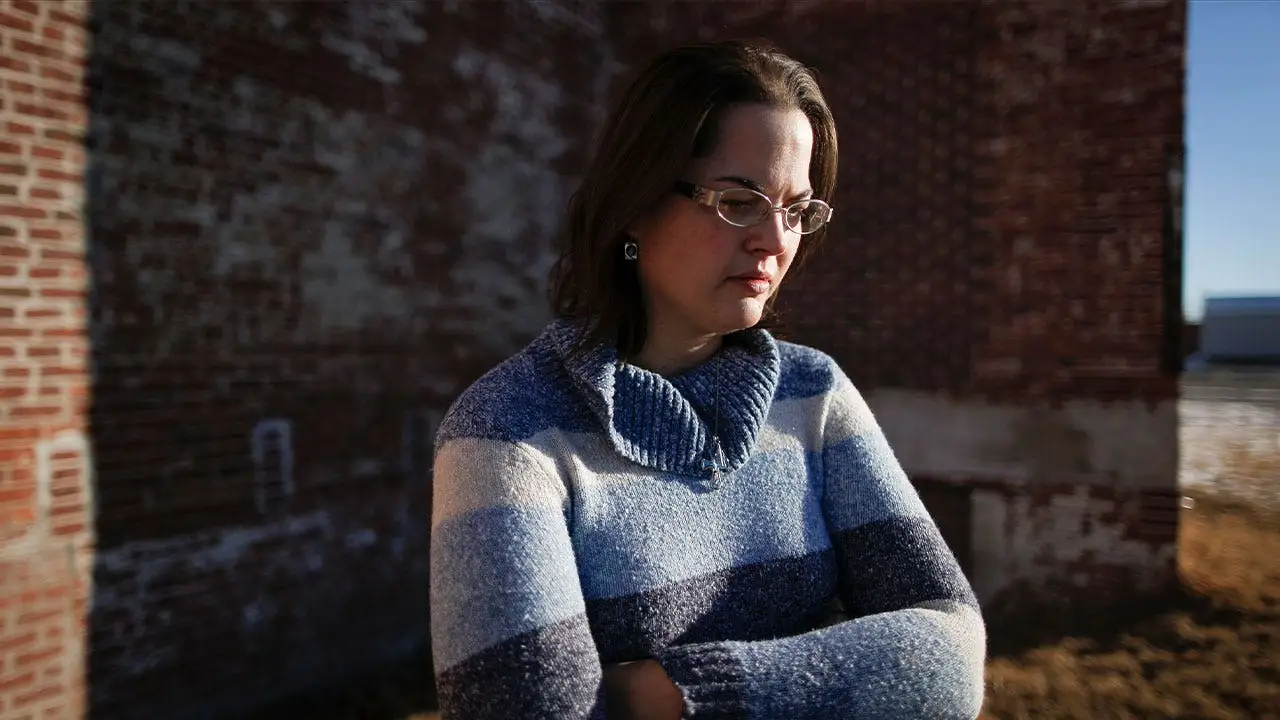
The human mind is a vulnerable vessel, uniquely susceptible to the cumulative weight of inherited trauma, public scrutiny, and the crushing pressure of a past one did not design. For Kerri Rawson, this burden has been an omnipresent, suffocating reality since February 2005, the fateful moment she learned her devoted, church-going father, Dennis Rader, was actually the infamous “BTK” serial killer who had terrorized Wichita, Kansas, for decades. In the twenty years following that world-shattering revelation, Kerri chose a path of brave vulnerability, transforming herself from a devastated survivor into a bestselling author and an ardent, passionate advocate for the victims of violent crime. Her memoir, A Serial Killer’s Daughter: My Story of Faith, Love, and Overcoming, served as a beacon of hope for countless individuals trying to navigate their own dark corridors of grief and trauma. Yet, beneath the polished exterior of a public advocate and a resilient mother lay the enduring, invisible fractures of a mind carrying a legacy of unimaginable horror. The delicate balance of her healing journey was recently laid bare in a heartbreaking public domain, revealing that even the strongest champions of survival can find themselves overwhelmed by the agonizing echoes of the past, culminating in a severe mental health crisis that has temporarily fractured her family.
The painful reality of her internal struggle came to a head on a turbulent Sunday, January 5, 2025, in Altamonte Springs, Florida, when the psychological dam holding back decades of trauma appeared to break entirely. According to police records and court filings, a deeply distressed Kerri summoned her ex-husband, Darian Rawson, to a local police station, gripped by a terrifying, distorted perception of reality that is all too common in severe cases of post-traumatic stress and acute mental health episodes. Swept away by overwhelming panic, Kerri reportedly claimed she possessed psychic abilities that revealed their two teenage children were in imminent, catastrophic danger of being murdered that very morning. When authorities attempted to de-escalate the situation, the panic only deepened; Kerri contacted 911 to report a fabricated active-shooter situation at a nearby apartment complex, claiming that shots had been fired and multiple people were dead. While emergency responders rushed to the scene only to find the family completely safe and unharmed, the episode highlighted a tragic truth: to a mind warped by trauma, the imaginary threats can feel as vivid, terrifying, and immediate as the real-world horrors her father once inflicted. Authorities eventually located Kerri at the Orlando International Airport, leading to her voluntary self-admission and subsequent detention under Florida’s Baker Act, a legal measure designed to provide temporary, involuntary mental health examinations for individuals deemed a danger to themselves or others.
For her ex-husband, Darian Rawson, the frantic events of that winter morning forced him into a position of agonizing conflict, balancing his lingering care for the mother of his children with the primal, non-negotiable duty to protect their teenagers. In the wake of her hospitalization, Darian made the difficult decision to file for a temporary domestic violence injunction, a legal maneuver that highlights the collateral damage of severe mental health crises on innocent loved ones. A Florida judge granted the petition, temporarily awarding Darian sole custody of their two children and placing strict, painful boundaries around Kerri’s life, including banning her from their family home, their children’s school, and denying her physical contact with the family’s beloved pets. Under the current legal order, Kerri’s access to her teenage children is strictly limited to monitored electronic communication, a devastating blow for a woman who has spent her entire adult life trying to build a normal, safe, and loving environment far away from the shadow of the BTK killer. When the court documents surfaced, they painted a sterile, cold picture of the advocate, with one police report describing her as an individual known to make “inaccurate and fabricated statements” due to ongoing psychiatric issues, presenting a heartbreaking contrast to the eloquently spoken, deeply rational woman the public had grown to admire on television screens and book tours.
The stark duality between Kerri Rawson’s public persona as a pillar of strength and her private battle with psychological torment illustrates the profound toll of long-term trauma on the human psyche. For years, she worked tirelessly to humanize the victims of violent crimes, using her unique position as a serial killer’s daughter to validate the pain of those left behind and to demand dignity for the forgotten casualties of monsters. Yet, the very work that gave her purpose also kept her tethered to the gruesome details of her father’s crimes, constantly reopening wounds that perhaps never had the proper space to close. Public advocacy is often a double-edged sword; it demands that survivors repeatedly revisit their darkest moments for the benefit of others, leaving them vulnerable to the sudden, unexpected resurgence of buried panic. The recent events, including allegations by Darian that Kerri violated the injunction by repeatedly reaching out despite the strict no-contact order, reveal a woman desperately reaching through a fog of confusion, longing for the comfort of her family while her mind remains trapped in a defensive state of hyper-arousal. This tragic turn of events reminds us that survivors of extreme trauma are not immune to breaking under the weight of their own histories, and that true healing is a messy, non-linear process that cannot always be managed under the demanding glare of the public eye.
To fully understand the gravity of Kerri’s present crisis, one must look back at the dark, poison-filled legacy of Dennis Rader, a man who lived a carefully curated double life in the quiet suburbs of Wichita, Kansas. For nearly three decades, Rader operated as a respectable pillar of his community—serving as a Boy Scout leader, his church council president, and a diligent local compliance officer—while secretly operating as the “BTK” strangler, a sadist who bound, tortured, and murdered ten innocent people, including entire families and young children. When he was finally unmasked and arrested in 2005, pleading guilty to his heinous deeds before being sentenced to ten consecutive life terms, he did not just destroy the lives of his victims’ families; he also drop-kicked his own wife and children into a psychological wasteland of confusion, guilt, and profound betrayal. Kerri was forced to grapple with the horrifying realization that the father who had tucked her into bed and taught her to fish was a ruthless predator, leaving her with an inheritance of genetic dread and societal curiosity. Her current struggle is a powerful, sobering reminder that the damage inflicted by serial killers does not stop when they are locked behind bars; the toxic ripples of their violence continue to crash over subsequent generations, claiming peace of mind, stability, and family unity decades after the physical crimes have ceased.
Ultimately, this sad chapter in Kerri Rawson’s life should not be viewed through a lens of judgment, tabloid sensationalism, or controversy, but rather through a lens of deep empathy, compassion, and a renewed understanding of mental health. It is a story of a brave woman who ran out of strength, whose nervous system, battered by twenty years of fighting her father’s shadow, finally collapsed under a perceived threat she could not control. As she navigates the difficult road of clinical recovery, legal boundaries, and the long process of rebuilding trust with her children and ex-husband, she symbolizes the countless silent survivors who struggle privately with deep-seated mental illness. The legal filings and police reports, though clinical and harsh on their surface, represent a desperate cry for intervention and safety for a family caught in the crosshairs of generational trauma. It is the hope of those who have followed her journey that away from the cameras, the media courtrooms, and the heavy burden of her father’s name, Kerri Rawson can receive the profound help, peace, and quiet grace she needs to heal her own wounded soul, allowing her family to one day find their way back to a place of safety and mutual understanding.