

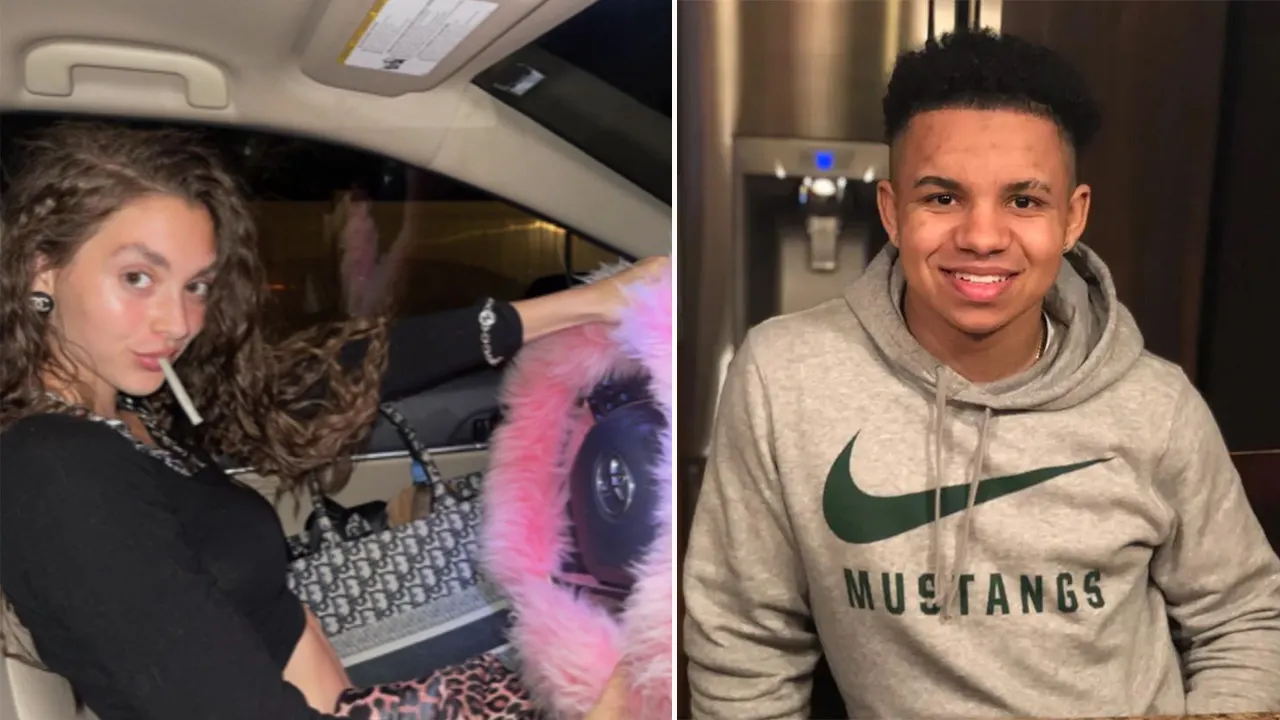
The devastating collision that shattered the quiet morning in Strongsville, Ohio, on July 31, 2022, forever altered the trajectories of three families and left a permanent scar on a community. Dominic Russo, a vibrant twenty-year-old with his whole life ahead of him, and Davion Flanagan, a nineteen-year-old passenger whose promising future was cut tragically short, lost their lives when the Toyota Camry driven by seventeen-year-old Mackenzie Shirilla slammed violently into a brick building. Today, at twenty-one, Shirilla is no longer just a teenager with a turbulent personal life; she is a convicted killer serving a double life sentence, her identity reduced to a state prison number at the Ohio Reformatory for Women. Yet, the raw human tragedy of that fateful morning has once again captured the public imagination, brought back into the societal spotlight by the Netflix docuseries The Crash. This media resurgence has reopened unhealed wounds, forcing the families of the victims to relive the worst day of their lives while prompting a fascinated public to dissect the thin, volatile line between a horrific teenage accident and a calculated act of cold-blooded murder. The case remains a haunting reminder of how quickly youthful passion, instability, and tragedy can collide, leaving behind an empty void that no courtroom verdict or documentary can ever truly fill.
The physical reality of the crash itself was terrifying, painting a grim picture of destruction that first responders encountered at 6:15 a.m. along Alameda Drive. The wreckage was so severe that emergency crews had to mechanically extricate Russo and Flanagan from the mangled steel of the Camry, only to pronounce them dead at the scene, while a critically injured Shirilla was flown by helicopter to a nearby medical center. Initially, local authorities and the medical examiner’s office classified the crash as a devastating but routine traffic accident—a tragic mistake made by an inexperienced teenage driver. However, as investigators began digging deeper into the vehicle’s onboard telemetry and data from the Life360 app, a far more sinister narrative emerged. The data revealed that the Camry had accelerated to a staggering ninety miles per hour in a modest thirty-five-mile-per-hour zone, with the event data recorder showing that the accelerator pedal was depressed to one hundred percent capacity with absolutely no application of the brakes in the seconds leading up to the impact. This chilling forensic evidence prompted police to formally request that the Cuyahoga County Medical Examiner’s Office change the official manner of death from accidental to homicide, transforming a painful local tragedy into a high-stakes criminal prosecution that would captivate the nation.
At the heart of the prosecution’s case was a deeply toxic, volatile relationship between Mackenzie Shirilla and Dominic Russo, a pairing characterized by intense arguments, emotional instability, and a dangerous cycle of codependency. Prosecutors argued passionately at trial that Mackenzie, nicknamed “hell on wheels” by the state, deliberately weaponized her vehicle as a tool of murder and suicide to permanently end her tumultuous relationship with Russo on her own extreme terms. In this narrative of domestic rage, Davion Flanagan was painted as a tragic, unintended victim—a friend who merely took a seat in the back of the car, completely unaware that he was stepping into a rolling powder keg. The courtroom became a theater of raw grief as the victims’ families sat through agonizing testimonies detailing the couple’s history of domestic friction, presenting Mackenzie not as a confused teenager who lost control of her vehicle, but as an angry, manipulative young woman who decided if she could not have peace in her relationship, she would orchestrate an explosive, final exit that spared no one inside the car.
Now stripped of her freedom and the chaotic social life that defined her teenage years, Mackenzie Shirilla’s daily existence has shrunk to the highly structured, sterile confines of the Ohio Reformatory for Women. Prison officials recently confirmed that Shirilla has transitioned into the institution’s labor force, securing a job as a food service worker—a role that forces her to adjust to the mundane routines of prison operations far removed from the dramatic narratives broadcast to millions on Netflix. While public information officers have declined to share specific details regarding her daily shifts, citing state security and public records exemptions, the reality of her job highlights the stark transition from her prior life of privilege and youthful rebellion to one of mandatory state labor and strict compliance. For Shirilla, who is serving two concurrent sentences of fifteen years to life, washing dishes, prep cooking, and serving meals to fellow inmates represents her new normal, a quiet and monotonous reality where she must contemplate the lives cut short by her actions while the world outside continues to debate her guilt and her character.
Even as she serves her time, a new legal battle is brewing behind the scenes, centering on a complex medical condition that her defense team argues was critically neglected during her original trial. In a recent appeal filed with the Ohio Supreme Court, Shirilla’s new attorneys contend that her previous representation failed her by neglecting to properly investigate and present her diagnosis of Postural Orthostatic Tachycardia Syndrome (POTS). POTS is a medical condition that affects blood flow and can cause rapid heart rates, severe lightheadedness, and sudden episodes of syncope, or fainting, particularly under stress. The defense argues that the condition was only cursorily mentioned during her trial, asserting that her previous lawyers should have secured medical experts to explain how a sudden POTS-induced blackout could have caused Shirilla to lose consciousness behind the wheel, explaining why her foot remained heavy on the accelerator without any attempt to brake. By framing the crash not as a malicious double murder born of romantic rage, but as an uncontrollable medical emergency, this appeal attempts to rehumanize Shirilla as a victim of her own physical fragility, offering a desperate sliver of hope for a retrial.
However, the pursuit of this medical narrative does little to sway the resolve of prosecutors or ease the profound sorrow of the families who are left to navigate life without Dominic and Davion. Cuyahoga County Prosecutor Michael O’Malley has remained steadfastly unmoving, declaring without reservation that Shirilla is a murderer who intentionally took two innocent lives, a stance mirrored by many who believe the telemetry data and the toxic history between the couple speak far louder than any retroactive medical defense. As the Ohio Supreme Court weighs the merits of her appeal, the case stands as a painful monument to the collateral damage of youthful volatility and unfinished stories. For the families of the victims, no legal maneuver, medical diagnosis, or true-crime documentary can restore the laughter of their lost sons, leaving them trapped in a cycle of grief while Mackenzie Shirilla serves food in a prison cafeteria, forever connected to a split-second decision that destroyed three lives in a flash of twisted metal.