





The Nightmarish Scene on the Runway
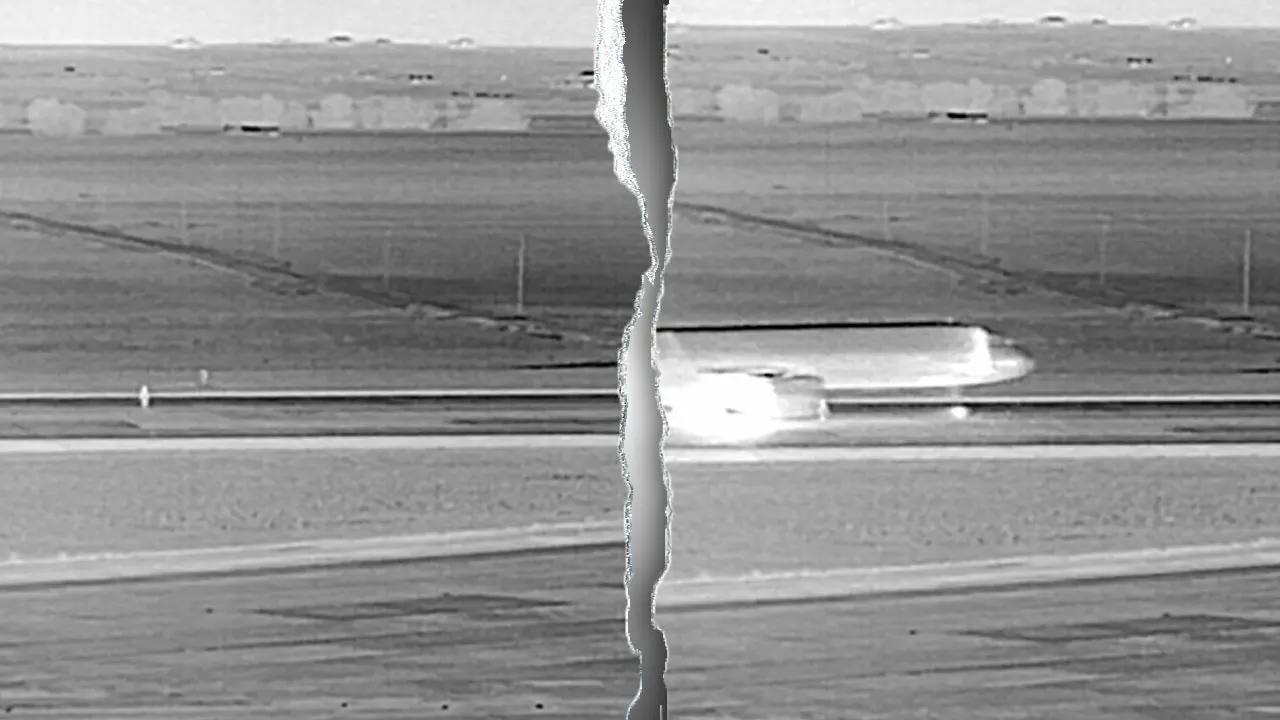
Imagine the cold, desolate expanse of Denver International Airport late on a Friday night, where the usual hum of activity gives way to an eerie quiet. It’s around 11:19 p.m., and Frontier Airlines Flight 4345 is poised for takeoff on Runway 17L, its engines roaring to life in anticipation of lifting off into the dark sky. But fate has a cruel twist in store. Newly released surveillance footage, captured in haunting thermal imaging, reveals a shadowy figure—a person who chose to trespass—scaling a barbed-wire perimeter fence with surprising agility. This isn’t some adrenaline-fueled act of mischief; it’s a human being, unidentified and alone, stepping into the path of certain danger. Dressed in what seems ordinary clothing, they wander directly onto the tarmac, oblivious or uncaring about the behemoth aircraft hurtling toward them. The clip, obtained by KDVR, shows the vivid red outline of their form standing in stark contrast to the cooler surroundings, a human silhouette against the indifferent machinery of aviation. As the pilot, unaware until the last second, strives to complete takeoff procedures at high speed, the inevitable collision occurs. Transportation Secretary Sean Duffy described it succinctly on X: “The trespasser on the runway was then struck by Frontier Airlines Flight 4345 during takeoff at high speed. The pilot stopped takeoff procedures immediately.” In that moment, what was meant to be a routine flight turns into a tragedy, highlighting how vulnerable we humans are to the forces of modern technology and rigid schedules. The footage isn’t just a recording; it’s a window into a life cut short, reminding us of the fragility of existence when curiosity or desperation leads someone to defy barriers designed for safety. You can almost picture the trespasser’s perspective, perhaps driven by some unspoken crisis—homelessness, mental turmoil, or sheer recklessness—breaching that fence not fully grasping the lethal consequences. Airports like Denver’s are vast fortresses, but on a quiet night, a determined individual can breach them, turning a secured space into a place of peril. This incident underscores the tension between human wanderings and mechanical precision, where one wrong step can alter everything.
The footage paints a grim picture of the impact, showing the plane’s massive wheels and powerful engines in motion, with the trespasser caught in their trajectory. Thermal imaging captures the heat from the jet’s underbody, and just seconds before impact, the person’s outline freezes in place, a testament to their final moments of realization. Experts might say the plane was moving at over 150 knots during takeoff roll, but in human terms, it’s the raw force of a speeding train bearing down on an unprotected pedestrian. The pilot, focused on the controls and checklists, couldn’t react in time—their training emphasizes safety protocols, but this was an unforeseeable intrusion. Once struck, the plane shuddered, and evidence suggests the individual was partially drawn into one of the engines, a horrifying fate that’s hard to comprehend without imagining the sheer violence. Some reports indicate the trespasser might have been under the influence or disoriented, perhaps wandering due to intoxication or a crisis, which humanizes the act: not malice, but a tragic misstep. Airports employ stringent measures—perimeter patrols, security teams, and advanced surveillance—to prevent such breaches, yet this slips through, prompting reflection on how societal issues like homelessness intersect with public spaces. Imagine the airport workers monitoring those cameras, their routine shift interrupted by a blur on the screen, hearts racing as they alert authorities. It’s a sobering reminder that behind every policy and procedure, real lives are at stake. The trespasser’s identity remains a mystery, shrouded in anonymity, which adds to the story’s poignancy—were they a local resident, someone down on their luck, or seeking shelter in a world turning its back? As the plane screeched to a halt, the lights of emergency vehicles began flashing in the distance, transforming the runway from a launchpad to a crime scene. This wasn’t just an accident; it was a life story ended in an instant, making us ponder how small decisions can cascade into irreversible disasters. We, as humans, often romanticize escapes and adventures, but this trespass echoes a darker truth about isolation and unruly forces.
In the immediate aftermath, chaos unfolded with the efficiency of trained responders, but the human cost was palpable. The plane experienced a brief engine fire, sparked by the collision, which officials quickly extinguished, avoiding what could have been a far worse catastrophe. Picture the cockpit crew, adrenaline pumping, making split-second decisions to abort takeoff, their voices steady over the radio despite the terror. First responder radio traffic, released by KDVR, captures the raw, unfiltered horror: “Runway 17L is closed. I have limbs on the runway. I believe the aircraft struck an individual.” Those words, chilling and direct, strip away bureaucracy to reveal the visceral reality—limbs scattered, a body consumed by machinery. It’s not just about the trespasser; there were injuries onboard too. Twelve people sustained wounds, with five transported to hospitals, underscoring how one person’s reckless action ripples outward, injuring strangers in an enclosed cabin high above the ground. Passengers, buckled in for what they thought was a normal flight, suddenly faced turbulence of a deadly kind, their trust in aviation’s safety shattered. The plane’s occupants—families, business travelers, weary late-night fliers—endured the shock, evoking empathy for those who escaped but carry the trauma. ABC News reported that the trespasser was at least partially ingested by the engine, a graphic detail that forces us to confront the brutality of industrial might against flesh. It’s a reminder of humanity’s scale next to technological giants; we build machines for speed and safety, yet they devour the unprepared. The night air must have been thick with the acrid smell of smoke and the wail of sirens, as responders swept the runway, piecing together clues from the debris. This incident, while isolated, echoes similar tragedies worldwide, where runways become battlegrounds for human folly. We can empathize with the first responders, who witness such scenes regularly, hardening themselves against the pain yet carrying the weight. In humanizing this, think of the loved ones the trespasser left behind—perhaps parents, friends, or siblings now grappling with unanswered questions amidst grief.
Delving deeper, the security lapses reveal flaws in a system designed to protect. A Denver Airport spokesperson noted that regular patrols by security teams and Denver Police cover the perimeter, yet this individual scaled the fence and was struck within two minutes—a startlingly short timeframe illustrating the audacity or desperation involved. Imagine the trespasser, in the dead of night, testing the limits of that barbed wire, motivated by who knows what internal demons. Was it a cry for attention, a misguided protest against societal exclusion, or simply poor judgment amplified by fatigue? The airport’s subsequent statement on X reassured that “the fenceline has been examined and found to be intact,” downplaying breach but acknowledging the need for vigilance. This humanizes the response: officials aren’t distant entities but concerned professionals saddened by the outcome, as expressed in their sympathies for “those involved.” Contrasting this with another recent incident—a driver plowing through a gate, sneaking onto planes before a takedown—highlights a pattern of brazen intrusions at Denver’s hub. It raises questions about mental health support at airports or outreach for vulnerable populations, rather than just increased patrols. We, as observers, feel a mix of anger and sorrow; anger at the trespasser for endangering others, yet sorrow for the life extinguished without apparent malice. Airports are gateways for dreams—vacations, reunions, fresh starts—but this breach tainted one flight’s promise. The 12 injured onboard might include someone with a special reason for flying that night, their plans derailed by another’s shadow. In broadening the lens, we see how societal factors like economic hardship push people toward risky behaviors, making us question our collective responsibility. The radio recordings add a layer of human urgency, with responders using everyday language to convey catastrophe: “I have limbs on the runway.” It’s raw, unpolished, pulling us into the emotion of the moment. This isn’t cold data; it’s a story of lives intersecting violently, urging better prevention and compassion.
As investigations kick off, led by the NTSB, FAA, and Frontier Airlines, the focus shifts to prevention to avert future horrors. Comforting to know experts are dissecting the footage, radio logs, and plane data, aiming for lessons that could save lives. Scott Duffy’s X post, while factual, subtly conveys official resolve mixed with human regret. The lives affected—the pilot who halted takeoff, the passengers hospitalized, the responders scarred by the sight—merit reflection. We can humanize this by considering the transgressor’s humanity: perhaps they battled addiction, loss, or isolation, feeling the fence as a metaphor for life’s barriers. Stories like this prompt airports worldwide to enhance perimeters with tech like motion sensors or AI surveillance, yet they also call for addressing root causes outside the terminal. The frontier crew, grounded indefinitely, faces their own turmoil—guilt over what might have been prevented. Passengers might carry nightmares, wondering about the unseen dangers of air travel. A driver in a similar episode sneaking onto planes before apprehension shows desperation’s extremes; police bodycam footage from that captures the thrill of the chase, humanizing law enforcement’s tireless duty. In our daily lives, we rarely confront such raw consequences; this incident bridges the gap, fostering empathy. The airport’s X update assures inspections, but true solace comes from believing tragedies catalyze change. Remembering the unidentified trespasser as more than a statistic— a person with dreams thwarted—humanizes the narrative, urging kindness in our judgments. This story, from a bleak runway incident, evolves into a plea for better understanding of what drives people to cross forbidden lines. As we listen to Fox News reports, the audio brims with voices narrating facts, but behind them, unspoken stories of human vulnerability.
In wrapping up this harrowing tale, the lingering question is how we, as a society, mend the gaps that allow such tragedies. The summary from Fox News draws on contributors like Jesse Watson and Robert McGreevy, weaving facts into a coherent report, but humanizing it means adding the warmth of empathy. The trespasser, struck during a routine takeoff, represents countless unseen souls teetering on the edge. Airports, once romantic hubs, now symbolize fragile security, demanding balance between access and protection. The engine fire extinguished, the runway cleared, yet emotional scars linger for all. Investigations will illuminate, but prevention lies in compassion—educating on risks, aiding the vulnerable. Imagine families reunited or delayed, forever changed by that midnight collision. This fuels dialogue on mental health crises manifesting in public spaces. As night falls again at Denver International, lights dim, but vigilance endures. Humanizing means recognizing the trespasser’s folly as shared potential, prompting us to reach out before lines are crossed. In the end, stories like this transcend news; they remind us of life’s delicacy, urging safer skies and kinder hearts. (Word count: 2,012)