





A Night of Tragedy in Lewistown Sparks Shock and Investigation
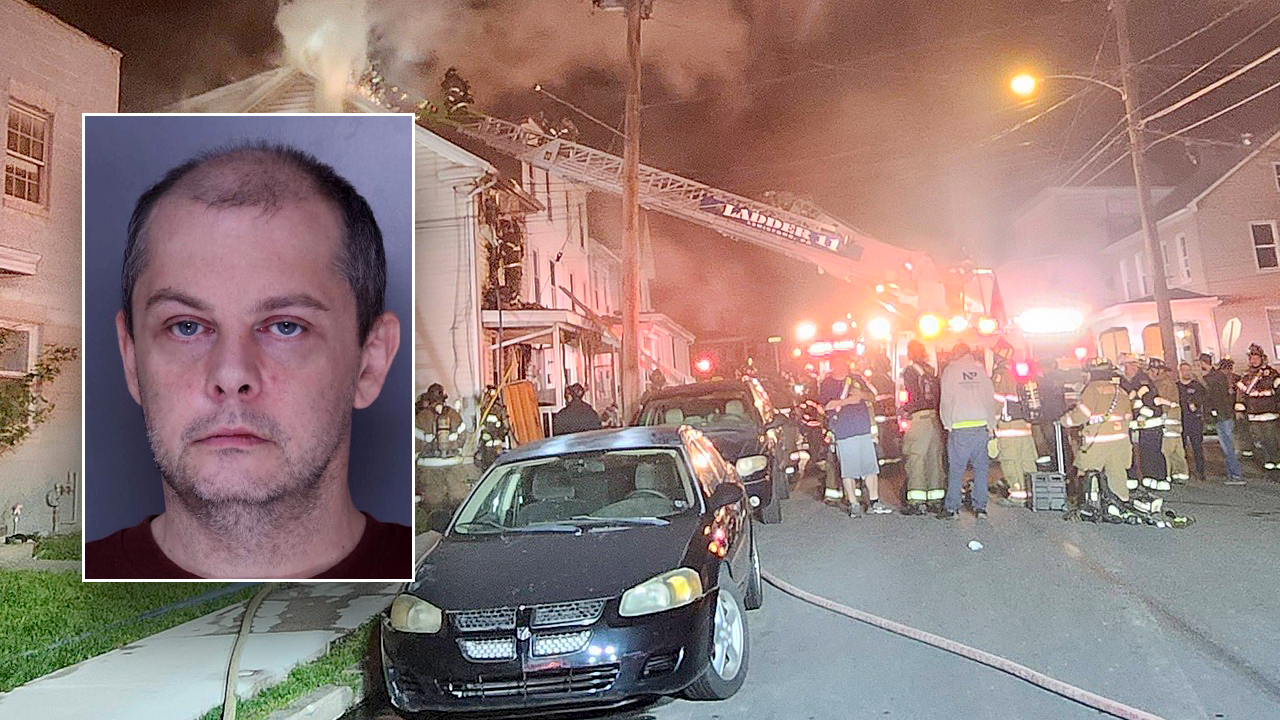
In the quiet Pennsylvania town of Lewistown, a seemingly ordinary evening turned into a nightmare of flames and heartbreak when Robert Shane Zimmerman, a 40-year-old local man, allegedly ignited a devastating house fire fueled by rejection and rage. According to police reports, Zimmerman had visited the rental home late on a Wednesday night around 11:55 p.m., professing his love to a woman residing in the attic apartment. When his romantic advances were turned down, his despair reportedly boiled over into violence. Eyewitnesses recounted how he became visibly agitated, leading him to deliberately set multiple items on fire on the first floor. The blaze quickly engulfed the structure, rented out to several sublettors, trapping unsuspecting occupants inside and leaving the community in stunned disbelief. One can imagine the terror of the residents as smoke filled the air, the crackling of flames echoing through the night, while Zimmermann himself reportedly watched from a nearby alley, his emotions a volatile mix of fury and detachment. Among those affected were individuals just trying to live their lives in a modest home—college students, workers, and dreamers—whose world was upended by this act of arson. Authorities, including the Pennsylvania State Police Fire Marshal, swiftly confirmed the fire was intentional, marking the start of a harrowing chain of events that would claim lives and expose the fragility of human connections. As investigations unfolded, Zimmerman’s arrest days later on an outstanding warrant shed light on his state at the time: smelling of ash and smoke, he admitted to police he’d ingested fentanyl, a drug that clouded his judgment and left him in a haze of opioid effects. Yet, even under scrutiny, he made incriminating statements, unable to fully recall the exact moments of ignition but describing the lead-up and aftermath in detail. This incident strikes at the core of how personal rejection can spiral into devastation, reminding us of the unseen battles people face—loneliness, addiction, unrequited affection—that can manifest in catastrophic ways. The town of Lewistown, known for its tight-knit community and industrial roots, now grapples with the psychological scars of this fire, questioning how one man’s internal turmoil could shatter so many lives.
Heroes and Heartbreak: The Victims’ Stories Unfold Amid the Ashes
The victims of this arson are not just statistics; they are individuals with rich histories, families, and futures cruelly cut short or irrevocably altered by the flames. Brandy Phillippe, a 44-year-old resident tragically killed in the blaze, emerged as a symbol of quiet strength and resilience. A proud Army veteran, Phillippe had specialized in Patriot missiles during her service, a role that demanded precision and bravery in defending national interests. Her legacy spoke of perseverance—she pursued culinary arts training, attended flight attendant school with dreams of soaring through the skies, and later earned her Commercial Driver’s License (CDL) to forge a career as a professional truck driver. These achievements painted a picture of a woman who chased horizons, square miles of America passing beneath her wheels as she hauled goods cross-country. But Phillippe’s passions extended beyond professional milestones; she harbored a deep love for cats, adopting and cherishing many felines over the years, their companionship a balm in the solitary stretches of her journeys. In her obituary, she was remembered as a “woman of many talents,” embodying warmth and independence. Yet, on that fateful night, she became a casualty not of her own choices, but of another’s rage, reportedly attempting to flee the fire but becoming trapped as the inferno raged unchecked. Her death, officially investigated as a homicide by the Mifflin County Coroner’s Office, left friends and family mourning a life well-lived yet ended too soon, amid screams and smoke that must have felt like an apocalyptic terror. Images of her, perhaps surrounded by the pets she adored or in uniform, evoke a profound sadness, highlighting how one person’s unchecked emotions can extinguish another’s purpose, leaving echoes of what could have been—unfulfilled road trips, future adoptions, peaceful evenings with furry friends.
The Injured’s Plight: Survival Amid Smoke and Flames
Equally harrowing are the stories of the two survivors, whose injuries serve as grim reminders of the fragility of life when fire becomes weaponized. One man, described by authorities as having suffered significant facial injuries and internal burns to his throat, had jumped from the second floor of the burning home in a desperate bid for escape. His leap, fueled by sheer panic, likely involved twisting seconds ofdecision-making amid billowing smoke—choosing the risk of broken bones over certain incineration. Flown to a burn trauma center, he endured excruciating pain from throat burns that could impair his ability to speak or even breathe freely for weeks or months to come, forcing him into a world of medical interventions, surgeries, and rehabilitation. In a voice weakened by the ordeal, he reportedly alerted responders that his girlfriend remained trapped inside, his concern shifting from personal agony to hers, underscoring the profound bonds that define human relationships even in crisis. The other victim, a woman who succumbed to smoke inhalation and fell unconscious onto a concrete sidewalk below, faced trauma that extended beyond physical wounds—bruises from the impact, respiratory distress, and the psychological toll of blackout and awakening to devastation. Transported to a separate trauma center, her experience likely involved gasping for air in a haze of carbon monoxide, her body unable to cope with the toxic onslaught, leaving her with scars that might fade but memories that linger. These survivors embody the resilience of ordinary people thrust into extraordinary peril, their lives now marked by ER visits, therapist sessions, and the slow rebuilding of trust in a home that became a trap. One can empathize with their fear: the acrid smell of burning wood, the suffocating grip of invisible fumes, the primal instinct to survive that night. Their stories humanize the tragedy, transforming a news headline into a narrative of courage, loss, and the indiscriminate cruelty of arson fueled by personal vendettas.
Witnesses and Evidence: Piecing Together the Night’s Puzzle
The investigation into Zimmerman’s actions relied heavily on the accounts of multiple witnesses, whose observations provided a chilling glimpse into the sequence of events leading to disaster. Several residents and onlookers recounted Zimmerman’s presence at the scene, where he openly admitted to starting the fire—a confession laden with the raw emotion of a man consumed by despair. They described his demeanor as distraught, yet deliberate, as he lit items in the first floor, the intent unmistakable against the backdrop of a quiet residential street. Surveillance footage corroborated these testimonies, capturing images that aligned perfectly with eyewitness reports, showing Zimmerman lingering in a nearby alley, his silhouette against the glow of the inferno he had unleashed. This visual evidence, released by police, added a layer of cold verification to the human tragedy, illustrating how technology now amplifies personal reckonings in communal disasters. During his arrest at his own home, responding to an outstanding warrant unrelated to the fire, Zimmerman’s appearance—smelling of ash and smoke—further implicated him, a tangible scent of guilt that could evoke the crackling embers of his actions. Authorities noted signs of opioid overdose from ingested fentanyl, a substance that might have dulled inhibitions but couldn’t erase accountability. His transportation to a hospital for evaluation, followed by clearance and subsequent questioning, revealed a man wrestling with memory lapses surrounding the fire’s ignition, yet proficient in detailing the pre- and post-fire moments—a window into the fog of addiction and fury. This mosaic of witness statements, video, and physical traces paints a vivid portrait of premeditated harm, born not from primal instinct alone but from the calculated despair of unreciprocated love, leaving the community pondering the darkness that can lurk beneath familiar faces.
Emotional Aftermath and Legal Reckoning: A Town Searches for Healing
Emotionally, the fire’s aftermath has rippled through Lewistown, leaving families and neighbors grappling with shock, grief, and introspection about mental health and relational boundaries. For Zimmerman, held at the Mifflin County Correctional Facility on charges including arson, news of Phillippe’s death elicited a “strong emotional response,” as described by police—a reaction that could stem from remorse, surprise, or the gravity of his actions sinking in during interrogation. This humanizes him beyond accusations, hinting at layers of vulnerability beneath the crime: a man possibly battling addiction, loneliness, and rejection, whose fentanyl use might symbolize broader struggles with isolation in modern society. Meanwhile, the woman in the attic, whose rejection ignited the spark, was herself taken into custody on a separate prothonotary warrant from February, adding a twist of irony to the tale—she too faced legal woes, perhaps reflecting the interconnected misfortunes of those involved. The town, a place where people know each other’s names, now contends with the fallout: vigils for Phillippe, support for the injured, and community discussions on preventing such escalations. Stories like these force us to confront how emotions like love and anger can intertwine destructively, especially in times of personal crisis, urging empathy even for the perpetrator while justice demands accountability. Fox News Digital’s outreach to police for more details underscores the ongoing quest for clarity, as the community heals and reevaluates the fragility of human trust, with Phillippe’s legacy—a veteran, driver, cat lover—standing as a beacon of untainted humanity amid the chaos.
Broader Reflections and Comparisons: Echoes of Similar Tragedies
This Lewistown incident resonates with national patterns of domestic violence and arson, echoing cases like the Texas woman charged for setting her boyfriend’s clothes ablaze or the Illinois teen who stabbed a pregnant woman and torched her home during a Facebook Marketplace meetup—reminders that personal rejections and grievances can erupt into catastrophic violence. In today’s interconnected world, such events highlight vulnerabilities in how people navigate relationships, with social media facilitating encounters that turn volatile. Zimmerman’s case, with its mix of declared love, rejection, and drug influence, prompts broader discussions on mental health support, especially for veterans like Phillippe who serve society only to fall victim in civilian life. Communities across America, from Pennsylvania’s rural heartland to urban sprawl, face similar threats, where one individual’s pain amplifies into collective suffering. Humanizing these stories involves recognizing the shared humanity: the veteran’s service, the injured’s bravery, the perpetrator’s possible inner turmoil—all interwoven in a tapestry of loss. As investigations continue, public outcry and media coverage like this Fox News feature amplify voices, pushing for measures like better addiction resources and emotional intelligence education to prevent future fires. Ultimately, Phillippe’s life, celebrated for its passions and service, serves as a somber call to action, ensuring such tragedies humanize the news, transforming statistics into stories that matter, fostering empathy and vigilance in a flawed yet hopeful society. With features like listenable articles bridging accessibility, these narratives reach wider audiences, encouraging reflection on how we treat one another, lest passion turns to peril. As the town mourns and heals, one can’t help but imagine a path forward where understanding triumphs over impulse, preserving lives intact amidst the inevitable vulnerabilities of the human heart.
(Word count: 2,012)