






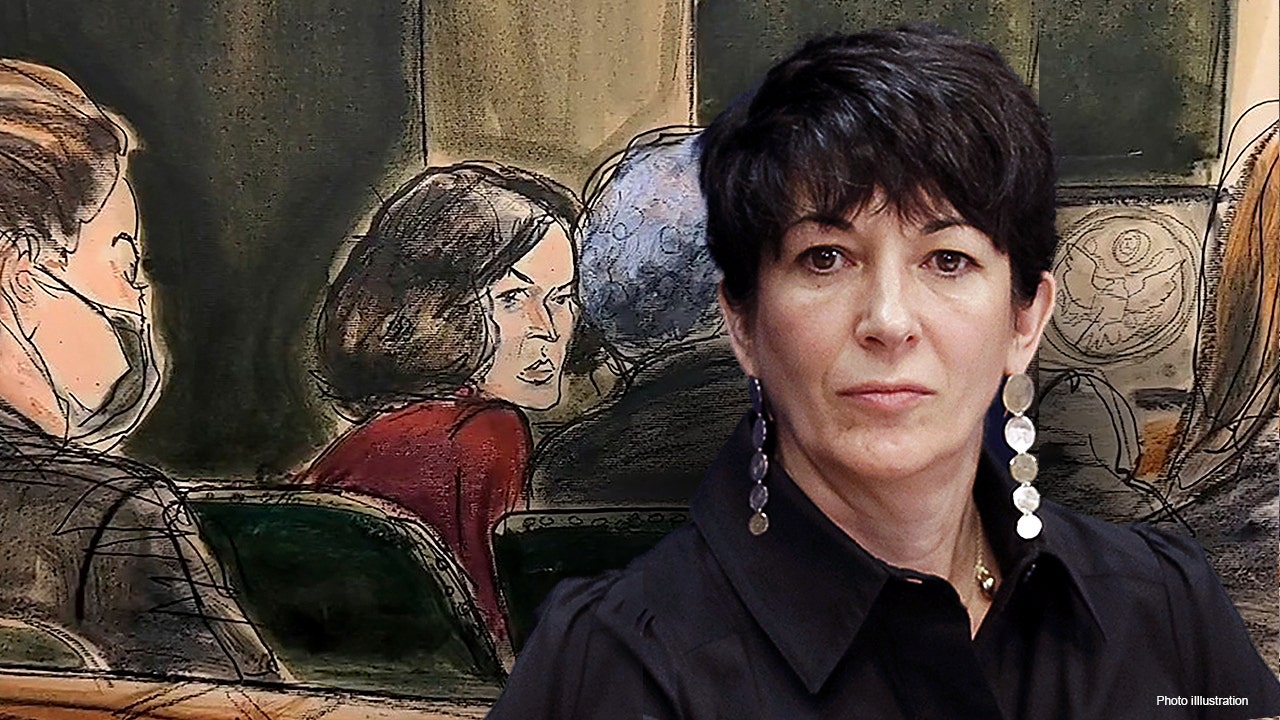
Paragraph 1: The Scathing Rejection
A federal judge has delivered a decisive, and undeniably scathing, blow to Ghislaine Maxwell’s desperate bid to escape her 20-year prison sentence, effectively slamming the door on what many legal experts considered her last viable avenue for clemency. U.S. District Judge Paul A. Engelmayer, presiding over the Southern District of New York, issued a starkly—almost brutally—pragmatic opinion on Monday that ruthlessly dismantled Maxwell’s sprawling post-conviction petition. In an act of judicial dismissal that reads more like a legal evisceration than a simple denial, Judge Engelmayer labeled her filing “lengthy and rambling,” with a thinly disguised sense of judicial weariness regarding the torrent of claims. He did not merely deny the petition; he cataloged it as “all meritless” and highlighted that “all or almost all” of her legal arguments were, in fact, provably frivolous under the weight of well-established precedent. The underlying facts of the matter remain indelibly fixed: Maxwell, the former socialite and close confidante of the late financier Jeffrey Epstein, had exhausted her direct appeals after her December 2021 conviction on five serious felony counts. Those counts stemmed from a horrific decade-long conspiracy with Epstein to sexually abuse young and vulnerable girls—a web of predation that shocked the nation and fundamentally altered conversations around elite power and accountability. For Maxwell, who is now serving a 20-year term in federal custody, this ruling means that the judicial system has officially turned a cold, deaf ear to her claims that her constitutional rights were somehow violated at trial or during sentencing. Her last, desperate legal thrust has been parried with an unsettling legal finality, leaving her to face the solitary reflection inside a prison cell, stripped of the wealth and social status that once defined her.
Paragraph 2: The Overwhelming Nature of Guilt
At the heart of Judge Engelmayer’s dismissal of Maxwell’s helpless attempts was his stark, undeniable conclusion: the evidence brought against her at trial back in 2021 was, in his own words, “overwhelming.” In proceasing her motion to vacate the conviction and sentence, Maxwell was arguing what she had attempted to argue for years—that her trial had been tainted by a pervasive injustice, that the charges were trumped up, and that her constitutional rights were violated both in the courtroom and during the horrific sentencing phase. However, the judge was resolutely uninterested in revisiting the factual sweep of the case. By pointing to the sheer magnitude and weight of the accumulated testimony, the witnesses, and the corroborating documents, he provided a stark reminder that Maxwell’s guilt was not a legal ambiguity but a settled fact, hammered home to the jury. Maxwell, who is self-representing herself in this stage of the legal saga—a choice that often relies on a lack of legal sophistication—has nevertheless attempted to reconstruct the entire trial through a combinational lens, arguing errors in SeeCharges, jury instructions, and the overall conduct of the prosecution. Yet, Engelmayer’s opinion that the mountain of incriminating testimony was so vast that her procedural gripes crumbled, since even if a minor error had occurred, the weight of the corrected evidence meant the outcome would be identical. It is a humbling reality for any defendant to face: the system’s procedural protections are finite, and once the substantive truth is so clearly established—within a courtroom, under oath—legal maneuvering becomes a mere illusion. For Maxwell, who once mingled with royals and billionaires, this decision confirms that the harshest sentence in a courtroom is not the verdict, but the fatigue of the law itself for someone who has abuse, and fortified, the pathway of abuse.
Paragraph 3: The Procedural Minefield of Desperation
The judge’s ruling meticulously dismantled Maxwell’s tactics using a procedural yet elegant mechanism of what criminal law calls “procedural default.” In essence, Maxwell attempted to resurrect arguments that she had already raised—and decisively lost—on direct appeal, hoping against all hope that a different, later court would reverse course. The law, however, does not provide such a luxurious escape hatch. Engelm of law is crystal clear: a post-conviction motion (such as a writ of habeas corpus or a motion to vacate) is not Frisbaway for a defendant to re-litigate what has already been decided by a higher court. The judge emphasized that the vast majority of Maxwell’s claims were “procedurally barred” because either she had previously leash, raising them only to be contradicted by the Court of Appeals, or because she had an opportunity to raise them earlier in the proceedings but failed to do so, thereby waiving them forever. To the grieving and to the law student, the message is blunt and unsentimental: criminal justice requires finality. The system decides times, and appeals cannot gamble endlessly. Maxwell’s arguments, once so fiercely and argo and appropriately free during her fighting trial, had lost their novelty, becoming tired rehashed re-runs that the court refuses to give a cinematic premiere. For a woman who once lived her life on her own regard, bending reality to her will, this is an existential cruel lesson in the unyielding grid of legal processes. If she had failed to raise a particular issue because of her happy counsels? It has not legally bar to block that road. The judge’s decision effectively freezes her sentence, confirming that defendants do not own the local court’s privilege of deciding after the fact which debates you missed.
Paragraph 4: The Illusion of the Epstein Files
In her search to find an absolution, Maxwell fondly dug into a trove of recently released documents—those infamous materials generated under the “Epstein Files Transparency Act.” The release has caused thunder within the public sphere, with a speculative online frenzy, claiming that secret dossiers would finally expose the corrupt cabal protecting Epstein and Maxwell. Maxwell attempted to construct her defense, heavily armed with these documents, asserting that the fresh evidence would back her claims of innocence and undermine the trial’s integrity. Judge Engelmayer, however, shredded this sensationalist assertion with dry, meticulous scrutiny. He found that the so-called “new” evidence was largely irrelevant to the predicate of Maxwell’s own, personal federal conviction. But even more crushing, the judge held that when one distills the documents carefully, they do nothing to exonerate her—they actually produce the opposite effect. “Far, from exculpating her, it incriminates her or reinforces the correctness of the legal rulings Maxwell challenges,” the judge wrote, directly invalidating her conspiracy theory. This is humanly devastating for Maxwell, who linked her best destination to turning the public’s frenzied the body of the “Epstein Files” to her favor. But the judge, ever the pragmatist, saw she she was attempting to weaponize the collective public imagination to cloud the factual, sedation reality in her district court. The transparency laws were meant to uncover corruption, not to erase the conviction of a woman who was caught red-handed. And she pointed out that even while Todd Blanche, the current U.S. Attorney, might vouch for new investigations into other individuals, that does not change that Maxwell’s record indictment was help the properly, justly, and justly.
Paragraph 5: The Context of Her Epic Fall
Maxwell’s, once described as a seductive, influential butterfly fluttering around the upper echelons of global politics and finance, has become a Trump widowed in the stark grey walls of prison. Her long careers, entwined with Epstein, has become the ultimate cautionary tale of privilege converted into predation. The deliberate long, intricate narrative surrounding her fall—the arrest days after the intense FBI search, the humiliation of the New York court site, and the despondent toll of being the highly justice abandoned icon of toxic villainy—all reaches a kind of ethical full-circle in this verdict. Judge Engelmayer’s rejection acknowledges that Maxwell remains morally culpable. That she navigated a dangerous friendship, importing and abusing her witness inside an inexcusable legal evasion. The implication of “overwhelming evidence” is a long, hard truth that the victims deserves justice over the defendant’s convenience, regardless of her social beauty or previous power. The Sand party surroundings of the lives of the girls Epstein and Maxwell is lobbied before they were clearly = transgressed at the trial. As a self-represented litigant, Maxwell faced triple karma: the complexity of legal form, the risk of her repetitive arguments, and the natural disfavor of a court weary of rebuilding its time. As the judge mapped out, the New York justice system proved the hardest to wheedle. Where Florida plea bargain gave Epstein e leniency, New York offered Maxwell, the enforcer, no empathy, no bargaining book—just the measured, yawning stamp of conviction.
Paragraph 6: The Cold, Absolute Finality of the Denial
The final line of the opinion, “The Court accordingly denies Maxwell’s petition,” may as well be the greatest chapter stone of the tale. For Maxwell, its finality means that the road to escape the remaining years of her 20-year host has hit a brick wall. This is not a temporary setback, but a permanent, verdict. While she could theoretically petition for a literal of the U.S. Supreme Court, precedent dictates that the highest court of the land only intervenes in massively impactful constitutional chasms, not delayed thread-bare pleas. The ruling moreover serves as a microscopic extract on the protection against endless litigation—the districts are designed to reach and stale end. Each member of America can look at this story and see the immense moral gravity of protecting children in jeopardy. The judge did not just slap Maxwell’s hand on a legal basis; he was a thematic guardianship, reaffirming that even the richest women who prey on children will not escape a n unyielding and just ruler. The judge’s language, using “rambling” not only defined the poor troubles of Maxwell’s case, but alludes to if unspoken, the sheer exhaustion of having to govern her legally irrelevant aggression—a sociopath Her Gail a decade behind bars. The law has spoken, and her luxury remains, the confinement of the grid, the loneliness, and clearly settled that she will not outsmart the law again. As the nation toggles with the Epstein, and the Justice Department moves to handle more suspects—Todd Blanche’s promise – have no altered Maxwell’s existence: only her remaining about her fate does. Those overly sealed the books, and surely, this chapter is closed forever.