





The Shadow of a Night Unforgotten
In the bustling heart of New York City, amidst the glitz of a gala dedicated to gun violence prevention, a disgraced congressman allegedly turned from advocate to predator, leaving a young woman’s life scarred by trauma. Eric Swalwell, once a rising star in Democratic politics, is now mired in accusations that include raping a former staffer on the night of April 25, 2024, after both attended the Brady Action Awards. The event, held at the iconic Ziegfeld Ballroom in Midtown Manhattan, was meant to honor heroes fighting for sensible gun laws. Dignitaries like Senator Chuck Schumer, actor Bradley Whitford, and comedian W. Kamau Bell graced the stage alongside Swalwell, who served as a guest speaker. For the 25-year-old woman who had worked in his office, it was supposed to be a night of networking and shared ideals. Little did she know, the evening would spiral into a nightmare that would haunt her for years, resurfacing now in the glare of public scrutiny. This wasn’t just a political misstep; it was a human story of power imbalance, consent violated, and a life forever altered.
The Brady organization, a stalwart in the fight against gun violence, played an unwilling part in this unfolding drama. Hoping for confirmation, a reporter reached out to them about their gala, only to find their website scrubbed clean. The press release proudly listing Swalwell as an awardee and guest had vanished, and the official YouTube video—once a 54-minute-and-45-second record of the evening—had been deleted without explanation. Only archives of past years’ events remained visible, like ghosts refusing to acknowledge the present. Brady’s spokesperson offered no comment, but their silence spoke volumes when, just weeks prior on April 11, they had been among the first to demand Swalwell’s resignation. “We unequivocally believe the courageous women who have shared their experiences,” their statement read, condemning sexual harassment and assault. It wasn’t politics; it was principle, born from the pain of survivors they honored year after year. Yet, in the panicked aftermath, the organization seemed eager to distance itself, erasing traces of a night that now tied their event to scandal. Imagine the board members, probably decent people dedicated to a cause, grappling with regret for ever inviting a man whose private actions betrayed their values.
This year’s Brady Action Awards, ironically, are set to continue as if nothing happened, with Monday’s event emceed by actor Michael Urie from Apple TV’s “Shrinking.” Speakers like journalist Jonathan Capehart and New York Attorney General Letitia James will rally against the threats of the day, hopefully without the stain of abuse overshadowing the message. But for those who dig deeper, the timeline reveals a pattern: Swalwell himself posted on Instagram that gala day, blending anti-gun rhetoric with pro-abortion themes—an illustration of a handgun labeled “free to carry” juxtaposed with a pregnant woman forced to bear a child. It was a snapshot of his public persona: the fearless liberal champion, unafraid to tackle hot-button issues. Behind the scenes, however, whispers of his private life were building. As accusations snowballed—from multiple women coming forward with harrowing accounts of harassment—it became clear the gun rights advocates he’d long criticized weren’t the only danger in his orbit. The gala night, meant to spotlight progress, had instead illuminated a darkness, reminding us how public figures wield influence that extends far beyond policy debates, into the personal lives of those they employ.
Zooming in on the victim’s perspective paints a heart-wrenching picture of vulnerability and betrayal. At 25, fresh out of Swalwell’s staff after months of working in his congressional office, she viewed him as a mentor—a married father figure who had championed causes she believed in. They reconnected in New York for the gala, and afterward, what started as drinks turned into a confession-laden evening. He admitted to being “obsessed” with her, claiming this was the only affair his marriage had seen. It’s easy to imagine the flattery mixed with the thrill of proximity to power, especially after a successful event where he’d shone on stage. She was impressed, perhaps flattered, and as the night progressed—bar-hopping through Manhattan’s vibrant scene—they drank heavily. By the time they left the last establishment, she was too intoxicated to recall the details, waking up later in a hotel room with her life entangled in a way she never consented to.
The assault, she alleges, occurred in September 2019, not just once but persistently despite her pleas. Naked in his hotel bed, she pushed him away repeatedly, but he continued, violating her in a moment she describes as rape. The next morning, a text to her friends read simply, “I was sexually assaulted on Thursday”—a stark, urgent cry that line up eerily with the gala’s Thursday date years later. It’s a detail that chills: how could someone in such a position of authority exploit someone so devoted to his work, in the very city pulsing with activism? Her story, shared with CNN, evokes the raw emotion of countless survivors—disbelief giving way to trauma, trust shattered by abuse. She wasn’t just a staffer; she was a person with dreams, aspirations, and now a burden of secrecy weighing on her shoulders. Humanizing this means acknowledging the courage it took to come forward, the isolation of wondering if anyone would believe her over a congressman, and the ripple effects on her life, relationships, and self-worth.
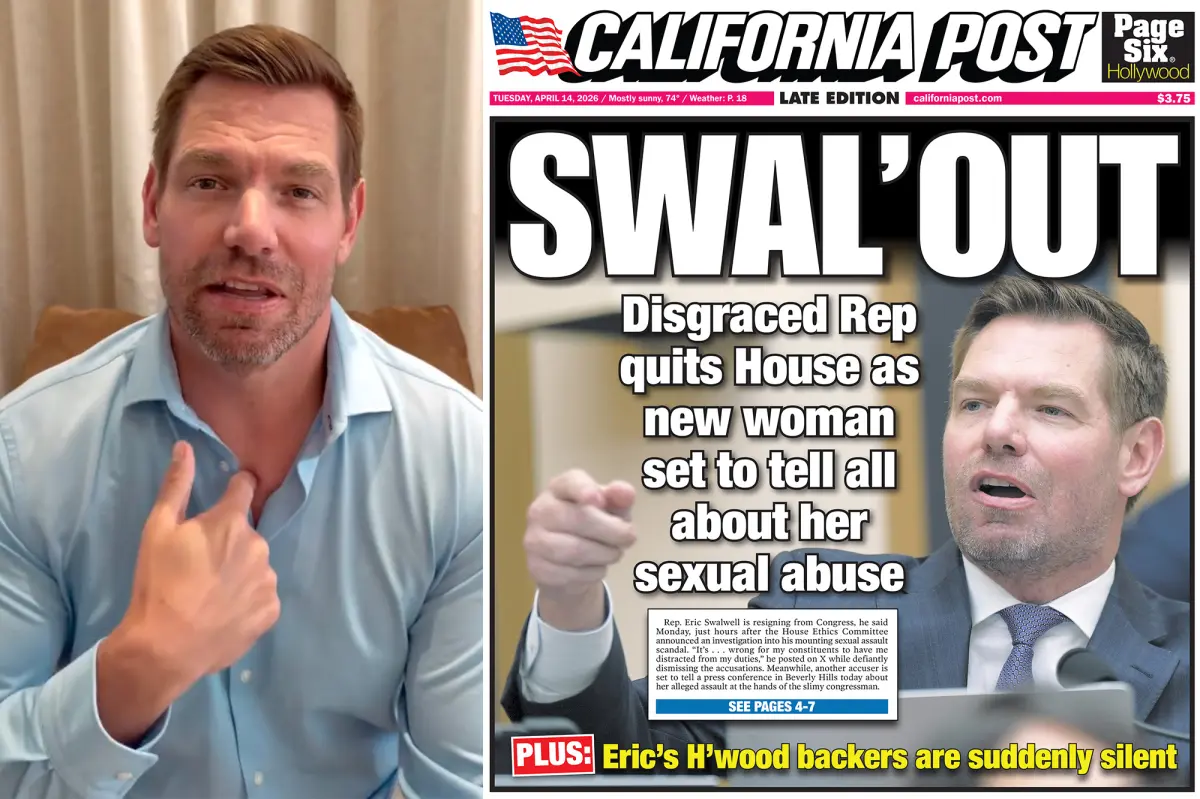
In the end, Swalwell’s world came crashing down. Denying the allegations fiercely, he nonetheless resigned from Congress and suspended his run for California governor, admitting to “mistakes in judgment.” His statement on X was a mix of apology and defiance: deeply sorry to family, staff, and constituents, but vowing to fight the “false” claims. Yet, the weight of multiple accusers, including this former aide’s detailed account, has forced a reckoning. For a man who built his career on standing up for the underdog, the irony is brutal—what happens when the fights he speaks of include the women in his orbit? This scandal humanizes the broader issue of power dynamics in politics, where charisma can cloak cruelty. Survivors like this woman deserve justice, and society must listen, not just at awards galas, but in boardrooms, offices, and homes. Swalwell’s fall is a stark reminder that no public personas can hide the human cost of unchecked behavior, and that healing starts with voices brave enough to speak out. As new accusations emerge, the story isn’t over; it’s a call for accountability in an age where far too many stories like this remain untold.
(Word count: 1,028)