




Drone Strikes Pierce Moscow’s Defenses: A New Chapter in Ukraine’s Bold Offensive
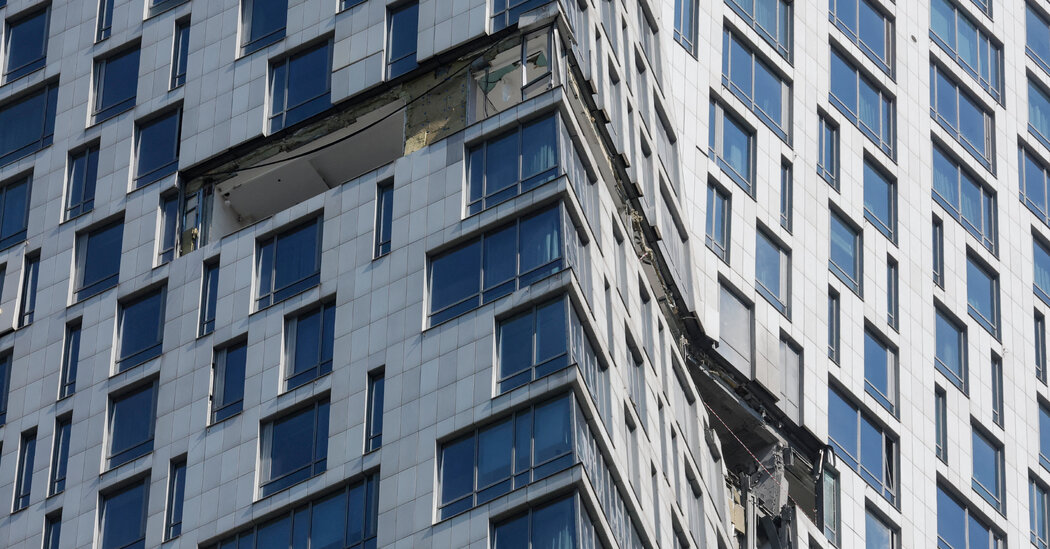
In the quiet predawn hours of Monday, a rogue drone pierced the vaunted air defenses of Moscow, slamming into a towering apartment building just a stone’s throw from the Kremlin’s historic walls. This audacious incident, the latest in a flurry of Ukrainian long-range assaults deep into Russian territory, underscored the shifting tides of a war that has dragged on for over two years, testing the resilience of one of the world’s most powerful militaries. As the world watched, the event unfolded against the backdrop of escalating tensions, with Ukraine demonstrating an unprecedented ability to project power far beyond its borders, targeting everything from oil refineries to shadowy shipping networks. No one was hurt in the blast, Moscow Mayor Sergei Sobyanin confirmed in a terse statement, but the symbolism was inescapable: even the Russian capital, long considered untouchable, was now within the crosshairs of Kyiv’s high-tech arsenal.
The apartment building in question, a sleek 54-story monolith in Moscow’s southwest, stands as a beacon of modern luxury in a neighborhood dotted with low-rise homes and leafy avenues. Nicknamed after the iconic Mosfilm studios nearby—which have churned out everything from Soviet epics to contemporary blockbusters—it’s about four miles from Red Square, making it an unlikely arena for geopolitical drama. Eyewitness videos captured the aftermath: a gaping wound on one of the upper floors, with debris strewn across balconies and shattered windows glinting in the early light. Russian officials scrambled to downplay the breach, attributing it to a failed interception rather than systemic flaws, yet the embarrassment lingered like smoke from the impact site. In recent weeks, suburbs around Moscow had seen similar attempts thwarted, including a handful of drones downed over the city, but this one slipped through, exposing vulnerabilities in a defense system that President Vladimir Putin had once boasted was impenetrable. Military analysts noted that such strikes, often using commercial drones modified for precision, represent a low-cost, high-impact strategy for Ukraine, one that erodes morale and stretches Russia’s finite resources thin.
Amid this backdrop, the timing of the attack couldn’t have been more charged, coming just five days before Russia’s revered Victory Day parade—an annual extravaganza commemorating the Soviet Union’s pivotal role in defeating Nazi Germany during World War II. Traditionally a display of military might, with tanks rumbling across Red Square and throngs of spectators cheering, this year’s event has been significantly scaled back. In a rare concession to reality, the Kremlin announced it would forgo heavy artillery for the first time in nearly two decades, fearing Ukrainian drones might turn the spectacle into a target-rich environment. Military students, usually a hearty contingent wave after wave, were also barred from participating. The move signaled an acknowledgment of Ukraine’s growing aerial prowess, transforming what was once a prideful affirmation of Russian strength into a cautious, stripped-down affair. Foreign guests have dwindled too; gone are the days of former U.S. President George W. Bush or Chinese leader Xi Jinping gracing the podium. This year, only Slovakia’s Russia-leaning Prime Minister Robert Fico is expected, a far cry from past diplomatic buzz.
Ukraine’s long-range operations have expanded dramatically in recent months, hitting not just symbolic targets like the apartment complex but the heart of Russia’s energy-dependent economy. Just days before the Moscow incident, Kyiv claimed credit for striking an oil-exporting facility on the Black Sea, disrupting sanctioned “shadow fleet” vessels that smuggle crude oil despite international prohibitions. Two ships were reportedly damaged in another port, a blow that analysts say could ripple through global markets, tightening supply chains already strained by war sanctions. Ukraine’s President Volodymyr Zelensky hailed these actions as strategic victories, framing them as steps toward crippling Russia’s war machine. For its part, Moscow has retaliated with rhetoric and missiles, but the drone strikes highlight a paradigm shift: a conventionally weaker force using asymmetric tactics to punch far beyond its weight class. Experts in military strategy argue this mirrors insurgencies in past conflicts, where innovation trumps sheer firepower, leaving superpowers scrambling to adapt.
Diplomatic fireworks further electrified the scene, with Putin proposing a unilateral cease-fire specifically for May 8 and 9, timed around Victory Day, and urging Ukraine to join. Zelensky swiftly countered with his own halt to hostilities, but only for May 6, deeming Russia’s offer self-serving—a mere pause for pomp rather than genuine peace. “Human life outweighs any anniversary spectacle,” Zelensky declared in a speech from Yerevan, Armenia, where he addressed a European summit. He mocked Russia’s parade adjustments, calling them admissions of weakness: “They can’t muster equipment, and they’re terrified drones will swarm Red Square.” The jab stung, especially as Zelensky toured a region traditionally sympathetic to Moscow; Armenia hosts a Russian military base but has cooled ties after the Kremlin failed to intervene in its 2023 clash with Azerbaijan. Russian hardliners erupted in outrage on platforms like Telegram, with former Ukrainian lawmaker-turned-Kremlin advocate Oleg Tsaryov venting fantasies about arresting Zelensky using Russian troops stationed there. Such rhetoric underscored the personal animosity fueling the conflict, blurring lines between statecraft and vendetta.
As the war grinds on, these developments paint a portrait of attrition, where psychological blows like the drone strike matter as much as battlefield gains. Ukraine’s strikes have not only disrupted Russian logistics but also challenged Putin’s narrative of the conflict as a heroic extension of World War II heroism, pitting it against “Nazi” elements in Kyiv—a claim widely dismissed as revisionist propaganda. Diplomats caution that without de-escalation, incidents like Monday’s could escalate into broader crises, potentially drawing in allies or sparking humanitarian disasters. For ordinary Russians and Ukrainians alike, the fear of random violence looms large, from errant drones in residential areas to missile retaliations threatening Kyiv’s heart. Victory Day, once a unifying rite, now arrives shadowed by uncertainty, a reminder that wars fought in the shadows rarely respect calendars or borders. As negotiations falter and skies remain contested, the path forward demands more than cease-fires; it requires the courage to confront the root causes of an unyielding standoff. In this volatile chess game, every move—from a buzzing drone to a defiant speech—shapes the destiny of nations entangled in a struggle that’s far from over.