



On a seemingly ordinary day in Arlington, Virginia, a quiet parking garage stairwell became the backdrop for a deeply traumatizing ordeal that would shatter a community’s sense of security. A young woman, navigating her daily routine, was suddenly confronted, cornered, and subjected to a terrifying assault. The suspect, identified as Cristobal Liobardo Vasquez-Sanchez, a twenty-five-year-old Salvadoran national residing in the United States without legal authorization, allegedly targeted her in this isolated space, committing acts of sexual battery and object sexual penetration by force. In an extraordinary display of survival instinct and adrenaline, the victim managed to break free from her captor, running desperately toward safety and crying out for help. While local police officers responded swiftly and eventually apprehended Vasquez-Sanchez, the physical and emotional scars left on the survivor are profound and enduring. This distressing encounter illustrates a painful truth: behind the cold, clinical language of police blotters and legal charges are real human beings whose lives are altered in an instant by acts of violence. The incident has left Arlington residents grappling with a heightened sense of vulnerability, transforming everyday spaces like parking garages and stairwells from mundane conveniences into symbols of hidden danger. As the community seeks healing for the victim, this tragedy has also thrust local residents into the center of a polarizing national conversation about how we protect the vulnerable, enforce our laws, and prevent those with known histories of violence from falling through the cracks of a fractured system.
The arrest of Vasquez-Sanchez is particularly painful for the community because it represents a sequence of missed warning signs and a systemic failure to intervene before a violent escalation occurred. Throughout the preceding months, Vasquez-Sanchez accumulated a staggering total of fourteen criminal charges, paintng a picture of an individual caught in a destructive cycle of criminal behavior and immediate release. His interactions with law enforcement escalated from minor offenses to increasingly aggressive confrontations. In January, he was booked for violating pretrial release conditions while out on bond for a prior offense; by February, he faced larceny charges. The spring brought even more volatile behavior, marked by an April arrest for public intoxication, assault and battery, and a direct assault on a law enforcement officer, followed just days later by another pretrial violation. Throughout April and May, he was arrested multiple times for public intoxication, fleeing from police, and disorderly conduct, alongside other charges of destruction of property and larceny detailed in law enforcement records. Despite this rapid accumulation of offenses, the justice system repeatedly released him back onto the streets on pretrial bond rather than detain him. This revolving-door pattern reflects a deeper systemic struggle to balance reform-minded pretrial release policies with the urgent necessity of public safety. For the residents of Virginia, the realization that an individual with such a volatile, escalating record was repeatedly returned to their neighborhoods is deeply unsettling, raising urgent questions about how local judicial systems assess the risk an offender poses to innocent families.
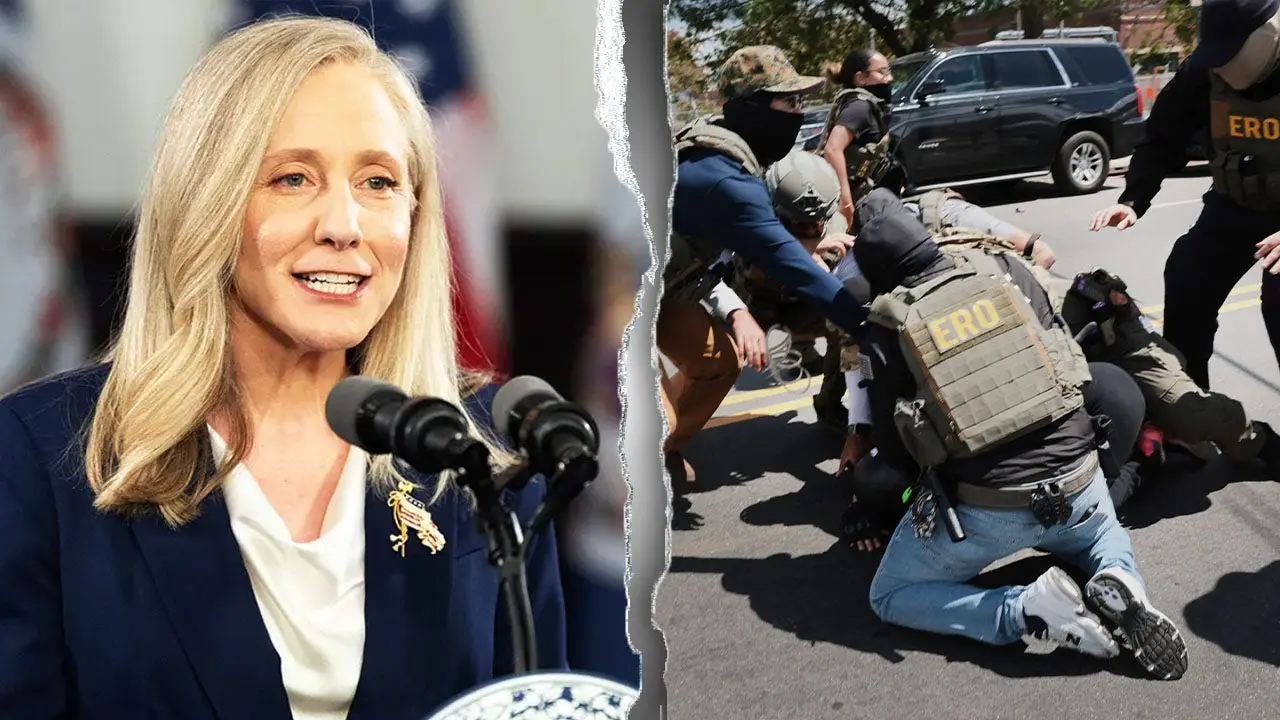
This case has illuminated a deep, ideological friction between federal immigration authorities and Virginia’s state leadership over how to handle non-citizens who commit crimes. Under the direction of Democratic Governor Abigail Spanberger, Virginia enacted policies that effectively ended state-level cooperation with Immigration and Customs Enforcement (ICE), mandating that federal agents present judicial warrants before state resources can be used to hold detainer suspects. Critics argue that requiring judicial warrants for administrative immigration detainers is legally irrelevant and creates an unnecessary barrier to deporting dangerous individuals. Just days before the assault in Arlington, Governor Spanberger issued an executive order that added further obstacles for federal immigration officers attempting to operate within the Commonwealth. When ICE previously flagged Vasquez-Sanchez with a detainer request hoping to initiate deportation proceedings, the request was denied due to these policies, allowing him to remain free. The clash highlights a profound division in governance philosophies: one side prioritizes the integration and protection of immigrant communities by decoupling local policing from federal immigration enforcement, while the other side views these policies as dangerous obstructions that harbor criminals. As these two administrative philosophies collide, local communities are left to navigate the real-world consequences, caught in the crossfire of a bureaucratic stalemate where policy decisions made in government offices directly impact the safety of the streets.
The frustration surrounding this policy divide is deeply felt by federal immigration officials, who argue that state-imposed restrictions place both the public and law enforcement officers in jeopardy. Acting Assistant Secretary of the Department of Homeland Security, Lauren Bis, expressed profound frustration over the situation, asserting that Governor Spanberger’s policies directly allow dangerous criminal offenders to be released back into unsuspecting communities. From the perspective of federal agents, when local jails refuse to honor ICE detainers, it eliminates a controlled, safe environment for transferring custody of potentially violent individuals. Instead, ICE officers are forced to conduct high-risk, real-world apprehensions out in public neighborhoods, tracking down suspects who have already been released. This dynamic not only increases the physical danger to the officers themselves but also exposes nearby residents to potential violence during arrests. DHS officials emphasize that federal agencies are tasked with a vital mission to protect American citizens from high-risk individuals, including sexual predators, gang members, and drug traffickers. They argue that when state leaders block cooperation, they actively undermine public safety and place political ideology above the protection of families. This perspective humanizes the daily anxieties of federal law enforcement officers who feel they are fighting an uphill battle, risking their lives to apprehend repeat offenders who, in their view, should have never been allowed back onto the streets in the first place.
In response to these heavy criticisms, Governor Spanberger’s administration defends its stance by emphasizing its commitment to the rule of law and clarifying the bureaucratic boundaries of state authority. A spokesperson for the Governor countered the federal narrative by asserting that Spanberger has consistently supported the prosecution and deportation of violent criminals who are in the country illegally. The administration points out a crucial legal distinction in Vasquez-Sanchez’s case: while the Virginia Department of Corrections maintains a long-standing practice of notifying ICE when non-citizens are held in state-level prisons, Vasquez-Sanchez was being held in local, county custody in Arlington, which falls outside the state’s direct operational control. Furthermore, the Governor’s office highlights her personal background as a former federal law enforcement officer who spent years actively investigating and prosecuting child predators, arguing that her dedication to the safety of families is beyond question. From the state’s perspective, maintaining clear legal boundaries and demanding judicial warrants protects the constitutional integrity of the justice system and ensures that local law enforcement can build trust with immigrant communities, which is vital for solving local crimes. They argue that blaming state leadership simplifies a complex legal framework and ignores the cooperative efforts that Virginia state police continue to extend to federal task forces daily.
Ultimately, the tragic events in Arlington and the political firestorm that followed demonstrate a desperate need for a immigration and justice framework built on human empathy, clarity, and common-sense cooperation. Beyond the statistical arguments, the legal jargon, and the political finger-pointing, there are human lives hanging in the balance: a survivor fighting to reclaim her sense of peace, a community demanding safety, law enforcement officers seeking clear guidance, and immigrant communities hoping to live without fear of systemic discrimination. To build a safer society, leaders must find a way to bridge the gap between humanizing compassionate immigration reform and maintaining the absolute rule of law. A system that allows an individual to accumulate over a dozen criminal charges without meaningful intervention or communication between jurisdictions serves no one, failing both the public and the offenders themselves. True progress will require moving past partisan rhetoric and focusing on practical local-to-federal communication channels that protect innocent citizens while upholding human dignity. Only by listening to the fears of local families, the frustrations of law enforcement, and the constitutional responsibilities of leaders can we construct a society where safety is guaranteed for everyone, and tragedies like the one in Arlington are prevented before they ever begin.