




Breakthrough in the Depths: First Miner Rescued from the Shadows of Xaysomboun
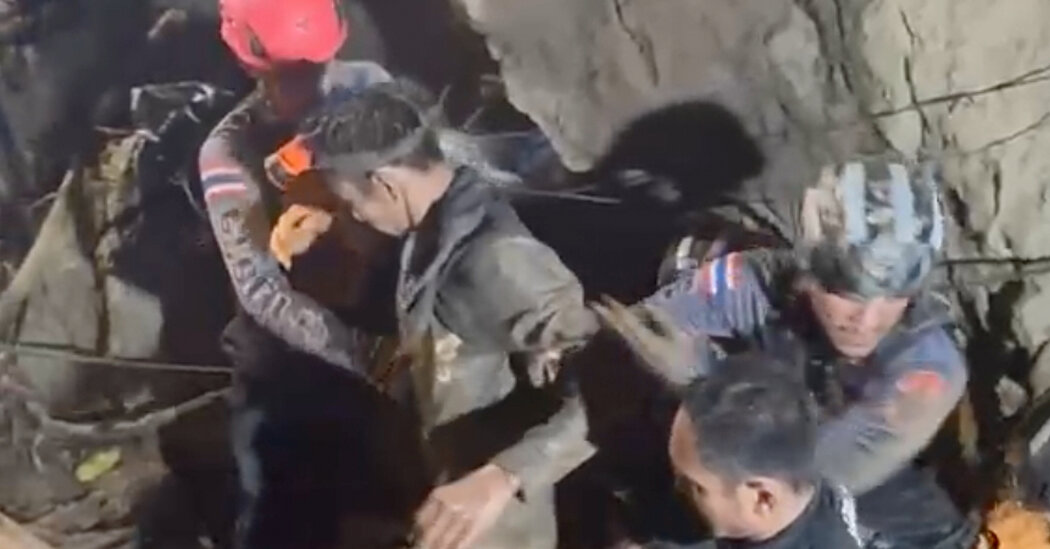
Against the backdrop of a damp, looming mountain facade in Laos’s rugged interior, a fragile wave of relief washed over a weary rescue encampment on Friday night as a single, exhausted miner was successfully extracted from the pitch-black depths of a collapsed gold mine. Yet, the celebratory moment remained deeply bittersweet, overshadowed by the grim reality that four of his companions remain trapped within the claustrophobic chambers of the cavern, while two other miners remain completely unaccounted for. The dramatic rescue operation, unfolding in the remote and mountainous province of Xaysomboun, has become a frantic, high-stakes race against time and the elements, as rescue teams work around the clock to locate the missing and free the remaining survivors before oxygen supplies fail or another severe weather system inundates the underground network. Over a week ago, a sudden onslaught of torrential monsoon rains triggered a catastrophic landslide, sending a colossal deluge of wet mud, gravel, and saturated debris crashing down the hillside, instantly sealing the mine’s narrow exit and trapping the seven-man crew deep within the subterranean labyrinth. The men had originally entered the cavern with plans to stay for only a few days to pan for gold, bringing with them a modest supply of food and clean water, which ultimately proved to be their primary lifeline during the agonizing days spent waiting in the dark while an international coalition of rescue experts devised a highly technical extraction strategy.
The Cost of Survival: Economic Desperation Fuels Dangerous Informal Mining in Laos
                             Xaysomboun Province, Laos
                         ┌──────────────────────────────┐
                         │  Rich Mineral Deposits       │
                         │  (Gold, Copper, Silver)      │
                         └──────────────┬───────────────┘
                                        ▼
                    ┌──────────────────────────────────────┐
                    │   Corporate Mining (e.g., PanAust)   │
                    │   Pays low minimum wage (~$113/mo)   │
                    └───────────────────┬──────────────────┘
                                        ▼
                    ┌──────────────────────────────────────┐
                    │   Risky Informal "Wildcat" Mining    │
                    │   Offers high-yield financial hope   │
                    └──────────────────────────────────────┘
The perilous plight of these trapped workers serves as a stark and tragic reminder of the systemic economic pressures that drive rural villagers into the hazardous world of unregulated, informal mineral extraction throughout Southeast Asia. Xaysomboun Province is renowned for its vast, lucrative deposits of gold, copper, and silver, natural riches that have attracted massive corporate interest, including major players like PanAust—an Australian mining conglomerate owned by a subsidiary of the Chinese state-run Guangdong Rising Holdings Group. However, despite the immense wealth extracted from these hills, local mine workers receive only a meager minimum wage of approximately $113 per month, a sum that fails to cover basic living costs in an era of rising inflation. According to Oliver Tappe, a distinguished professor of anthropology at the University of Cologne who has spent years researching local mining cultures in Laos, this severe economic disparity forces impoverished villagers to bypass corporate operations entirely, risking their lives to enter abandoned shafts and informal caves in search of raw gold to sell on the black market to smaller Chinese operators who pay significantly higher prices. This high-risk gamble is fueled by a desperate hope of escaping generational poverty; while the endeavor is highly volatile and relies almost entirely on sheer luck, a successful expedition can yield earnings that far exceed the monthly minimum wage, making the immense physical dangers of the subterranean world seem like a necessary risk for survival.
Monsoon Gambles: Why the Heaviest Rains Draw Miners into Perilous Caverns
Paradoxically, the very weather conditions that make cave entry most life-threatening also present the most lucrative opportunities for informal miners, creating a deadly seasonal cycle that peaks during Laos’s intense rainy season. Anthropological and geological studies reveal that wildcat miners purposely venture deep into subterranean networks during periods of heavy rainfall because the saturated, wet earth is significantly easier to pump, liquefy, and pan for gold flakes than hard, dry soil. This wet mud can be quickly processed using rudimentary tools, allowing miners to separate precious metals with minimal heavy machinery, but the practice leaves the surrounding geological structures incredibly unstable and highly prone to sudden collapse. When the recent monsoon storms battered the mountainous terrain of Xaysomboun, the waterlogged soil above the mine entrance lost its structural integrity, sending a massive plug of liquefied earth and stones directly into the main access tunnel, trapping the men inside with a finite volume of breathable air. This recurring environmental hazard has historically claimed the lives of numerous informal miners across the region, as many of these makeshift shafts lack any form of structural reinforcement, leaving workers completely defenseless when the earth shifts under the weight of accumulated rainwater.
Navigating the “Drinking Straw”: The Absolute Grit of the International Rescue Operation
=========================================================================================
CAVE EXTRACTION PATHWAY
[Cave Entrance] <==== [Water Pumps] <==== [Narrow Tunnel: “Drinking Straw”] <==== [Chamber]
(Flooded) (Continuous) (Barely enough room to breathe) (5 Men Found)
To extract even a single survivor from this muddy tomb required an extraordinary feat of physical endurance and technical engineering, demanding that rescuers navigate a flooded underground labyrinth under near-impossible conditions. High-volume industrial pumps were deployed to work continuously, fighting an uphill battle against the flooded terrain to draw down the water levels at the cave mouth until a tiny air gap emerged, allowing the dive team to wriggle forward. The path inward, however, was a nightmare of natural obstructions; rescuers had to squeeze single-file through a tortuous, water-filled channel that was so incredibly tight, muddy, and jagged that there was barely enough room to lift one’s head to take a breath, let alone easily transport bulky oxygen tanks and survival gear. Kengkard Bongkawong, a seasoned Thai rescue diver who was among the first to confirm the successful extraction of the first miner on Friday evening, described the suffocating journey as the equivalent of crawling through a winding paper drinking straw while submerged in liquid mud with zero visibility. Every inch gained required meticulous coordination, physical contortions, and immense mental fortitude, as a single panic attack or shifted rock inside the claustrophobic passage could easily prove fatal for both the diver and the helpless miner they were attempting to guide toward the surface.
Echoes of Tham Luang: Legendary Elite Divers Assemble to Defy the Odds Again
The extreme complexity of the rescue operation prompted local authorities to call upon a highly elite group of international search and rescue specialists, drawing direct parallels to one of the most famous cave rescues in modern history. Among the team members are legendary divers from Thailand and Finland, including renowned Finnish technical diver Mikko Passi, who first gained global recognition for his heroic role in the miraculous 2018 Tham Luang cave rescue, where a youth football team was successfully extracted from a flooded cavern in northern Thailand. The presence of these seasoned veterans has injected a vital boost of confidence and expertise into the Laotian mission, as they bring invaluable, battle-tested knowledge of how to manage foreign dive gear, layout guide lines, and navigate the psychological panic associated with dark, tight, underwater spaces. These international specialists have worked alongside local Laotian emergency services, combining advanced diving tech with local knowledge of the mountain’s hydrology to establish reliable communication lines, map out the cave’s interior, and manage the incredibly complex logistics of feeding, stabilizing, and eventually moving the emaciated survivors through the active flood zones.
The Final Ascent: Hunger, Weakness, and the Suspended Hope for the Trapped and Missing
While the successful extraction of the first miner has proven that survival is possible, the remaining operations remain fraught with extreme danger, as the physical toll of prolonged isolation has left the remaining four men too weak to undergo the grueling journey to the surface. Rescuers first located five of the men on Wednesday, huddled together on a small mud ledge in a dry chamber roughly 984 feet from the primary cave entrance; a poignant video recorded by the divers and shared widely on social media showed the men visibly shivering and hungry, yet remarkably uninjured and clear-minded. Despite their stable health, Mikko Passi cautiously warned that immediately extracting the remaining four men would be a logistical and medical nightmare, noting that their profound physical weakness and lack of dive training mean they cannot easily negotiate the tight water passages without risking severe panic or drowning. As medical teams work tirelessly to pump warm liquid nutrition and clean water into the chamber to rebuild the survivors’ strength, emergency crews are simultaneously searching the muddy, bypassed alcoves of the cave system for the two miners who are still missing, keeping alive a flickering flame of hope that they too might have found an air pocket in the deep, silent dark of Xaysomboun.