


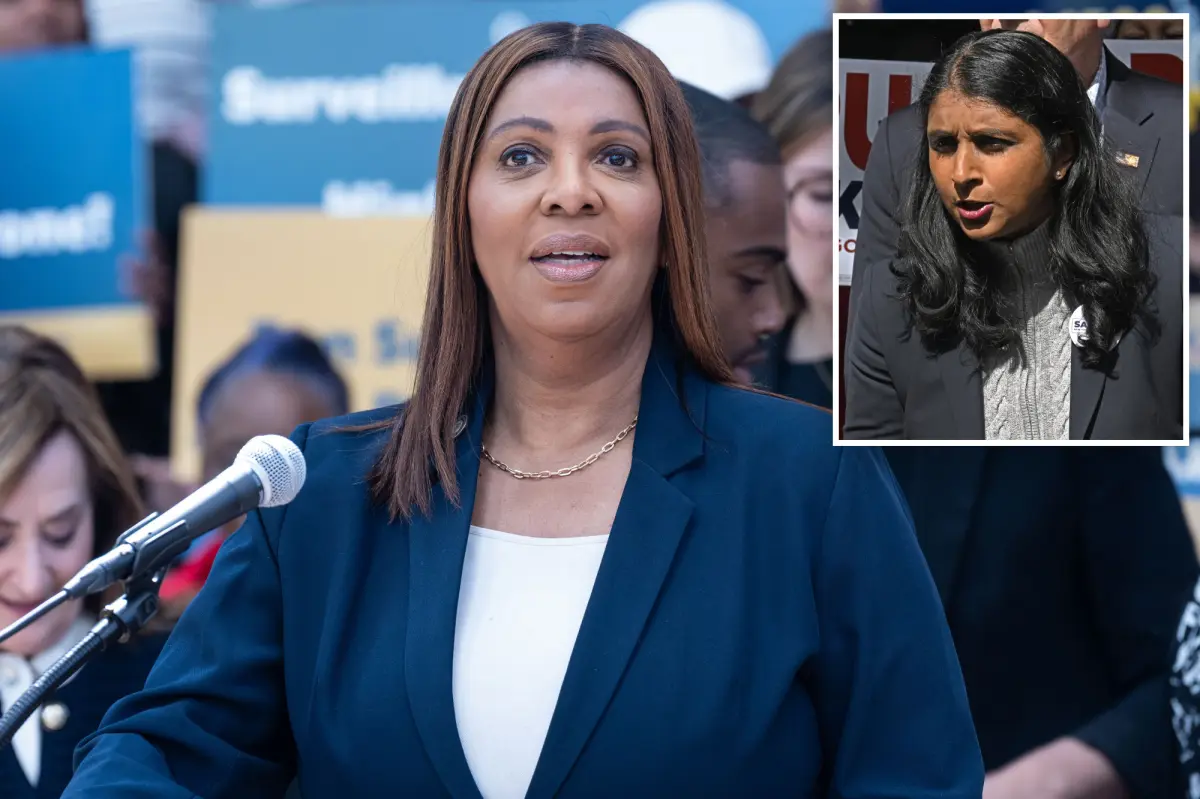
In the high-stakes arena of New York politics, a fierce battle is unfolding over public trust, financial accountability, and the ethical boundaries of state leadership. Saritha Komatireddy, a formidable Republican candidate for Attorney General and a highly experienced former federal prosecutor, has hurled a series of explosive accusations against the incumbent Democrat, Letitia James. At the heart of Komatireddy’s critique is the staggering allegation that James has systematically misallocated $20 million of taxpayer money by outsourcing standard state legal responsibilities to expensive, high-profile private law firms. This dynamic takes place against a backdrop of deep economic anxiety, where working-class families across New York are forced to navigate the highest cost-of-living rates in the nation. To many of these struggling citizens, the revelation that millions in public funds are being funneled to elite private attorneys—rather than being utilized to improve the state’s crumbling infrastructure, lower taxes, or bolster public services—feels like a direct betrayal of the social contract. Komatireddy has positioned herself as a champion for these forgotten taxpayers, arguing that the Attorney General’s office, which is already heavily funded and fully staffed with qualified public servants, has no business using public funds to enrich corporate white-shoe law firms for tasks that could easily be handled internally.
The controversy deepens when looking at the intricate, seemingly incestuous financial relationships between these private outside law firms and the political machinery of New York’s dominant party. Komatireddy has highlighted a worrying pattern of campaign contributions, pointing out that approximately 145 lawyers belonging to the very firms selected for these lucrative state contracts contributed a collective $23,000 to James’s reelection campaign. Prominent among these organizations is Davis Polk & Wardwell LLP, an ultra-luxurious, white-shoe law firm currently holding a $575,000 state retainer to represent the Attorney General’s office in a sensitive sexual harassment lawsuit involving a former high-ranking aide. The ethical optics are further complicated by the personal lives of New York’s ruling class; Bill Hochul, the husband of Democratic Governor Kathy Hochul, is employed by Davis Polk, drawing an annual salary of roughly $1.3 million, even though he reportedly recuses himself from state-specific matters. From the perspective of the average citizen, who must work multiple jobs just to pay rent and put food on the table, these overlapping connections paint a discouraging picture of a self-serving political class. This web of political donations, incredibly high-paying defense contracts, and close-knit elite structures fosters a sense of disillusionment, leaving voters with the uneasy impression that public funds are being used to fuel a exclusive, closed-loop financial system for political insiders.
This narrative of systemic self-preservation is further fueled by the existence of a controversial $10 million legal defense fund, established by state Democratic lawmakers in Albany. Originally designed to protect high-profile political figures like Letitia James during their own personal and professional legal crises, the fund has come to symbolize the stark divide between the ruling class and the constituents they serve. James herself has faced serious scrutiny over a federal investigation into allegations of fraud regarding a personal mortgage application for a residential property she purchased in Virginia. To the average New Yorker, who has no safety net or specialized legal shield when facing the intimidating and financially devastating complexities of the American justice system, the creation of a multi-million-dollar protective fund for wealthy politicians is incredibly offensive. This dynamic represents a profound double standard: while normal citizens face personal and financial ruin from minor legal disputes, high-ranking public officials enjoy custom-built, state-sanctioned financial cushions designed specifically to absorb the consequences of their alleged personal and professional missteps.
Compounding this sense of public outrage is the quiet, tactical maneuvering of the New York state legislature, which recently worked to expand both the scope and the longevity of this protective legal defense fund. Rather than reforming or dismantling the fund in response to public criticism, Albany lawmakers elected to broaden the criteria for what types of legal expenses can be submitted for taxpayer reimbursement. Under these newly revised rules, virtually any statewide elected official can now have their mounting legal bills footed by hardworking taxpayers if they find themselves dragged into a formal hearing, targeted by an investigation, or even hit with a criminal indictment. Interestingly, because of the heavy public scrutiny surrounding the fund, James ultimately chose not to dip directly into this specific taxpayer-funded pot. Instead, she chose a less transparent financial route, utilizing an oblique funding stream categorized under the Democratic Attorneys General Association (DAGA). This tactical pivot has done little to ease the concerns of government watchdog groups and political adversaries, who view such maneuvers as highly secretive and designed to preserve the political status quo while evading direct public accountability.
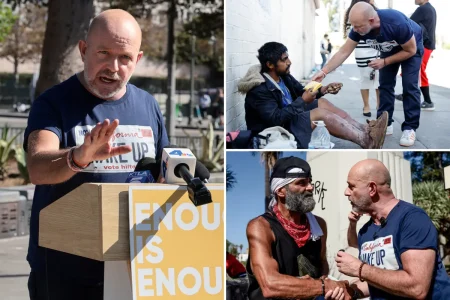
This conflict reveals a deep and unsettling contrast when held up against the everyday crises impacting New York’s communities, highlighting a fundamental misalignment of government priorities. While millions of dollars are easily allocated to defend powerful political figures and retain elite Manhattan law firms, the state’s most vulnerable populations are left to navigate a deteriorating social landscape with dwindling resources. Across the state, and particularly on the streets of New York City, communities are grappling with severe, unaddressed crises: a soaring epidemic of homelessness, an overwhelmed mental health infrastructure, a devastating opioid crisis, and rising concerns over public safety and repeat offenders. Komatireddy has forcefully leaned into this harsh reality, arguing that the state’s resources should be actively deployed to help citizens struggling with addiction, mental illness, and poverty, rather than shielding powerful state officials. This stark contrast between high-priced corporate boardrooms and the grim realities of everyday life on the street highlights a larger, more human question about what public service should look like, emphasizing that every dollar spent protecting a politician’s career is a dollar stolen from the public good.
Ultimately, the escalating clash between the reform-minded challenger Saritha Komatireddy and the powerful incumbent Letitia James is much more than a routine, partisan campaign dispute; it represents an urgent referendum on the moral core of public stewardship. At its essence, this confrontation challenges New Yorkers to decide whether they will tolerate a political system that shields its leaders from accountability, or whether they will demand a government that puts the needs of its people first. True public service requires an unwavering dedication to transparency, a commitment to handling public money with care, and a deep compassion for those who are struggling. As this highly visible debate continues to unfold in the media and the court of public opinion, it carries the quiet but powerful hopes of everyday families who simply want their leaders to act with integrity. By bringing these issues to the forefront, the conversation challenges the current political establishment to remember that their primary duty is not to protect themselves, but to protect, serve, and uplift the communities they are privileged to represent.