



In the quiet, rolling hills of Pickett County, Tennessee, where the rhythm of daily life is usually dictated by the gentle turning of the seasons and the close-knit bonds of a small Southern community, a sudden and devastating act of violence has shattered the peace. On a recent Wednesday, the tranquil atmosphere of the 1000 block of Parker Road was irrevocably broken by the echo of gunfire—an event that would ultimately claim the life of 40-year-old Christopher Yates. For those who live in this scenic region, where neighbors know each other by name and doors are often left unlocked, the news of Yates being shot in the chest was not just a passing headline, but a deeply personal tragedy that reverberated through every home. Emergency responders rushed to the scene, desperately trying to preserve a life that was slipping away, and transported Yates to a nearby hospital. Despite the frantic efforts of medical professionals, he succumbed to his injuries, leaving behind a grieving family whose lives have been permanently altered, and a community wrestling with the profound shock of an senseless loss. To humanize this tragedy is to recognize that Christopher Yates was not just a statistic in a police report; he was a son, perhaps a brother, a friend, and a vital thread in the social fabric of his town, whose sudden absence leaves a gaping void that no amount of time can truly fill. The immediate shockwave of his death quickly transformed into a collective grief, as friends and family gathered in quiet disbelief, trying to comprehend how a normal Wednesday could dissolve into such a nightmare. As law enforcement worked to notify his next of kin and secure the crime scene, the realization began to settle over Pickett County that a vibrant life had been violently cut short, leaving a legacy of sorrow and an urgent, burning demand for answers and accountability.
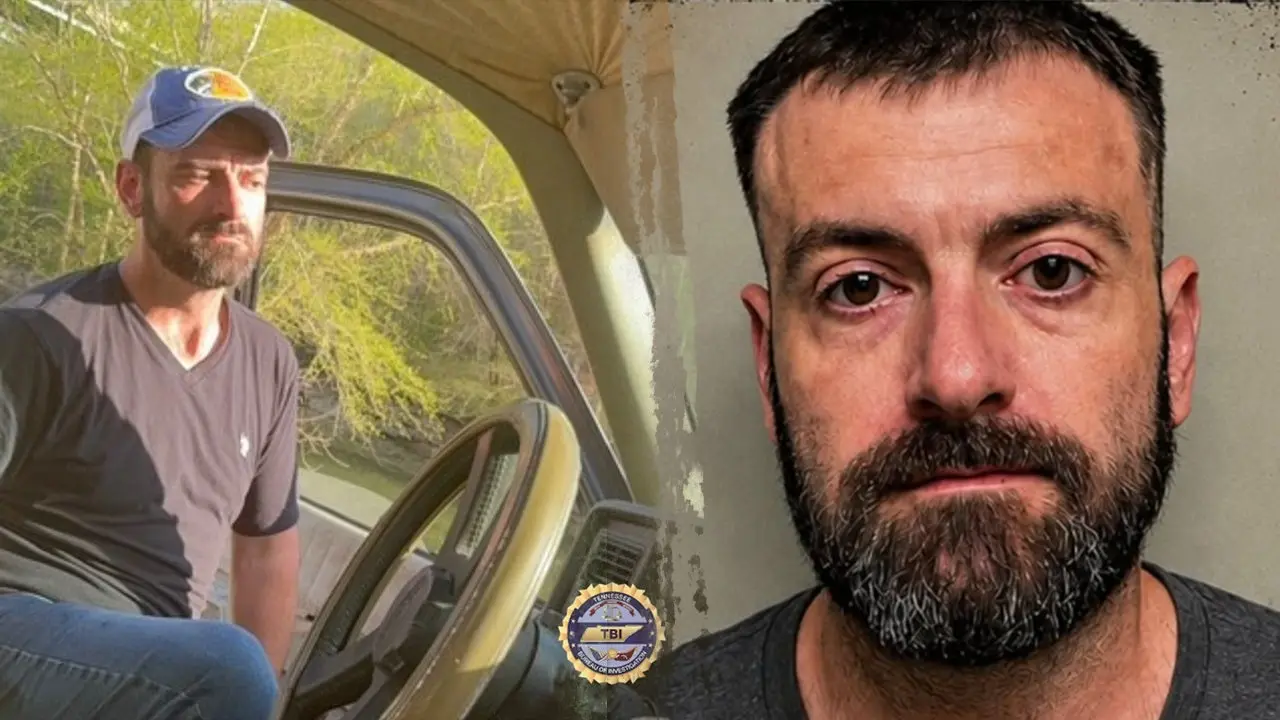
As the community began to mourn, the focus of law enforcement rapidly shifted to identifying and locating the individual allegedly responsible for this devastating act, pointing squarely at 38-year-old Jesse Phillips. Described as a white male standing five feet, ten inches tall, weighing approximately 225 pounds, with brown hair and brown eyes, Phillips quickly went from a local citizen to a fugitive fleeing the immediate reach of justice. In the frantic moments following the shooting, Phillips allegedly climbed into his vehicle—a highly distinctive black pickup truck marked by a bright yellow hood—and sped away from the Parker Road scene, vanishing into the undulating rural landscape. The image of this stark, yellow-hooded truck tearing away from a scene of violence serves as a chilling symbol of the sudden disruption of peace in this countryside. The thought of a suspected killer driving through the winding backroads, desperate, unpredictable, and heavily armed, sent a shudder through the region, transforming the scenic vistas of Tennessee into a setting of high-stakes tension and fear. For those who may have known Phillips, or who simply shared the same country lanes, grocery aisles, and community spaces with him, his transition into an accused murderer on the run is a surreal and terrifying concept that underscores the unpredictable, fragile nature of human existence. Families who once took their safety for granted suddenly locked their doors and kept their children indoors, hyper-aware of every passing engine and every unfamiliar shadow stretching across their yards. The psychological weight of knowing that an armed suspect, driven by the desperation of survival, was navigating the local arteries of their community created an invisible web of anxiety, proving that the trauma of such a crime extends far beyond the immediate victim, casting a long, dark shadow over the entire populace.
The desperate search for Phillips quickly escalated, crossing geographical boundaries and demonstrating that the invisible lines separating states offer no barrier to either flight or justice. It was not long before the cooperative efforts of multi-state law enforcement yielded a critical clue, when sheriff’s deputies in Clinton County, Kentucky, located Phillips’ abandoned black and yellow pickup truck parked at a residential home on Norman Cole Road in the town of Albany. This discovery situated the manhunt squarely in a neighboring state, proving that Phillips had indeed fled across state lines in a bid to evade capture, and shifting the anxiety of the search to the residents of southern Kentucky. The cross-border nature of the flight immediately mobilized a coalition of agencies, spearheaded by the Tennessee Bureau of Investigation (TBI) at the explicit request of 13th Judicial District Attorney General Bryant Dunaway, who recognized that apprehending a suspect of this nature required seamless inter-agency communication and a unified front. For the residents of Albany, Kentucky, waking up to find that a murder suspect’s vehicle had been recovered in their quiet community was a jarring awakening, reminding them of how closely interconnected their lives are with those just across the state line. Law enforcement officers, working tirelessly under the immense pressure of a ticking clock, combed through the area surrounding Norman Cole Road, utilizing canine units, aerial surveillance, and ground searches to trace any footsteps Phillips might have left behind. This border region, characterized by thick canopies of trees, rolling farmlands, and isolated homesteads, presents a formidable challenge for search teams, who must meticulously clear barns, outbuildings, and abandoned cabins where a desperate man might seek temporary refuge from the elements. The physical recovery of the vehicle served as both a breakthrough and a chilling reminder: while the truck was secured, the man who drove it was still out there, on foot or potentially aided by others, blending into the vast forestlands and rural hideaways of the Kentucky-Tennessee borderlands.
Behind the tactical operations, the warrants, and the police blockades lies a deeply human story of grief, resilience, and the fragile nature of community trust. The loss of Christopher Yates is not merely a legal case file to be resolved; it represents a profound disruption of the human ecology of Pickett County, where the sudden absence of a neighbor leaves an aching silence. Friends and family are left to navigate the dizzying stages of grief, planning a funeral under the cloud of an active manhunt, while trying to remember Yates for the life he lived rather than the violent manner in which it was taken. This human element is what drives the investigators, who are working around the clock, fueled by coffee and a burning sense of duty, understanding that every hour Phillips remains free is another hour of terror for Yates’s loved ones and the public at large. In rural communities, where law enforcement officers are often neighbors and friends of both the victims and sometimes even the suspects, the emotional toll of such investigations is heavy and complex. Deputies and TBI agents are not detached bureaucrats; they are members of the same community, feeling the same fear for their own families while carrying the professional responsibility of bringing a suspected killer to justice. The collective trauma of this event has sparked a wave of communal solidarity, with neighbors checking on the elderly, offering meals to the grieving family, and maintaining a vigilant eye on their surroundings, proving that even in the face of senseless violence, the human capacity for empathy, care, and unity remains unbroken. This grassroots network of community care stands as a powerful counterweight to the division and fear sown by the crime, illustrating that a neighborhood’s true strength is revealed not during times of ease, but in the dark, uncertain hours of trial.
To accelerate the apprehension of the fugitive and bring a measure of security back to the region, the Tennessee Bureau of Investigation took the decisive step of adding Jesse Phillips to its highly publicized Most Wanted List, a designation reserved for the state’s most elusive and dangerous criminal suspects. This official designation was accompanied by the announcement of a substantial financial reward, funded by state resources and community contributions, aimed at incentivizing anyone with even the smallest sliver of information to come forward. The introduction of a reward often changes the dynamic of a manhunt, turning the eyes of the entire public into an extension of the police force and putting immense pressure on the suspect’s potential network of associates. Investigators understand that in rural stretches where digital footprints can be sparse and physical hiding spots are plentiful, the most valuable tool is often a tip from a vigilant citizen who notices something out of place—a strange light in an abandoned barn, an unfamiliar figure walking along a highway utility line, or a sudden change in someone’s routine behavior. The TBI’s digital and social media platforms have been flooded with Phillips’ photograph and physical description, transforming the search from a local sheriff’s department investigation into a statewide, and indeed nationwide, digital dragnet. Yet, despite the high-tech tools at their disposal, the heart of the operation remains grounded in old-fashioned, shoe-leather detective work, with agents conducting interviews, tracking past acquaintances, and verifying every tip that comes through the hotline. Every phone call received by the dispatch center is treated with gravity, as analysts work tirelessly to separate credible leads from rumors, knowing that the key to unlocking this mystery could lie in a single, seemingly insignificant detail shared by an observant citizen.
As the search stretches into its subsequent days, authorities continue to issue a stern and vital warning to the public: Jesse Phillips is considered armed and extremely dangerous, and under no circumstances should any civilian attempt to approach or confront him. Instead, members of the community are urged to remain highly vigilant, keep their residences secured, and immediately dial 911 or contact the TBI at 1-800-TBI-FIND if they believe they have spotted the suspect or have any knowledge of his current whereabouts. The urgency of this plea underscores the volatile situation facing law enforcement, who are fully aware that a cornered suspect can behave with extreme unpredictability and aggression. The ultimate goal remains a peaceful surrender, minimizing any further risk of bloodshed and allowing the healing process for Pickett County, Clinton County, and the family of Christopher Yates to truly begin. The road to recovery for these communities will be long, marked by the painful process of a trial and the permanent absence of a cherished member of their community, but the first crucial step on that journey is the safe apprehension of the man responsible. Until that moment arrives, the tireless dedication of the investigators, the watchful eyes of the citizenry, and the shared hope for a swift resolution stand as a testament to a community’s refusal to be defined by fear. For those living along the state line, every sunset brings a quiet hope that the night will pass without incident, and every sunrise brings renewed determination that justice will prevail, ensuring that the tranquil hills they call home can once again become places of sanctuary and peace.