




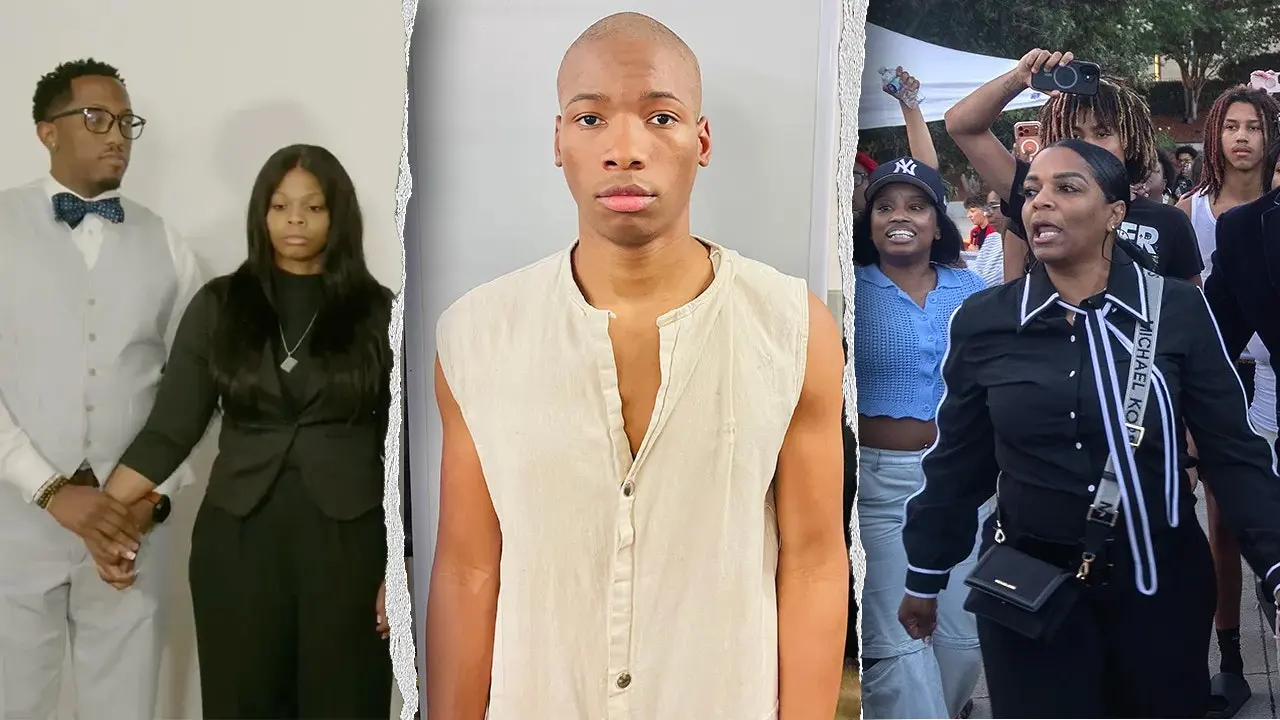
On a warm, ordinary spring afternoon in April 2025, the community of Frisco, Texas, was shaken to its core during a high school track meet—a venue normally reserved for youthful celebration, athletic triumph, and community solidarity. Instead, the event became the backdrop for an unimaginable tragedy when seventeen-year-old Austin Metcalf was fatally stabbed, a devastating moment that instantly shattered the lives of two families and sent shockwaves through the local community. The young suspect, Karmelo Anthony, was subsequently arrested, thrusting him from the familiar routines of teenage life into the clinical, unforgiving machinery of the criminal justice system. Following a highly publicized trial that laid bare the raw emotions of a grieving town, Anthony was convicted of murder and sentenced on a Tuesday to serve thirty-five years behind bars. Though his legal team has since filed a formal notice of appeal to challenge the conviction, the reality of the sentence remains a heavy, sobering anchor, marking the beginning of a decades-long prison term and leaving a trail of unresolved grief in its wake.
In the immediate aftermath of the tragedy, as public outrage and media scrutiny intensified, Karmelo’s mother, Kala Hayes, found herself navigating the agonizing intersection of maternal desperation and public condemnation. Seeking to protect her family and secure legal representation for her son, Hayes turned to the internet, launching a crowdfunding campaign on the international platform GiveSendGo on April 15, 2025, less than two weeks after the fatal incident. Titled the “Help Karmelo Official Fund,” the campaign was launched with an ambitious and desperate goal of generating nearly $1.4 million. In a testament to the complex, polarized nature of public sympathy, the fundraiser ultimately amassed a staggering sum of just under $634,000 before its recent removal. The campaign’s description painted a vivid picture of a family in crisis, explaining that while legal defense was a critical component of their journey, the financial support was also desperately needed to address a cascade of urgent security crises. These included funding the immediate relocation of the Anthony family, who reportedly faced escalating and credible threats to their physical safety, as well as covering basic living expenses, transportation, psychiatric counseling, and other protective measures as their lives collapsed around them.
The fundraising effort quickly became a focal point for intense ethical debate, illustrating the complex intersection of digital crowdfunding, the right to due process, and the raw pain of a victim’s grieving family. For many observers, the spectacle of raising hundreds of thousands of dollars for a defendant accused of a violent crime felt like an affront to the memory of young Austin Metcalf, whose family was left to mourn a loss that no amount of money could ever repair. Conversely, supporters of the fund argued that every accused individual is constitutionally entitled to a robust legal defense, and that a family should not be subjected to harassment or physical danger for the alleged actions of one of its members. The controversy eventually led to the direct intervention of GiveSendGo, which made the decision to take down the high-profile campaign. In a public statement shared on the social media platform X, the crowdfunding organization explained that the fundraiser had been originally established to support pre-trial needs and relocation efforts, and that those funds had been successfully dispersed over the past year for lawful purposes. Because those stated objectives had been met, the platform chose to close the fundraiser, explicitly emphasizing their strict policy that a campaign’s stated purpose must remain accurate so that donors are fully aware of what their contributions are supporting.
This shutting down of the official fund has thrown a renewed spotlight on the forced, quiet displacement of the Anthony family, who were compelled to abandon their home in Frisco under the cover of anonymity and fear. The psychological toll of fleeing a hometown under the shadow of a violent tragedy is profound, leaving the family to navigate a disorienting exists of isolation and displacement while Karmelo remains held in a jail cell, segregated from the general population as he awaits the outcome of his appeal. The family’s attempts to rebuild their fractured lives in secrecy have left sparse digital footprints, though glimpses of their relocation have emerged through social media. A man identifying himself as Karmelo’s father, Drew Anthony, publicly updated his Facebook profile to indicate that he currently resides in New Orleans, Louisiana, hundreds of miles away from the Texas suburb where the tragedy unfolded. This geographical dispersion highlights the quiet, secondary casualties of violent crime, showing how the ripples of a single tragic afternoon can scatter a family across state lines, forcing parents and siblings to live in a state of perpetual transit, forever haunted by the actions of a child they could not save from himself.
Despite the closure of the original GiveSendGo campaign, the struggle to fund Karmelo Anthony’s ongoing legal battle and his family’s survival has not ceased, but has instead mutated into a new phase of civil rights advocacy. Minister Dominique Alexander, a prominent and often polarizing Dallas-based civil rights activist who has served as the Anthony family’s official spokesperson throughout the grueling legal process, recently stepped forward to launch a brand-new fundraising initiative. Alexander’s involvement elevates the case beyond a localized criminal trial, positioning it within a broader, ongoing dialogue about systemic justice, youthful violence, and the defense of marginalized families under intense public pressure. When major media outlets, including Fox News Digital, reached out to the Anthony family, Alexander, and the administrators of GiveSendGo for comment on the sudden transition of these fundraising channels, they were met with a wall of silence. This lack of public response underscores the high stakes and defensive posture of those involved, as the legal team prepares for a lengthy, complex appeal process in a highly charged environment where every public statement is scrutinized and every digital dollar is contested by an angry public.
Ultimately, beneath the court filings, the hundreds of thousands of dollars in donations, the shifting addresses, and the polarized online battlefields lies a deep, permanent tragedy that no legal appeal or financial success can ever undo. Seventeen-year-old Austin Metcalf is gone, his potential forever frozen on that Texas track field, leaving his family to carry an agonizing void that will last a lifetime. On the other side of this tragedy, another young life has been severely derailed, with Karmelo Anthony facing the prospect of spending the entirety of his youth and middle age behind a prison wall, isolated from the world as his family navigates a life of exile and quiet shame. The closure of one fundraiser and the suspicious reappearance of another serve as stark reminders of the messy, unresolved human costs of violence, where the search for safety, justice, and redemption remains elusive for everyone involved. As the legal system slowly grinds onward through the appeals court, the community of Frisco and the families of both the victim and the offender are left to grapple with the painful reality that on that tragic day in April, there were no winners—only a devastating loss of life and a legacy of brokenness that will endure for generations.