



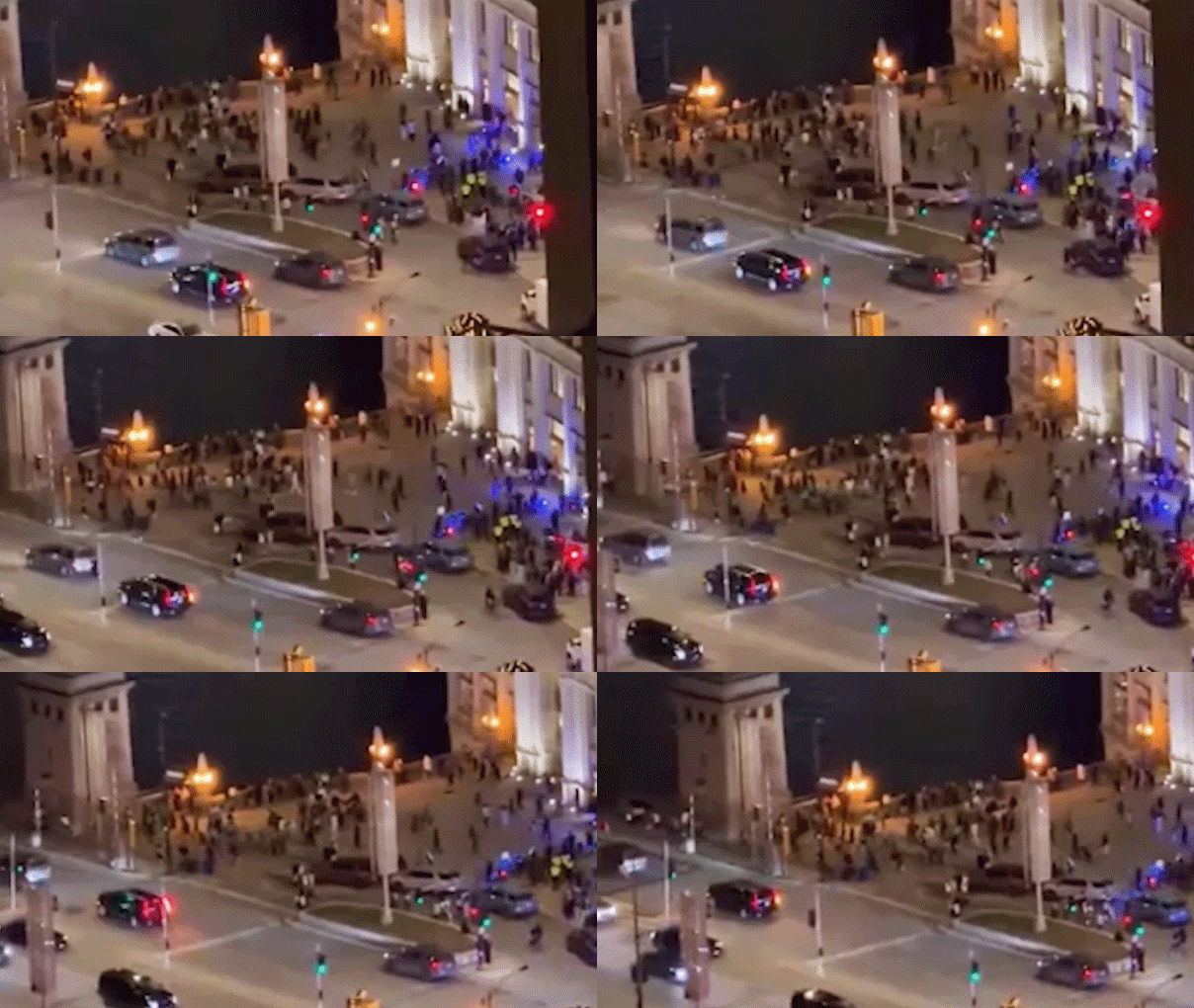
Halloween is supposed to be a night of innocent mischief, costumes, candy, and the kind of spooky fun that brings neighborhoods together. But in cities and towns across America, that familiar excitement is now tangled with a very different kind of fear: the worry that Halloween will turn into another so-called teen takeover. These are not just large groups of kids hanging out. They are massive, social-media-fueled gatherings that can overwhelm streets, parks, and downtown districts, sometimes turning into chaos with fights, property damage, and even gunfire. This year, local leaders and police departments are not waiting to see what happens. From the Jersey Shore to suburban Atlanta, officials are rolling out strict curfews, flooding the streets with extra officers, and working with community volunteers to stop trouble before it starts. They are determined to let young people have their holiday, but not at the expense of public safety. The message is clear: Halloween should be about fun, not fear. And the planning happening in places like Oak Park, Illinois; Chicago’s Hyde Park neighborhood; Covington, Georgia; and Long Branch, New Jersey shows just how seriously communities are taking the threat—and how much they hope a few simple precautions can keep the peace.
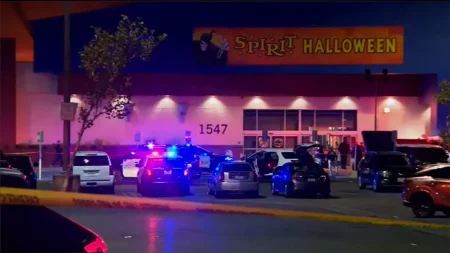
The concerns are not abstract. Just ask Oak Park, a village just outside Chicago that is still reeling from last year’s terrifying Halloween night. According to police, an estimated 500 teenagers swarmed downtown Oak Park, and the festive mood quickly turned dangerous. Fights broke out, gunshots rang out, and the local police department was so overwhelmed that officers from six neighboring agencies had to be called in for backup. It was the kind of scene no community wants to relive. This year, Chief Shatonya Johnson has promised a different approach. Her department will have more officers on duty than usual during Halloween weekend, and they will be using a range of extra measures specifically designed to prevent a repeat of last year’s chaos. The increased presence is about more than enforcement—it is about sending a signal that Oak Park is paying attention and ready to respond. For parents, it is a small measure of comfort; for teenagers, it is a reminder that unsupervised, anonymous crowds making trouble will not be tolerated. The strategy reflects a broader lesson many cities are learning: you cannot just hope the rowdiness will fade away. You have to plan, communicate, and be visible. Chief Johnson’s proactive stance is not about being the fun police. It is about making sure everyone goes home safe, and that a single night of poor choices does not leave a permanent scar on the community.
In Chicago’s historic Hyde Park neighborhood, the response is coming not just from law enforcement but from the people who live and work there. A group called CollaBOOration is organizing adults to take to the streets in bright orange shirts, walking the sidewalks and staying in constant contact with one another. The goal is to establish what founder Bennie Currie calls a “critical mass on the street” before the holiday chaos even begins. If large gatherings try to take over 53rd Street, they will already be met by a wall of calm, watchful adults. This community-led effort was born from real trauma. From 2016 to 2019, Hyde Park saw a series of large Halloween gatherings that turned violent, leaving residents feeling unsafe in their own neighborhood. Instead of hiding behind locked doors, they decided to reclaim the streets. The orange shirts are a simple but powerful sight: they say, “We are here, we care, and we are not going anywhere.” There is something deeply human about this approach. It acknowledges that police cannot be everywhere at once, and that communities must sometimes take responsibility for their own streets. It also offers teenagers something rare: the presence of adults who are not yelling at them, but simply being there—watching, guiding, and quietly standing between them and danger. The image of neighbors patrolling their own block is a reminder that Halloween is not just for kids; it is a shared tradition, and protecting it requires everyone.
Further south, in the Atlanta suburb of Covington, Georgia, the rules are spelled out clearly. Any child under the age of 16 will have to be home or accompanied by an adult after 7 p.m. on Halloween if they want to be in the downtown area. It is a direct, straightforward curfew aimed at preventing the kind of crowd that can quickly spiral out of control. And in Long Branch, New Jersey, the police department is preparing to strictly enforce a Halloween curfew for anyone under 17, from 8 p.m. until 6 a.m. That curfew was born out of a painful lesson: in May, hundreds of people gathered for a teen takeover that ended in fights and six arrests. For a beach town like Long Branch, such turmoil is not just unsettling; it can damage the entire community’s reputation and make residents and visitors alike feel vulnerable. Curfews are often controversial. Some worry they unfairly punish all teenagers for the actions of a few. But here, the message is being framed as one of safety, not punishment. The idea is not to keep young people from having fun on Halloween. It is to help them understand that there are limits, and that crowds can become unpredictable and dangerous long after the fun stops. Parents, too, are being reminded that their involvement matters. A curfew is only as effective as the adults who enforce it, and local officials are hoping families will understand that these rules are designed to protect everyone, not to spoil a holiday.
National police experts see this wave of curfews and increased patrols as a sign of progress, not overreach. Sgt. Betsy Brantner Smith, a spokeswoman for the National Police Association, calls it a “great idea” for cities to be proactive about Halloween. She points out that police call volume jumps dramatically on Halloween night—by four, five, or even six times the normal amount. There are fireworks, there are fights in schoolyards, there are frantic parents looking for their kids. Add the social-media-driven desire to hold large teenage takeovers, and you have a recipe for chaos. Brantner Smith’s perspective is grounded in decades of real-world experience. She knows that Halloween is one of the busiest nights for law enforcement, and that any extra step taken beforehand can make all the difference. Her comments also highlight an uncomfortable truth: teen takeovers are not slowing down. They have become a recurring feature of the modern landscape, amplified by hashtags and livestreams that draw hundreds or even thousands of young people to a single location in a matter of minutes. What begins as a playful idea can quickly become a dangerous mob. By getting ahead of these gatherings with visible police presence and clear consequences, communities are trying to break the cycle before one bad night escalates.
At its heart, this story is about the tension between youthful energy and public safety, between letting kids be kids and keeping them safe from themselves. The cities taking action are not trying to cancel Halloween. They are trying to preserve it. They know that a night of flooded streets and costumed crowds can be joyful, but also fragile. One wrong spark—a rumor, a fight, a prank gone too far—can turn a celebration into a crisis. That is why Oak Park is adding officers, why Hyde Park neighbors are putting on orange shirts, why Covington is setting a curfew, and why Long Branch is drawing a line at 8 p.m. Each solution is different because each community is different, but the goal is the same: to make sure young people can enjoy a time-honored tradition without putting themselves or others in harm’s way. There is sorrow in this, too. It is sad that Halloween now requires so many precautions, that something as simple as walking down the street has to be planned and policed. But there is also hope. In the adults who volunteer their time, in the officers who choose to work overtime, and in the parents who sit with their kids to explain why boundaries exist, there is a deep and abiding care for the next generation. That is the human heart of every curfew and every orange shirt. It is not about control. It is about love, and the simple wish that everyone comes home safe. So as Halloween night approaches, the hope in all these communities is that the only takeover will be one of laughter and candy, and that the only fights will be over who has the best costume.