

The night before Halloween should have been one of playful frights, not real-life terror. But in Fairfield, California, what began as an evening of last-minute costume shopping at the Solano Town Center ended in heartbreak and bloodshed. The young woman killed in the shooting has been identified as Constance Hages, a 31-year-old whose life was cut short inside a Spirit Halloween store. In the aftermath, her family delivered another devastating piece of news to investigators: Hages was pregnant at the time she was shot. Police have been careful to say that this detail has not yet been confirmed, and they are awaiting the findings of the Solano County Coroner’s examination. But for those who loved her, the grief is already overwhelming. She was not just a victim or a number on a police report; she was someone’s daughter, someone’s friend, possibly someone’s mother. The holiday atmosphere that once filled the mall with fake cobwebs and cheerful screams now feels grotesque, as real grief mixes with what should have been a season of make-believe. The community has been left to wrestle with a painful contradiction: how can a place designed for family fun become the site of such senseless violence?
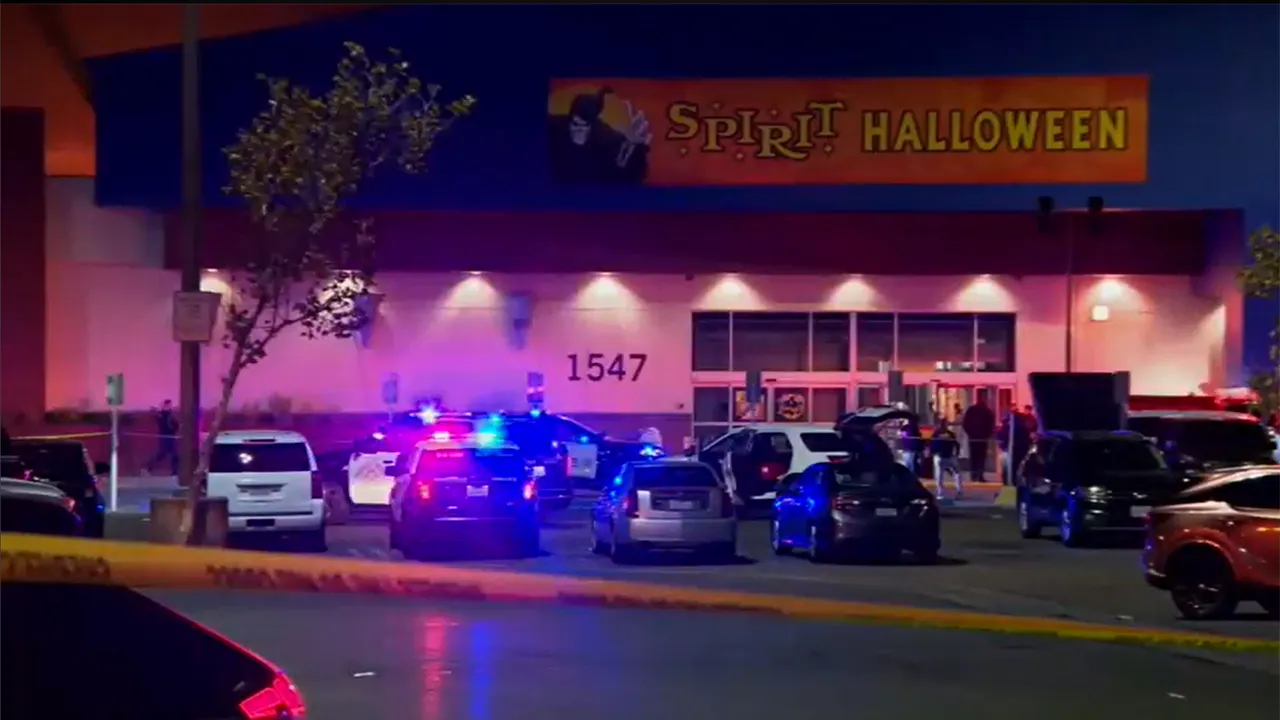
The shooting unfolded around 8:30 p.m. on Friday, when officers with the Fairfield Police Department responded to frantic calls about gunfire at the Spirit Halloween store. The scene was chaotic, as employees and shoppers who had been browsing costumes and decorations suddenly found themselves in the middle of an active shooter situation. When the smoke cleared, seven people had been wounded—one of them fatally. Police later revealed that investigators believe the violence was not a random attack but rather a targeted incident involving a single suspect inside the store. That detail offers a sliver of explanation, but it does little to soothe the terror of those who were caught in the crossfire. For the people who were there, the distinction between a random act and a targeted one is meaningless in the moment. They heard gunfire, they ran, they ducked, they prayed. They saw holiday displays covered in shattered glass and bloodstains. The store, intended to sell costumes for a night of make-believe monsters, became the backdrop for a real-life nightmare. Officers quickly secured the mall, but by then, the damage had been done. A family was destroyed, and many more lives were forever changed in a matter of minutes.
The surviving victims represent a painful cross-section of the community. A 16-year-old boy, a 19-year-old man, and a 32-year-old man remain in critical condition, fighting for their lives in hospitals. A 23-year-old man is listed in critical but stable condition, a phrase that offers a thin measure of hope but also acknowledges how fragile his situation remains. Two other men—ages 19 and 43—were treated for gunshot wounds and have already been released from the hospital. They are lucky to be alive, though “lucky” feels like a strange word when applied to survivors of such trauma. They will carry the memory of that night with them forever, even as their physical wounds begin to heal. The families of the critically injured are no doubt living through a sleepless nightmare, standing vigil in hospital waiting rooms, trying to make sense of a senseless act. The victims range from a teenager to a middle-aged man, reminding us that gun violence does not discriminate. These are not just statistics on a news report. They are sons, brothers, fathers, friends. They are people who simply went to a store on the night before Halloween, probably looking for a costume or a decoration, and instead found themselves caught in an act of violence that has left their community shaken to its core.
In the hours after the shooting, the Fairfield Police Department released statements expressing grief and gratitude. “Our thoughts and prayers are with the families of the victims of this heartbreaking incident,” the department said, acknowledging that words can feel hollow in the face of such loss. But behind those words, detectives were already hard at work. They are reviewing surveillance video from the mall and the Spirit Halloween store, collecting evidence, and interviewing witnesses in the hope of identifying and apprehending the shooter. As of now, no arrest has been made, and police have not released many details about what led up to the violence. Investigators continue to search for the suspect, urging anyone with information to come forward. They have asked the public to contact the Fairfield Police Department at 707-428-7600 or to email [email protected]. The department has also acknowledged the broader concern for public safety as families prepared to celebrate Halloween the very next night. Parents who had planned to take their children trick-or-treating were suddenly facing a painful decision: try to give their kids a normal experience after a tragedy, or stay home in fear. Police encouraged residents to remain vigilant, to report suspicious activity, and to look out for one another. The holiday spirit, already complicated by the violence, was now weighed down by a sense of vulnerability.
The shock of the shooting rippled beyond Fairfield. In neighboring Suisun City, Mayor Alma Hernandez echoed the grief and fear of residents across the region. “Please join us in praying for the victims and their families and for the officers working to bring the suspect into custody,” she said. Her words capture the dual need of a community in crisis: to mourn those who have been hurt and to demand that justice be served. For the people of Fairfield, a city of about 115,000 located between San Francisco and Sacramento, the shooting is a blow to their sense of safety. Malls and shopping centers are supposed to be neutral ground, places where people go to run errands or enjoy an evening out. They are not supposed to be war zones. But this is the reality of a country increasingly familiar with mass shootings. The images from Solano Town Center on Friday night were all too recognizable: police tape, flashing lights, ambulances, and stunned bystanders holding phones to their ears, trying to reach loved ones. The holiday that followed was understandably muted. Even those who did go out to celebrate Halloween did so with a new awareness, keeping their eyes open for anything suspicious, hugging their children a little tighter, and wondering if their community would ever feel safe again.
In the wake of such tragedy, the focus now turns to the search for answers—and for the person responsible. Police are asking anyone with information about the shooting to step forward, no matter how insignificant the detail might seem. A phone call, an anonymous tip, a memory of someone acting strangely outside the store—any of these could be the piece that solves the case and brings the suspect into custody. But even as detectives work toward an arrest, the deeper work of healing has only just begun. Constance Hages’ family must now grieve not only for her, but for the unborn child they say she carried. They must plan a funeral for two people, a mother and a baby, who should have had decades of life ahead of them. The critically injured victims and their families face long roads to recovery, both physical and emotional. The survivors who were released from the hospital will have to learn to live with the memories of that night. The employees of the Spirit Halloween store, closed now and marked with memorials, must return to their lives knowing that their workplace became a site of violence. And the community as a whole must try to reconcile its ordinary routines with the extraordinary tragedy that struck in the middle of a shopping trip. This is not a story that ends when the news cycle moves on. It is a story that will stay with Fairfield for years. But out of the darkness, there is still hope: hope in the officers working tirelessly to find the shooter, hope in the neighbors and leaders offering prayers and support, and hope that the human spirit, battered but unbroken, will find a way to heal. For now, all anyone can do is hold on to each other, seek justice, and remember that behind every statistic is a real person, a real family, and a real loss that cannot be undone.