


China Escalates Critical Minerals War with New Ban on Rare Earth Shipments to Key U.S. Tech Firms
Beijing Targets Washington’s Flagship Magnet Manufacturers in Strategic Trade Blow
In a major escalation of the global battle for semiconductor and clean energy dominance, Beijing has struck a direct blow against Washington’s highly publicized campaign to revive its domestic critical minerals sector. On Monday, China’s Ministry of Commerce announced sweeping new export restrictions that bar Chinese companies from shipping vital rare earth metals to ten prominent American entities, effectively aiming to cripple the United States’ ability to manufacture high-performance permanent magnets independently. Positioned at the absolute center of this retaliatory strike are USA Rare Earth and MP Materials, the two leading American enterprises currently backed by hundreds of millions of dollars in Pentagon funding to break the West’s near-total reliance on Chinese mineral processing. This aggressive policy maneuver threatens to reignite volatile trade tensions between Washington and President Donald Trump, directly undermining previous diplomatic assertions. Following an October bilateral meeting with Chinese President Xi Jinping in South Korea, President Trump had announced that Beijing had agreed to maintain reliable rare earth shipments to the United States as needed; however, Chinese officials notably refrained from verifying that agreement publicly, and a subsequent peak-level summit in Beijing last month concluded with no progress made on stabilizing the strategic supply chain.
The Chokehold on Global Technology: Understanding the Light and Heavy Rare Earth Monopoly
The global high-tech economy remains profoundly vulnerable to Beijing’s near-monopolistic control over the rare earth elements that power modern defense systems, renewable energy grids, and next-generation consumer electronics. Currently, China processes approximately 90 percent of the world’s light rare earth elements, which are indispensable for refining petroleum, polishing specialized glass, and fabricating standard vehicle magnets. The geopolitical leverage is even more severe regarding heavy rare earth elements—critical additives required to create heat-resistant permanent magnets used in artificial intelligence microchips, military drones, precision lasers, and advanced robotics—where China refines a staggering 98 percent of the global supply. This extreme concentration of industrial power provoked deep anxiety at the recent Group of 7 (G7) summit in France, where leaders of the world’s major industrialized nations pledged to aggressively diversify their supply networks, calling for a strict international standard where no single nation supplies more than 60 percent of any country’s critical mineral imports by 2030. In response, Beijing has increasingly weaponized its geological dominance as a trade retaliatory tool, establishing tight export controls back in April 2025 on seven rare earth elements and finished magnets by designating them as “dual-use” goods with both military and commercial applications, a regulatory move that has already triggered widespread operational disruptions across global automotive and aerospace manufacturing sectors.
The U.S. Race to Rebuild a Severed Industrial Base
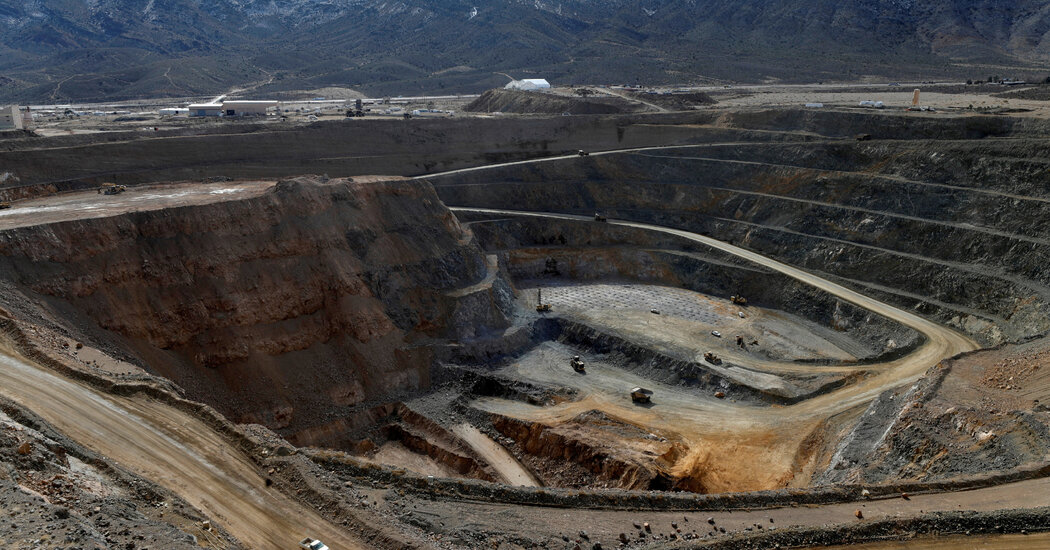
To counter this existential economic threat, the United States government has embarked on an urgent, heavily subsidized industrial crusade to resurrect a domestic magnet-manufacturing infrastructure that was largely abandoned to overseas competitors a quarter-century ago. At the vanguard of this federal effort, MP Materials operates the historic Mountain Pass open-pit mine in California alongside a massive processing facility engineered to refine four fundamental light rare earth elements, while concurrently constructing advanced magnet-manufacturing factories in Texas designed to supply General Motors and key defense prime contractors. Meanwhile, USA Rare Earth has focused its efforts on retrofitting and restoring dormant, high-precision magnet-production machinery at a specialized facility in Stillwater, Oklahoma, attempting to establish a completely domestic, vertically integrated supply chain from mine to market. Yet, despite the massive influx of public capital from the Department of Defense, both companies remain highly dependent on foreign sources for the raw heavy rare earth additives required to make these magnets functional under extreme conditions. The immediate silence from both raw material giants following Monday’s announcement, coupled with a lack of comment from the U.S. State Department, underscores the precarious nature of this high-stakes industrial transition as American firms scramble to adapt to China’s formalized blockade.
The Physical Reality of the Critical Minerals Embargo: A Quiet Supply Chain Freeze
While policymakers in Washington debate long-term decoupling search strategies, real-time customs data reveals that China’s targeted export restrictions have already quietly severed the lifeblood of American advanced manufacturing. According to official data from China’s General Administration of Customs, direct shipments of dysprosium—an irreplaceable heavy rare earth element required to prevent electric vehicle motors, steering systems, and high-temperature brake sensors from demagnetizing under intense friction—have been completely suspended to the United States since the initial dual-use restrictions took effect in April 2025. Terbium, an even scarcer and more expensive heavy rare earth element that magnet manufacturers utilize as a substitute for dysprosium, has suffered an identical fate, with Chinese customs records showing zero shipments to the United States since last October, save for a single six-metric-ton consignment that Beijing strategically authorized to coincide with the diplomatic summit in South Korea. This calculated choking of the supply chain leaves domestic magnet producers with virtually no raw materials to feed their brand-new, multi-million-dollar processing lines, turning what once seemed like a distant geopolitical warning into an immediate, business-threatening shortage for American automakers and military contractors alike.
Corporate Rivalry and Technological Walkarounds in a Scarcity Economy
The sudden starvation of these heavy rare earths has forced Western producers to pursue clever metallurgical workarounds, though the resource crunch has simultaneously sparked bitter corporate warfare over intellectual patent rights. Smaller specialized firms, such as Florida’s Advanced Magnet Lab, have managed to survive the supply freeze by sourcing recycled dysprosium from specialized boutique recyclers in Europe to fuel their niche production of drone-wire magnets, but this recycled supply yields only a few tons annually—a drop in the ocean compared to the 10,000-ton industrial scales targeted by MP Materials and USA Rare Earth. To drastically reduce their dependency on heavy rare earths, large-scale manufacturers are attempting to implement a cutting-edge technique known as grain boundary diffusion, which selectively deposits dysprosium or terbium only along the microscopic boundaries of the magnet’s crystal structure rather than throughout the entire material. However, this critical technological bypass has become the subject of intense litigation, with MP Materials filing a high-profile lawsuit against USA Rare Earth alleging systemic theft of intellectual property related to the diffusion process—a claim USA Rare Earth vigorously denies—proving that even as the U.S. struggles to unite against foreign economic pressure, domestic champions are actively cannibalizing one another over the intellectual tools needed for survival.
The Global Scramble for Mineral Sovereignty Ahead of Beijing’s Next Deadline
With the domestic supply chain hanging in the balance, Western companies are furiously scanning the globe to secure non-Chinese deposits before Beijing codifies an even stricter set of global export guidelines scheduled to take effect this November. USA Rare Earth has sought to mitigate its domestic vulnerabilities by pursuing strategic international partnerships, most notably a landmark acquisition to gain control of Serra Verde, an emerging mining operation in Brazil that has recently begun extracting small, commercial quantities of dysprosium from unique ionic clay deposits. Similarly, Australia’s Lynas Corporation has started producing minor volumes of heavy rare earth oxides, yet these combined non-aligned operations produce only a fraction of the raw materials required to feed the West’s projected gigafactories. As the clock ticks toward Beijing’s November regulatory deadline, the frantic global scramble for alternative supply lines highlights a stark reality: the battle over these microscopic, highly magnetic elements has evolved far beyond a routine international trade dispute, solidifying into a defining geopolitical struggle that will ultimately dictate which superpower controls the physical foundations of the twenty-first-century clean energy transition, advanced robotics, and global military supremacy.