


A Fragile Peace Shattered by Fire: Inside the Devastating Explosion at Qatar’s Ras Laffan Energy Hub
The Midnight Inferno: A Crucial Energy Source Erupts in the Persian Gulf
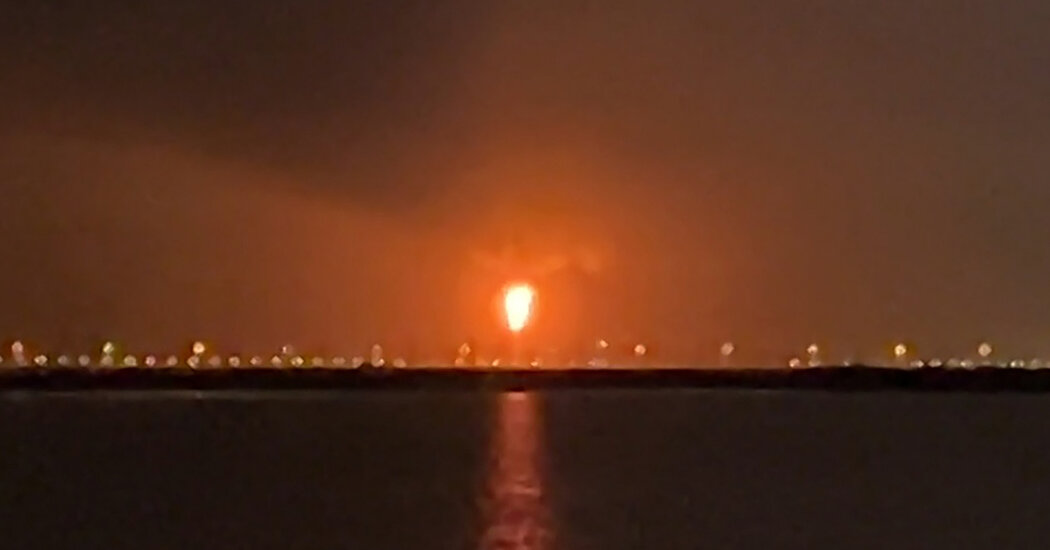
On a late Sunday evening, when the waters of the Persian Gulf were supposed to reflect nothing but the quiet hum of industrial prosperity, a sudden, blinding flash of orange light tore through the night sky, exposing the deep vulnerabilities of our global energy infrastructure. The massive explosion at Ras Laffan Industrial City, the crown jewel of Qatar’s economic power, has left at least 54 people injured and a frantic search underway for 18 workers who remain missing in the charred debris. The catastrophic blast occurred at a localized gas supply facility managed by QatarEnergy, the state-run oil and gas giant, just as engineers and technicians were attempting the highly delicate process of restarting production after a prolonged, wartime shutdown. In the immediate aftermath of the explosion, the Qatari Interior Ministry issued swift statements via social media, aiming to calm panic by emphasizing that while the physical damage and human toll were severe, no critical hazardous gas leaks had been detected in the surrounding atmosphere. Yet, as rescue teams navigate smoking metal ruins under the hot desert sun, the tragedy serves as a grim reminder of the high-stakes dangers of fuel production and the physical toll extracted from those who work on the frontlines of global energy supply.
                          [ RAS LAFFAN INDUSTRIAL CITY ]
                                 |
           +---------------------+---------------------+
           |                                           |
 [ HUMANITARIAN CRISIS ]                     [ SYSTEMIC TECH CHALLENGE ]
 • 54 Workers Injured                        • Cold-restart thermal stress
 • 18 Missing (Search ongoing)               • Reactivating idle pipelines
 • Heavy local rescue deployment             • Complex cryogenic LNG systems
The Perils of the Reactivation Phase: Technical Demands and Infrastructure Strain
The incident at Ras Laffan highlights the complex and dangerous nature of maintaining liquefied natural gas (LNG) infrastructure, particularly during start-up operations. Engineering experts point out that restarting a massive cryogenic facility after an extended period of inactivity is one of the most hazardous undertakings in the petrochemical industry. The process requires reintroducing volatile, highly pressurized hydrocarbons into pipelines, valves, and processing units that must operate at temperatures as low as minus 162 degrees Celsius. During a prolonged shutdown, thermal contraction, seal degradation, and moisture ingress can compromise safety systems. QatarEnergy acknowledged that the ignition occurred “during the start-up of operations,” hinting at a sudden technical failure or pressure flare-up that bypassed automated emergency shutdowns. While Qatari officials have launched a transparent, safety-focused investigation into the sequence of events, industry analysts believe the rush to bring these critical systems back online to meet global demand may have placed unprecedented stress on both the mechanical infrastructure and the workforce operating it.
[ MARCH ATTACK ] [ EXTENDED IDLENESS ]Iranian missile/drone strike ===> System-wide shutdown &
causes major structural damage unprecedented thermal stress
||
/
[ ATTEMPTED COLD-RESTART ]
||
/
[ PRESSURE & FLARE FAILURE ]
Technical malfunction triggers
sudden ignition & explosion
The Backbone of Global Energy: Ras Laffan’s Geopolitical Position
To understand the profound implications of this explosion, one must look closely at the geographic and economic significance of Ras Laffan Industrial City itself. Situated on a small peninsula juts prominently into the Persian Gulf, Ras Laffan is not merely a domestic asset; it is a global energy choke point whose operational status dictates the price of electricity and heating from Tokyo to Berlin. Qatar is one of the world’s leading exporters of liquefied natural gas, sharing the massive North Field—the largest non-associated natural gas field on Earth—with neighboring Iran. Over the last decade, European nations, in their quest to decouple from Russian pipeline gas, have become highly reliant on Qatari supertankers to keep their heavy industries afloat and warm their homes during winter. Consequently, any interruption at Ras Laffan ripples instantly through international commodity exchanges, threatening to drive up energy prices, trigger inflation, and disrupt supply contracts at a time when the global economy is still struggling with high interest rates and precarious supply chains.
                    +----------------------------+
                    |  QATAR'S NORTH FIELD GAS   |
                    +--------------+-------------+
                                   |
            +----------------------+----------------------+
            |                                             |
[ WESTERN DEMAND HUB ] [ EAST ASIAN MARKET ]
• Replaces Russian pipeline gas • Feeds heavy manufacturing
• Shields EU from winter spikes • Critical for grid stability
Caught in the Crossfire: The Legacy of Regional Conflict
The roots of Sunday’s industrial disaster are deeply intertwined with the devastating geopolitical conflict that recently gripped the Middle East. Fast-developing events began earlier this year when Qatar was forced to shutter its primary natural gas production facilities during the outbreak of the destructive war involving the United States, Israel, and Iran. This conflict transformed the Persian Gulf into a hazardous zone, directly exposing Qatar’s energy infrastructure to regional fire. In March, the vulnerability of Ras Laffan became clear when a massive Iranian missile and drone assault successfully evaded air defenses, causing significant structural damage to several processing trains. At the time, stunned Qatari officials warned that rebuilding the affected units and restoring the facility to peak export capacity could take several years of intensive labor. Sunday’s tragic attempt to restart operations was a direct, perhaps premature, attempt to defy those gloomy projections—a high-stakes bid to prove to international markets that Qatar could overcome the physical scars left by modern drone warfare.
                [ MARCH ATTACK: IRANIAN MISSILE/DRONE STRIKE ]
                                      |
                  +-------------------+-------------------+
                  |                                       |
       [ PHYSICAL INFRASTRUCTURE ]               [ STRATEGIC IMPACT ]
       • Damaged processing trains               • Years-long recovery estimate
       • Compromised thermal seals               • Urgent pressure to restart
The Paradox of Diplomatic Mediation and National Vulnerability
The timing of this catastrophic malfunction is particularly bitter, coming just days after the United States and Iran reached a landmark preliminary agreement to end their conflict. In a showcase of diplomatic skill, Qatar acted as a primary mediator, hosting backchannel negotiations and utilizing its balanced connections to broker peace between the Western alliance and Tehran. This dual role defines Qatar’s modern geopolitical strategy: balancing major global powers by serving as an indispensable diplomatic mediator and hosting the strategic Al Udeid Air Base, while simultaneously sustaining a massive energy network alongside Iran. Yet, this high-wire act offers little protection against the cold realities of physical warfare and industrial hazards. The fire at Ras Laffan highlights the paradox of a small nation that can successfully broker peace agreements on the global stage, yet remains highly vulnerable to the domestic economic impacts of those same conflicts.
                     +--------------------------+
                     |  QATAR'S BALANCING ACT   |
                     +------------+-------------+
                                  |
          +-----------------------+-----------------------+
          |                                               |
[ DIPLOMATIC POWER ]                             [ PHYSICAL VULNERABILITY ]
• Host of Al Udeid Air Base                      • Proximity to regional targets
• Key mediator: US-Iran talks                    • High concentration of LNG assets
Looking Ahead: Search Operations and the Future of Energy Security
As the smoke clears over Ras Laffan, the immediate focus remains on rescue efforts. Specialized search and rescue teams, supported by canine units and advanced thermal imaging technology, continue to search the damaged structure in hopes of finding survivors among the 18 missing workers. While the Qatari government works to reassure global trading partners that exports will continue through alternative terminals, energy analysts are reassessing global supply vulnerabilities. The incident highlights that ceasefire agreements cannot instantly repair damaged infrastructure or resolve the technical challenges of restarting idled industrial systems. For a world looking to transition to cleaner fuels, liquefied natural gas remains a critical bridge; however, the disaster at Ras Laffan reminds us that this bridge is built on complex, high-pressure infrastructure vulnerable to both geopolitical conflict and technical failure.
                  +--------------------------------+
                  |   POST-DISASTER OUTLOOK        |
                  +---------------+----------------+
                                  |
           +----------------------+----------------------+
           |                                             |
[ IMMEDIATE ACTION ] [ GLOBAL LESSON ]
• Rescue efforts for 18 missing • Critical need to harden assets
• Integrity testing of pipelines • Diversification of energy lanes