


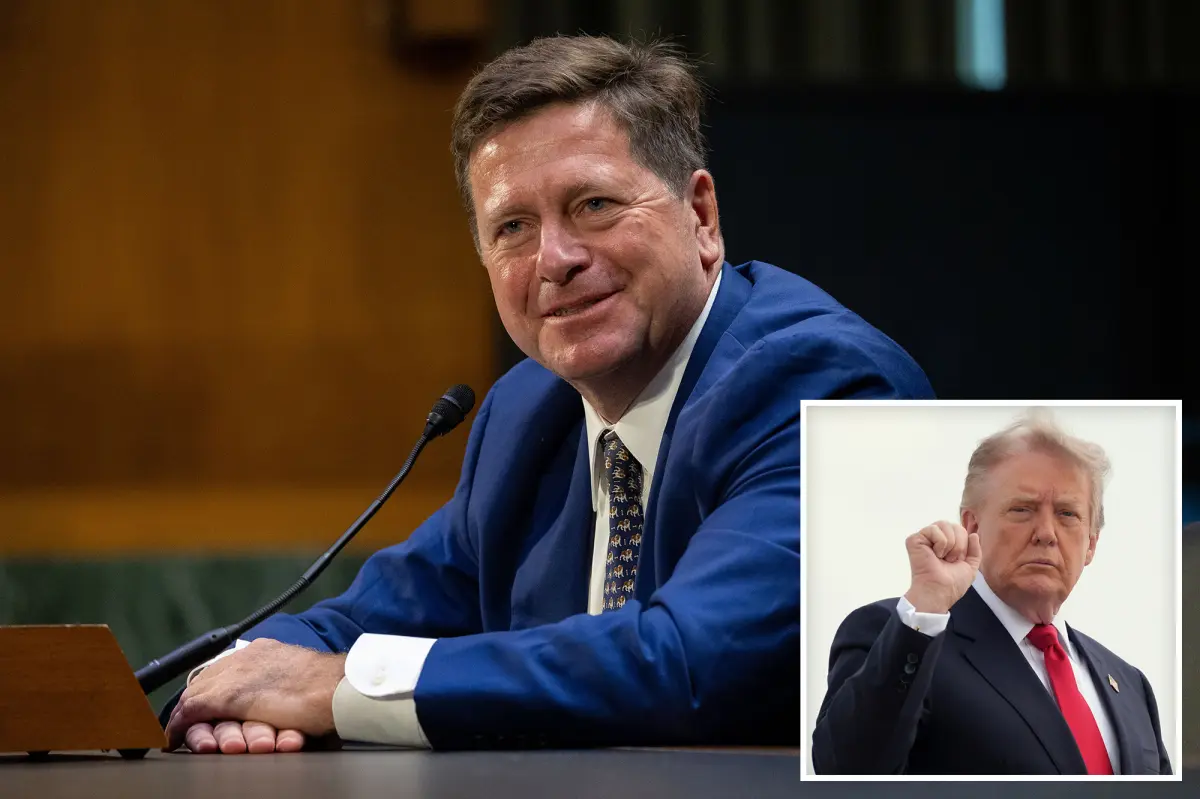
On a tense Monday evening in the nation’s capital, the mahogany-paneled chamber of the United States Senate became the stage for the latest chapter in American political theater. Jay Clayton, the seasoned corporate lawyer and former regulatory chief, successfully cleared his first major procedural hurdle in a tight 51-43 vote. Falling strictly along partisan lines, the roll call reflected the deep executive divisions that have come to define modern Washington. If Clayton survives the final, binding confirmation vote scheduled for later this week, he will officially assume one of the most intellectually demanding and stressful jobs in global governance: Director of National Intelligence (DNI). For weeks, the Office of the Director of National Intelligence (ODNI) has operated under the temporary stewardship of acting director Bill Pulte, holding its breath for a permanent leader after a chaotic succession process defined by sudden departures, intense partisan bickering, and unusual political curveballs. Senate Majority Leader John Thune, a South Dakota Republican, had set this high-stakes wheel in motion by filing a cloture motion on Clayton’s nomination, pushing it through the Senate Intelligence Committee despite fierce resistance from across the aisle. Standing before his colleagues on the Senate floor, Thune painted a picture of a nation facing an increasingly hostile global threat environment, arguing that Clayton’s formidable resume as the former top prosecutor for the Southern District of New York (SDNY) and as Chairman of the Securities and Exchange Commission (SEC) makes him uniquely qualified to restore steady, clear-eyed leadership to America’s sprawling intelligence apparatus.
Behind this legislative chess match lies a series of deeply personal and human struggles that have left the country’s national security agencies in a state of profound anxiety. The vacancy Clayton is poised to fill was created by the sudden, heartbreaking departure of Tulsi Gabbard, the original DNI nominee who stepped down to care for her husband as he fights an extremely rare and aggressive form of bone cancer. In the wake of her exit, the White House installed Bill Pulte—a federal housing regulator and online philanthropist with virtually no traditional intelligence experience—as the acting director, a move that triggered bipartisan alarm bells. Under Pulte’s brief and turbulent reign, the agency was plunged into morale-crushing uncertainty as he initiated a series of aggressive restructuring efforts, announcing on social media that the ODNI had just completed its fourth round of what he termed “thoughtful, measured layoffs.” These corporate-style downsizings deeply unsettled career analysts and intelligence officers who felt their critical national security missions were being destabilized by a political novice. Senate Intelligence Committee Vice Chairman Mark Warner, a Virginia Democrat, publicly voiced the widespread anxiety shared by many on Capitol Hill, confessing his desperation to seat a permanent, qualified leader because he viewed Pulte as spectacularly unfit for the job. Yet, in a glaring paradox of modern congressional politics, when given the opportunity to advance Clayton’s nomination and end Pulte’s controversial oversight, not a single Democrat voted to support the procedural motion, prompting Thune to accuse them of playing reckless partisan games with the nation’s security systems.
The debates surrounding Clayton’s nomination highlight a persistent question in modern statecraft: does a successful corporate reformer possess the raw instincts required to manage high-stakes espionage and global counterterrorism? Clayton readily acknowledges that he does not have a traditional career in cloak-and-dagger intelligence, but he has masterfully reframed his lack of conventional spycraft as a distinct modern asset. He presents himself not as a lifelong bureaucrat, but as a proven builder capable of restructuring, modernizing, and managing massive, complex organizations. During his tenure leading the SDNY, Clayton was exposed to some of the nation’s most sophisticated and sensitive legal threats, overseeing complex cases that directly touched upon national security, financial terrorism, international bribery, state-sponsored money laundering, and the malicious manipulation of American media platforms by foreign adversaries seeking to sow civil unrest. To his defenders, Clayton represents a new breed of intelligence chief—one who understands that the modern battlefields of the twenty-first century are fought as much in the digital ledger and on social media feeds as they are in physical shadow zones. However, his critics remain deeply skeptical, arguing that managing elite Wall Street prosecutors and financial regulators is a far cry from directing the complex, highly sensitive operations of sixteen distinct military and civilian spy agencies, each with its own deeply entrenched cultural norms and highly classified operations.
Adding to the complexity of Clayton’s path to confirmation is his relationship with President Donald Trump, which has frequently caught the nominee in the crosshairs of the executive branch’s unpredictable legislative maneuvers. After nominating Clayton with high praise on Truth Social, declaring that “few people anywhere in the legal community are respected at the level of Jay,” Trump abruptly threw the nomination process into chaos. In an unexpected move that baffled lawmakers, Trump instructed Clayton to skip his own scheduled Senate hearing, choosing to lock the nomination in a holding pattern for several weeks. This strategic delay was not born out of dissatisfaction with Clayton, but was rather a high-stakes leverage play, as Trump sought to pressure Senate leaders into passing the SAVE America Act while simultaneously searching for a politically aligned successor to fill the highly coveted, influential vacancy at the Southern District of New York. This political maneuvering left Clayton waiting in a uncomfortable, public limbo, caught between his desire to serve the public and his patron’s transactional approach to federal appointments. The delay also heightened frustrations among Senate Democrats, who accused the administration of treating vital national security roles as bargaining chips, leaving the country’s premier intelligence office leaderless and vulnerable at a time of escalating international instability.
The friction surrounding Clayton’s nomination reached a boiling point following a domestic press freedom scandal that emerged during the President’s high-profile NATO summit in Turkey. When the New York Times published a controversial report alleging that Trump had swapped a luxury private aircraft gifted by Qatar for his former Air Force One plane due to unresolved security concerns, Clayton’s office responded by issuing aggressive criminal subpoenas to several Times journalists. The legal demands sought to force reporters to testify before a grand jury and surrender their personal phone records under the threat of federal prosecution, a direct intervention that sending shockwaves through the national media landscape and drawing furious condemnation from civil liberties organizations. Legal advocates, including Democracy Defenders Fund director Norm Eisen, warned that if Clayton’s aggressive legal maneuver succeeded, it would effectively dismantle the first amendment protections that safeguard investigative journalism in America, leaving no reporter safe from government retaliation. Recognizing the immense political damage and the threat of a full-scale constitutional crisis, the Justice Department quietly withdrew the subpoenas, but the chilling episode left a lingering stain on Clayton’s reputation, transforming what was expected to be a bipartisan, smooth confirmation process into a highly contentious referendum on executive power and the freedom of the press.
When Clayton finally appeared before the Senate Intelligence Committee, he was met with intense questioning from lawmakers who probed his personal independence and commitment to the democratic process. Democrats pressed him on his views regarding the peaceful transfer of power and the legitimacy of the electoral system, prompting the nominee to put some distance between himself and his party’s more extreme rhetoric by asserting, “I’m not an election denier. Joe Biden was certified as the president of the United States.” This direct statement, while clearing a necessary bar for middle-of-the-road senators, did little to soothe the partisan tensions that have left his nomination on incredibly thin ice, with Democrats remaining deeply distrustful of his record on civil liberties. As the Senate prepares for the final, decisive confirmation vote by the end of the week, the atmosphere in Washington remains thick with anticipation. While John Thune continues to publicly chastise his colleagues across the aisle for allowing critical counterterrorism tools to languish during this prolonged transition, the ultimate success of Clayton’s bid will rest on whether he can convince a deeply divided assembly that he possesses the moral independence, operational wisdom, and respect for constitutional norms required to guide America’s intelligence community through a dangerous and unpredictable future.