


Paragraph 1: The Unlikely Intrusion of Federal Agents into a Small Alaskan Town
In the remote fishing community of Petersburg, Alaska—a place accessible only by air or water, where the rhythm of life is dictated by the tides and the salmon runs—the arrival of a stranger from the FBI does not go unnoticed. Yet this was no ordinary visit. The agent, based in Anchorage, made a specific trip to the town’s boat dealership, leaving behind a business card for Charles Flint, a local resident who has known Dan Sullivan for years as a respected teacher and musician. The visit was part of a rapidly expanding federal investigation into whether donors had been deceived in the high-stakes U.S. Senate race in Alaska, where two men named Dan Sullivan are competing for the same seat. One is the incumbent Republican senator, a polished political figure with decades of establishment support; the other is a retired teacher and musician, a political unknown who entered the race late, creating a perfect storm of confusion among voters and, now, the scrutiny of federal law enforcement. For the past several months, the FBI has quietly probed whether the lesser-known Dan Sullivan was recruited by political operatives to confuse voters and siphon support away from the incumbent, potentially undermining the integrity of an election that could help determine control of the U.S. Senate. The investigation intensified dramatically after The New York Times reported that the campaign of Democratic candidate Mary Peltola appeared to be involved in recruiting the retired teacher to enter the race. Now, federal agents are fanning out across Alaska and beyond, knocking on doors of ordinary citizens who made modest contributions to a candidate they believed was simply a civic-minded neighbor, only to find themselves in the middle of a national political storm. For Charles Flint, the intrusion into his quiet life was as bewildering as it was unwanted—a stark reminder that even the most personal and local choices can be swept up in the machinery of national power.
Paragraph 2: The Local Hero’s Perspective on a Confounding Federal Visit
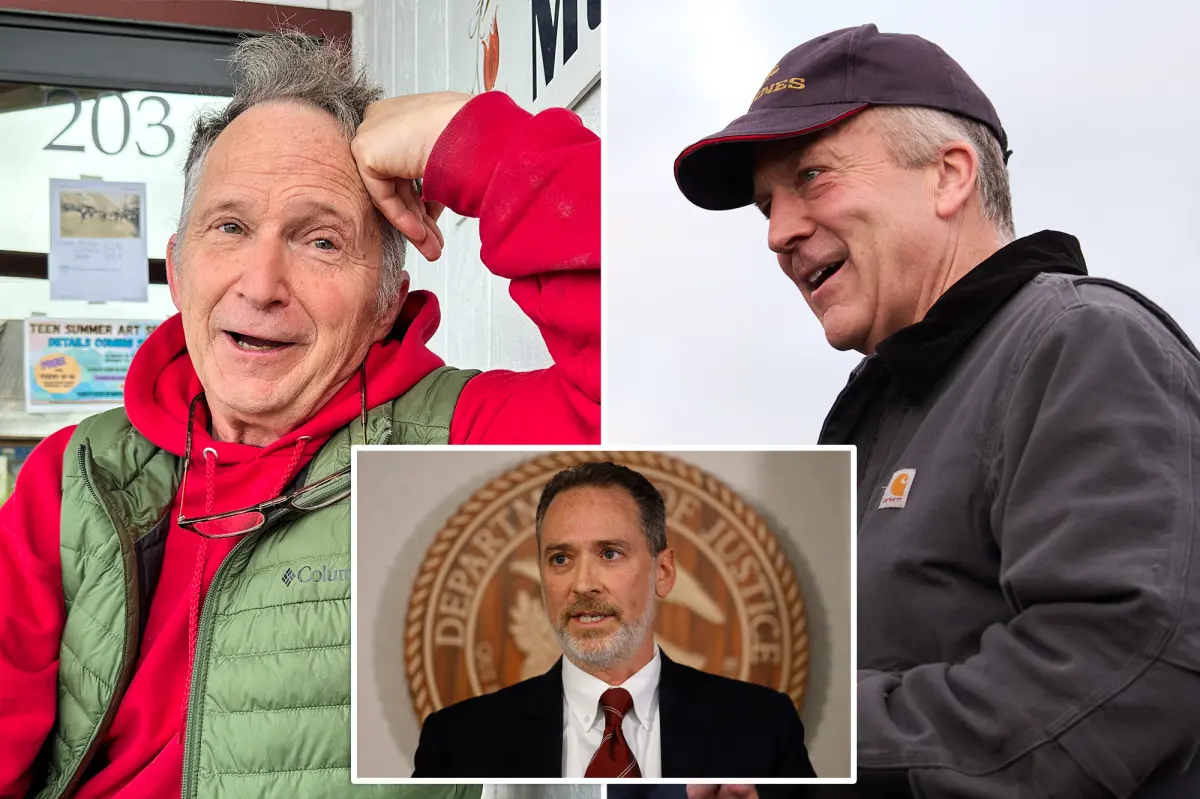
Charles Flint, who has been out of town during the agent’s visit, spoke to The Associated Press by telephone, his voice carrying a mixture of bemusement and small-town defiance. He had contributed $500 over the summer to what he considered a long-shot campaign, not out of any political calculation, but out of respect for a man he admired for “throwing his hat in the ring.” Flint knew Dan Sullivan—the retired teacher—through years of community interaction, seeing him as a dedicated educator and a talented musician who had given much to the town. To Flint, supporting him was a simple act of friendship, a bet on a good man’s civic spirit, with no illusions about victory. The FBI agent, however, had other questions. Through Flint’s son, who was working at the dealership, the agent asked whether Flint felt he had been “misled” about which Dan Sullivan he was supporting. The question itself struck Flint as absurd. He knew exactly who he was supporting, and he intended to vote strategically in Alaska’s ranked-choice general election: Mary Peltola first, then Dan Sullivan (the teacher). “I don’t feel like I’ve been misled at all,” Flint said, adding he had no intention of returning the agent’s call, concluding with a wry, “Let him waste his time trying to track me down.” His reaction embodies the mood of many locals who are caught in a national controversy they never anticipated. They see the FBI’s presence not as a necessary safeguard against democracy, but as a clumsy intrusion into a community where everyone knows everyone, and where political loyalty is based on personal relationships, not narrative spin. Flint’s sentiment—that “everybody knows who the incumbent is”—reflects a deep skepticism about the very premise of the investigation, and a resentment toward bureaucrats who cannot comprehend the intimacy of Alaskan politics. Yet his quiet defiance also masks a more profound unease: the realization that his small contribution has transformed him into a data point in a federal inquiry, a footnote in a legal battle that could shape the future of a state he loves.
Paragraph 3: The Escalation of an Investigation with National Repercussions
The federal probe, which had been simmering for months, has now burst into full view, prompting the U.S. Department of Justice to push for a court order to isolate certain Alaska ballots to investigate potential voter confusion. Alaska’s U.S. Attorney Michael Heyman acknowledged that recent revelations from The New York Times—specifically that Peltola’s campaign appeared to be involved in recruiting retired teacher Dan Sullivan—have resulted in a “significant surge of law enforcement assets to Alaska.” This legal maneuver is unprecedented in its scope, raising questions about the right to vote versus the need to ensure electoral integrity. At a Halloween party at his Mar-a-Lago estate, President Trump weighed in, calling the matter “voter fraud at the highest level” and suggesting that Dan Sullivan (the teacher) had gone into hiding because “he knows he’s guilty.” Trump also hinted, without offering evidence, that top Democratic leaders outside Alaska could be involved and should be prosecuted. These remarks injected a volatile mixture of accusation and speculation into an already charged atmosphere, further inflaming partisan tensions. But for the everyday donors contacted by the FBI, the political rhetoric is far removed from their reality. They are not operatives or strategists; they are ordinary Americans who responded to a candidate’s plea for support, often with modest sums, and now find themselves under the microscope of federal agents. The investigation’s focus on whether donors were deceived about which Dan Sullivan they were contributing to strikes many as a chilling overreach, an attempt to criminalize confusion rather than clarify it. Yet the federal government’s concern is not entirely unfounded: in a ranked-choice election, a third candidate sharing the name of the incumbent could indeed create confusion, potentially altering the outcome in a tight race. As the investigation unfolds, it threatens to overshadow the substantive issues of the campaign, turning the Alaska Senate race into a national curiosity and leaving the state’s voters to navigate a complex electoral landscape overshadowed by legal questions and the heavy presence of law enforcement.
Paragraph 4: Voices from the Donor List: Politeness and Perplexity Across the Nation
The FBI’s outreach has extended far beyond the sparsely populated villages of Alaska, reaching into the suburban neighborhoods of Massachusetts. In Sitka, another remote Alaskan town accessible only by ferry or plane, two FBI agents conducted a brief, doorstep interview with a donor who asked to remain anonymous given the ongoing investigation. The agents asked whether the contribution had been made to the Sullivan the donor had intended. The conversation lasted about five minutes, with the donor describing the agents as “scrupulously polite” and emphasizing that the conversation was entirely voluntary. The scene was a testament to the delicate balance between federal authority and civil liberties—the agents were not accusatory, but their questions carried an unspoken weight. Similarly, in the town of Groton, Massachusetts, Pat Campbell recounted a visit from a couple of FBI agents who came to her door on a Friday afternoon and spoke with her husband. She related in a text message: “They said they were from the FBI and investigating fraud in election contributions. No, we had not been defrauded. We knew to whom we had contributed.” The Campbells, like Flint, were not confused; they had made a deliberate choice to support the underdog candidate, perhaps out of curiosity or genuine belief in his platform. What unites these donors across state lines is a shared sense of being caught in a political drama not of their making. They speak of the FBI’s courtesy, yet their tone hints at a deeper bewilderment: why would the government spend resources on ordinary people who simply donated a few hundred dollars to a local candidate? For many, the investigation feels less like a search for truth and more like a cautionary tale about the risks of political involvement in an era of hyper-polarization. The agents’ questions—about whether they were misled—seem to presuppose that they were incapable of discerning the difference between two men with the same name, an assumption that many find insulting. Their responses, delivered with quiet dignity, undermine the narrative of widespread confusion, yet they also acknowledge an uncomfortable reality: even if they were not confused, others might have been, and the federal government believes it must act to preserve the integrity of the vote. As the investigation continues, these donors represent the human face of a legal inquiry that often seems abstract and distant—until a federal agent appears at your doorstep.
Paragraph 5: Peltola’s Defiance and the High Stakes of Alaska’s Ranked-Choice Experiment
Amid the chaos, Mary Peltola, the Democratic candidate and former congresswoman, has remained resolute. At a campaign rally in Anchorage, she again denied any involvement in a plan to place candidates on the ballot to detract from the incumbent senator. She described herself as “deeply offended” by the allegations, calling them “garbage” and part of a “smear campaign” to suppress turnout on the eve of the election. Speaking to a small group of campaign volunteers at an Anchorage aviation museum, she declared: “I know I can beat Dan Sullivan. I do not need any help winning this race.” Her defiance is understandable—the allegations threaten not only her campaign’s credibility but also its momentum. Yet the political reality is more complex. Alaska’s ranked-choice voting system, a relatively new experiment approved by voters in 2020, allows voters to rank candidates in order of preference. In such a system, a candidate with a similar name to the incumbent could theoretically siphon away first-choice votes, forcing the incumbent to rely on second-choice transfers. This is not merely a theoretical concern; it has been the subject of intense debate among political analysts since the late entry of the retired teacher Dan Sullivan. If he were to draw a small percentage of first-choice votes from voters who mistakenly believe they are voting for the incumbent, the cascading effect on the ranked-choice tabulation could be significant in a close election. This is precisely why the federal investigation and the Department of Justice’s request to isolate certain ballots to investigate potential voter confusion are so consequential. But for Peltola, the investigation is a cynical distraction, a way to delegitimize a victory that she believes she can achieve on the merits of her candidacy. Her campaign has focused on issues of importance to Alaskans—fishing rights, energy development, and the preservation of rural livelihoods—and she sees the name-sharing controversy as a tool of the political establishment to protect the status quo. As Election Day approaches, the stakes could not be higher: a race that will determine control of the U.S. Senate, playing out against a backdrop of federal probes, presidential rhetoric, and the everyday dignity of Alaskans who simply want to cast a ballot without confusion.
Paragraph 6: A Community Caught Between Distant Powers and Familiar Trust
The story of the FBI’s investigation into the Senate race in Alaska is ultimately not about a political scandal or a legal technicality. It is about the collision between the intimate, personal scale of community life and the impersonal, far-reaching power of the federal government. In Petersburg, Charles Flint sees not a conspiracy, but a neighbor who decided to run for office—a “long-shot” who deserved support. In Sitka and Groton, donors see their modest contributions as expressions of civic participation, not as tools of deception. The FBI agents, with their polite questions and voluntary interviews, represent a bureaucracy that cannot comprehend the social fabric of these places, where trust is built over decades of shared meals, school concerts, and fishing trips. Yet the investigation is also a symptom of a deeper national anxiety about the integrity of elections, an anxiety that has crystallized in Alaska, where a ranked-choice system and a fortuitous name have created a perfect storm of suspicion. As the election approaches, the residents of this state are left to navigate a landscape in which their neighbors are being transformed into potential witnesses, their donations into evidence, and their votes into subject of legal scrutiny. The outcome of the election may hinge on the very confusion the federal government seeks to address, but for those caught in the middle, the experience is deeply personal. They are simultaneously bemused and uneasy, trusting in their own judgment while aware that forces beyond their control are examining their actions. In the end, the investigation may reveal no wrongdoing, or it may uncover a scheme that confirms the darkest suspicions. But whatever the verdict, the process itself has already left an imprint on the people of Alaska—a reminder that in a democracy, the act of voting is both a sacred right and a subject of constant contestation. And as the sun sets over Petersburg, casting long shadows over the boat dealership where the FBI left its card, the quiet resolve of a man who knows exactly whom he supported stands as a testament to the power of ordinary citizens to maintain their own clarity in the midst of chaos.