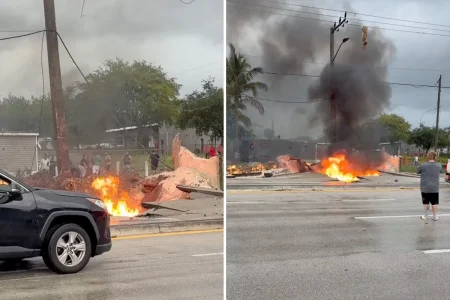


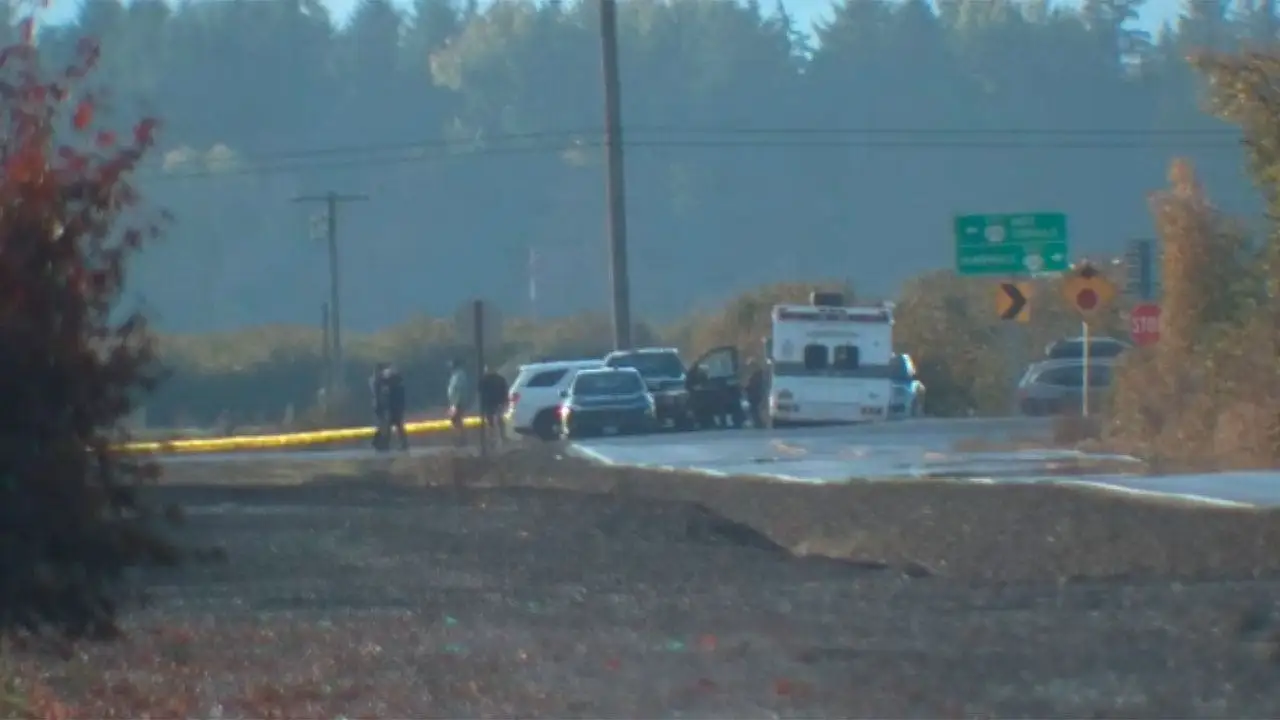
In the quiet countryside of Yamhill County, Oregon, an ordinary Thursday afternoon was shattered by a catastrophic event that would leave a small community grieving and an entire aviation world searching for answers. Just before 2:15 p.m., two helicopters—a Robinson R22 and an Airbus H125—collided midair near the McMinnville Municipal Airport, not far from the small town of Dayton. The impact sent both aircraft spiraling into a field off Oregon Route 233, scattering debris across the landscape and prompting emergency responders to close the highway and nearby county roads. Within hours, the full weight of the tragedy became clear: three people had lost their lives. The Federal Aviation Administration and the National Transportation Safety Board quickly launched an investigation, but for the families and friends left behind, the official inquiries will never replace the bright futures that ended in an instant. The airport itself remained open, its operations uninterrupted, yet the sky above McMinnville felt profoundly different as the sun began to set on a day no one in the community would forget.
The victims were young, vibrant, and each at a unique moment in their aviation journey. On board the Robinson R22 was 22-year-old Maddie Aasbo, a flight instructor originally from Texas, whose passion for flying had already made her a mentor to others. She was teaching a lesson, guiding her student through the skies with the patience and precision that define good instructors. That student, 31-year-old Christopher James Joughin, had traveled from the United Kingdom to pursue his dream of becoming a pilot. His identity was initially withheld by authorities as they worked to reach his family across the Atlantic, but Friday brought the confirmation that the aviation community had dreaded: both instructor and student had perished in the collision. The third victim, 38-year-old Tyler Delane Sturdevant of Newberg, Oregon, was alone in the Airbus helicopter, which was operating on a maintenance flight. Sturdevant was an experienced pilot and a familiar presence in Oregon’s aviation circles. Together, these three individuals represented the many threads of flight: teaching, learning, and maintaining the machines that carry us through the air. Their deaths are not just statistics in an accident report but the loss of laughter, ambition, and camaraderie that had filled hangars and cockpits long before the crash.
The two aircraft involved were both based at McMinnville Municipal Airport, a facility that serves as a home base for pilots, flight schools, and maintenance operations in the region. The Robinson R22, a small two-seat helicopter often used for training, was conducting an instructional flight under the watchful eye of its young instructor. The Airbus H125, known officially as an AS350B2, is a more powerful utility helicopter frequently used for maintenance, aerial work, and other demanding missions. The collision occurred off airport property, in a field roughly one mile west of Dayton, but the shockwaves extended far beyond the crash site. Officials from the Oregon Department of Transportation closed parts of Route 233 and several county roads as emergency crews worked to secure the area, retrieve the wreckage, and begin the painstaking work of documenting exactly what happened. The airport manager, John Paskell, told reporters that the facility itself remained open and operational, but he could not confirm the nature of the flights or how the collision unfolded. For those living nearby, the sight of black smoke rising from a quiet field was a horrifying reminder of how suddenly and violently life can change, even in places known more for vineyards and peaceful rural landscapes than for tragedy.
Now begins the complex, methodical work of uncovering the truth. The National Transportation Safety Board announced that two investigators were already traveling to the crash site, with more resources to follow. Their task is to piece together a moment that lasted only seconds but will be examined in exhaustive detail for months. They will review flight tracking data, air traffic control communications, maintenance records, weather conditions at the time of the collision, and the flight experience of all three pilots. They will interview witnesses, collect electronic devices, and scour the area for surveillance footage, including doorbell cameras from nearby homes that might have captured the brief, terrible seconds before impact. The wreckage itself will be documented, recovered, and transported to a secure facility where experts can examine every twisted piece of metal and every instrument for clues. The NTSB has also asked anyone with relevant information to come forward, underscoring how even the smallest detail can prove crucial in determining why two helicopters, flying in the same airspace on a clear afternoon, came together in such a deadly way. The investigation will take time, and the preliminary report, expected within thirty days, will contain only the factual details gathered thus far. A final report, identifying the probable cause and any contributing factors, may not be released for one to two years.
For the aviation community, this tragedy is a somber reminder of the risks that pilots accept every time they take to the air. Midair collisions are exceptionally rare, especially between helicopters, but they are among the most feared accidents because they often leave little margin for survival. The Robinson R22 has long been a favorite for flight training due to its affordability and maneuverability, but it is also a demanding aircraft that requires constant attention and respect. The Airbus H125 is a workhorse, dependable and versatile, flown by professionals who trust it with their lives. Both aircraft were performing routine missions—teaching and maintenance—the very activities that keep aviation alive and safe. Yet on Thursday, those routines intersected in a catastrophic moment, leaving families to grieve, investigators to search for answers, and pilots everywhere to reflect on their own vulnerability. The presence of local first responders, highway closures, and a coordinated emergency response testified to the seriousness of the scene, while the outpouring of condolences from across the country revealed how deeply the loss resonated with those who knew the victims or simply shared their love of flying.
As the investigation moves forward, the community must also find a way to heal. Grief counselors will be available to friends and colleagues at the airport, where empty hangars and silent radios will serve as constant reminders of what was lost. The families of Maddie Aasbo, Christopher James Joughin, and Tyler Delane Sturdevant have been thrust into a nightmare no one could have anticipated, yet they will need to navigate it in the public eye as authorities release more information. For now, the focus is on remembering the lives behind the tail numbers. Aasbo, with her youth and dedication, symbolized the future of aviation instruction. Joughin, who crossed an ocean to learn, embodied the universal dream of flight that binds people across borders. Sturdevant, a veteran of maintenance operations, represented the unseen heroes who keep aircraft airborne. In the days to come, the wreckage will be removed, the highway will reopen, and the field will eventually return to its quiet green state. But the echoes of that Thursday afternoon will linger, in the unanswered questions, in the empty seats at dinner tables, and in the hearts of everyone who ever looked up at a passing helicopter and felt the wonder of flight. The NTSB’s final report may eventually offer technical answers, but it will never fully explain the senselessness of losing so much in so brief a moment. What remains is a community united in sorrow, determined to honor the dead by learning from their loss and striving to make the skies safer for all who follow.