




For months, the silence of Kathryn Kirk has been interpreted in the worst possible way. As the mother of Charlie Kirk—the charismatic conservative activist, founder of Turning Point USA, and a man whose assassination sent shockwaves through American politics—she had stayed out of the public eye while her daughter-in-law, Erika Kirk, stepped into the role of leading her husband’s movement. That silence, Kathryn now says, was never a sign of distance or disapproval. In a rare and deeply personal interview with Vanity Fair, she broke her silence to confront the rumors that have haunted her family: that she and her husband blame Erika for Charlie’s death, that they are locked in legal battles over his will, and that the family has fractured in the wake of unimaginable grief. None of it is true, she insisted, wiping away tears as she described a relationship that has, against all odds, grown stronger through shared trauma. “We were 100% behind her,” Kathryn told the magazine, rejecting the narrative that has circulated online and in tabloid speculation. She also revealed the shocking intrusiveness of the media in the immediate aftermath of the shooting. A TMZ reporter called her, she said, even before she had been able to reach her own daughter—before she had even stopped driving the car. It was a moment that captures the cruel machinery of news in the digital age, and it helps explain why Kathryn, who Vanity Fair noted had avoided speaking to journalists until now, has been reluctant to speak. She wants to remain a private citizen, she said, but she could no longer stand by while conspiracy theories about her family’s inner life took root. What emerges from the profile is not a portrait of estrangement, but of two women bound together by loss, trying to protect the memory of a man they both loved in ways no one else could fully understand.
At the heart of Kathryn’s interview is her relationship with Erika Kirk. Described by Vanity Fair as crying as she spoke, Kathryn pushed back forcefully against the idea that Charlie’s parents blame his widow for his death or are fighting with her over his estate and the future of Turning Point USA. “Erika and I have, through the trauma, grown closer,” she said. “We knew Charlie in a way that no one else did. We can look at each other’s eyes and we know the depth of our despair.” That shared knowledge—of a son and husband who was larger than life, who inspired devotion and drew threats, who was preparing for a future that would never come—has become the foundation of their bond. Kathryn acknowledged that her silence had become fuel for conspiracy theories, and she seemed acutely aware of how online speculation has added to Erika’s burden. She cried, according to the profile, as she discussed how upset Charlie would be over the way his wife has been treated on social media. It is a striking detail: a mother grieving her son, worrying not only about her own pain but about what he would think if he could see the cruelty directed at the woman he left behind. The profile makes clear that the family’s unity is not a performance. Turning Point board members, former employees, and close allies all describe a seamless transition, with Erika taking over leadership in accordance with Charlie’s explicit wishes. Kathryn’s words are not just a defense of Erika; they are an affirmation that the family Charlie built is still intact, even as the world tries to pick it apart. The two women have become each other’s anchors, able to communicate without words, sharing a grief that is at once deeply personal and painfully public. In a time when every gesture is scrutinized and every silence is interpreted, Kathryn’s decision to speak is a reminder that the bond between a mother and a daughter-in-law can be one of the most resilient relationships in a family—especially when it is forged in the crucible of loss.
The conspiracy theories Kathryn hopes to dispel did not arise in a vacuum. Erika Kirk has faced relentless scrutiny since her husband’s death, from online attacks to critical media coverage. In one notable episode, she publicly hit back at a New York Times newsletter about her marriage and children, accusing the writer of missing the point entirely. She has also written essays about her grief, offering readers a window into the wrenching past year, and she has urged conservative students not to back down as they navigate the first school year since Charlie’s assassination. But the hostility has at times escalated beyond words. Erika was forced to cancel an appearance at a University of Georgia Turning Point USA event over what the organization described as “serious threats.” Against that backdrop, Kathryn’s decision to speak feels less like a media appearance and more like an act of protection. She wanted to make clear, she said, that the family stands as one behind Erika—not out of obligation, but out of genuine love. The profile also reveals the extent to which Charlie and Erika were aware of the dangers surrounding them. They were not naive about the threats that had been mounting for years. According to Doug DeGroote, a Turning Point board member who manages the couple’s personal finances, they had been actively working on their will and planned to visit his office to sign the paperwork on the Monday after Charlie was killed. The timing is almost unbearable: they were doing the responsible, practical work of securing their family’s future, and then the future was torn away in an instant. The night before his death, Charlie had discussed security recommendations with Erika and their pastor, including bulletproof glass shields and vests. He was taking the threats seriously, but he was also moving forward with life, making plans, preparing for whatever came next. Kathryn said her son had shielded his parents from those conversations “because it would just go right into our fears.” He was trying to protect them, even as he tried to protect himself. The image of Charlie quietly working with his wife and pastor on security measures, while keeping his parents sheltered from the grim details, is heartbreaking in hindsight. It shows a man who understood the risks of his public life but refused to let fear dictate his actions—or burden his family with it.
Charlie’s intentions for Turning Point USA were clear to those closest to him. Board members, Erika, and several close allies told Vanity Fair that Charlie had made it known, repeatedly and without ambiguity, that he wanted his wife to succeed him if anything ever happened to him. This was not a decision made in the aftermath of tragedy; it was a plan laid out in advance, born of both love and strategic clarity. “She knew him more than anyone,” a former Turning Point employee said of Erika’s selection to lead the organization. That sentiment echoes throughout the profile: Erika was not simply a widow inheriting a title; she was Charlie’s partner, confidante, and the person best equipped to carry on his vision. Charlie had spent his career trying to develop the next generation of conservative voices, and he saw Erika as essential to that mission. Kathryn’s recollection of being shielded from these conversations adds another layer of poignancy. Charlie knew that discussing his own mortality would terrify his parents, so he spared them the details. He carried the weight of his security concerns quietly, with his wife and his pastor, rather than burdening his mother and father with fears they could do nothing to ease. Now, in hindsight, that protective instinct feels heartbreakingly prescient. The profile paints a picture of a man who was acutely aware of the risks of his public life but refused to live in fear. He made plans, he took precautions, and he made sure his wife would be ready to lead if the unthinkable happened. The fact that Erika has stepped into that role, despite her grief, is a testament to both her strength and Charlie’s foresight. For Kathryn, seeing her daughter-in-law carry on her son’s work is a source of pride and sorrow intertwined. She and Erika can look at each other and know the depth of their despair, but they can also look at each other and see the continuation of Charlie’s legacy. It is a legacy that extends beyond politics: it is about loyalty, courage, and the belief that the work matters more than the individual. Charlie built an organization that would outlast him, and he chose the person he trusted most to lead it. That choice, made in the shadow of threats and violence, now defines the next chapter of Turning Point USA—and it is a choice his mother fully supports.
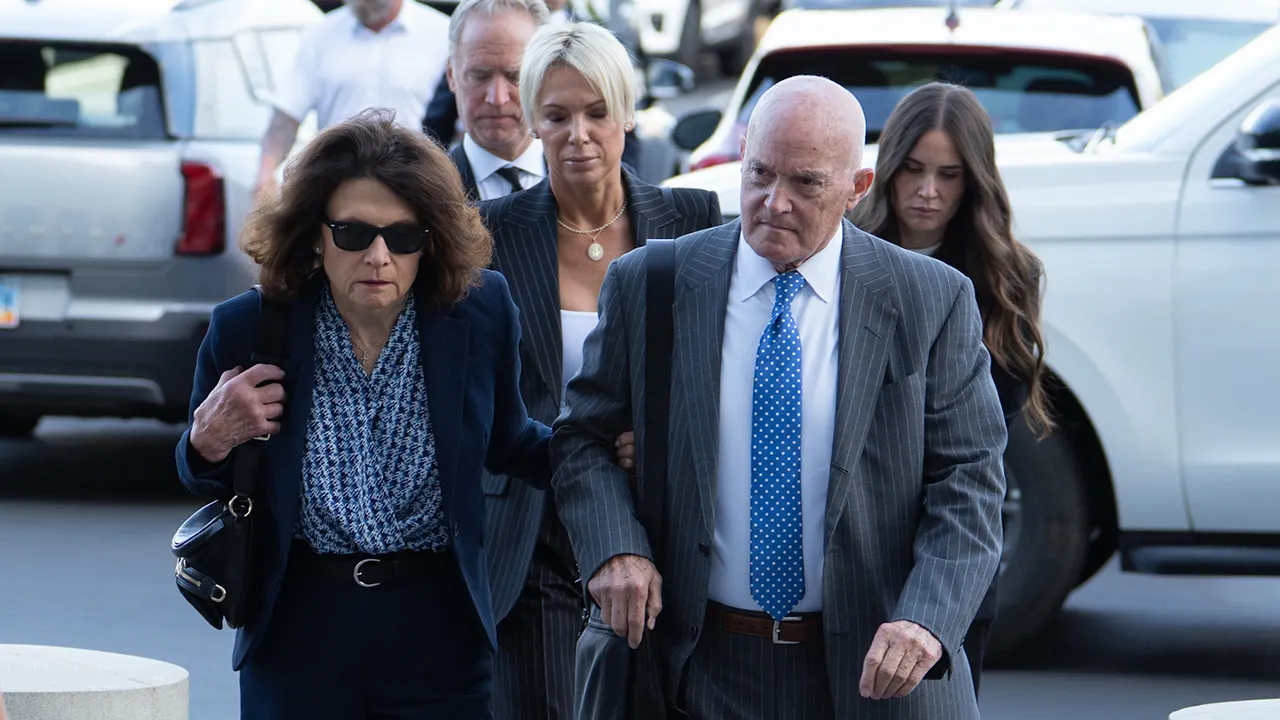
The rawest moments of the Vanity Fair profile come from Erika’s own account of the aftermath of the shooting. During a September preliminary hearing, she described the anguish of watching surveillance video of the murder. As she watched the man on the screen, she recalled pleading silently, “Don’t do it. Don’t you dare do it. It’s not too late.” She gripped Kathryn’s arm and cried out as the video showed Tyler Robinson, the accused assassin, taking position for the shot. It is impossible to read that description without feeling the horror of that moment—a wife watching her husband’s death unfold on a screen, helpless to stop it, while her mother-in-law sits beside her, sharing the same unbearable pain. The image of the two women holding onto each other in a courtroom, bound by grief and by love for the same man, is a powerful counterpoint to the rumors of family discord. At one point, despite her own anguish, Erika comforted a stranger in tears, a small act of grace that those close to her say was pure Charlie. Erika also recalled insisting on seeing her husband’s body at the Utah hospital, after a doctor advised against it. “I looked back at him and said, ‘With all due respect, I want to see what they did to my husband. I didn’t get a kiss goodbye this morning. I just want to kiss my husband,’” she told Vanity Fair. That single sentence captures the profound intimacy of their relationship and the brutal finality of loss. She had not had the chance to say goodbye in the ordinary way—a kiss at the door, a promise to see each other later—and she refused to let the circumstances of his death rob her of that last moment. The hospital staff, according to the profile, removed tubes from Charlie’s mouth, wrapped his neck, and cleared away blood before she saw him. They were trying to spare her, but she needed to be there, to bear witness, to claim her right as his wife. In that moment, she was not the public figure, not the leader of a movement, not the subject of conspiracy theories. She was simply a woman who loved her husband and wanted to say goodbye. The fact that she had to fight for that goodbye, even against well-meaning medical staff, says something about the depth of her love and her refusal to be shielded from the truth. It is a truth that will stay with her forever, but it is also a truth that contains a small, strange comfort: the last image she had of Charlie was not one of suffering, but of a smirk that was not sad.
Erika’s description of seeing her husband’s body is haunting, but it ends with a detail that feels almost like a gift. “I’ll never be able to put it into words,” she said. “But Charlie had a smirk. It wasn’t sad.” In the midst of horror, she found something that looked like her husband—not the victim of violence, but the man who faced the world with a knowing, defiant edge. That smirk, she seemed to suggest, was still Charlie. It is a memory she will carry with her, and it is a detail that humanizes a story that has been consumed by politics, conspiracy theories, and media noise. For Kathryn Kirk, the decision to speak now was not about entering the public square; it was about defending her family and telling the truth as she knows it. She remains, by her own choice, a private citizen. But she wanted the world to know that she is 100% behind Erika, that the two women have grown closer through trauma, and that Charlie would be upset by the treatment of his wife online. The profile ends with a sense of unresolved grief, but also with a sense of clarity. The Kirk family is not fractured. It is bound together by loss, by memory, and by a shared determination to honor Charlie’s legacy. Erika Kirk has stepped into the role her husband wanted for her, leading Turning Point USA into a new season, urging conservative students to stand firm, and navigating her first year of widowhood in the public eye. And Kathryn Kirk, the mother who stayed silent for so long, has finally spoken—not to insert herself into the story, but to set the record straight about the people she loves most. In doing so, she has given the world a more complete picture of a family enduring the unendurable, and a reminder that behind every headline, every political battle, and every conspiracy theory, there are real people trying to find a way forward. The smirk Erika saw on Charlie’s face is perhaps the most fitting symbol of that resilience: a refusal to be defined by tragedy, a quiet assertion that the spirit endures. For Kathryn and Erika, that spirit is what binds them together. They have lost a son and a husband, but they have found each other. And in the darkness of grief, that is no small thing.