





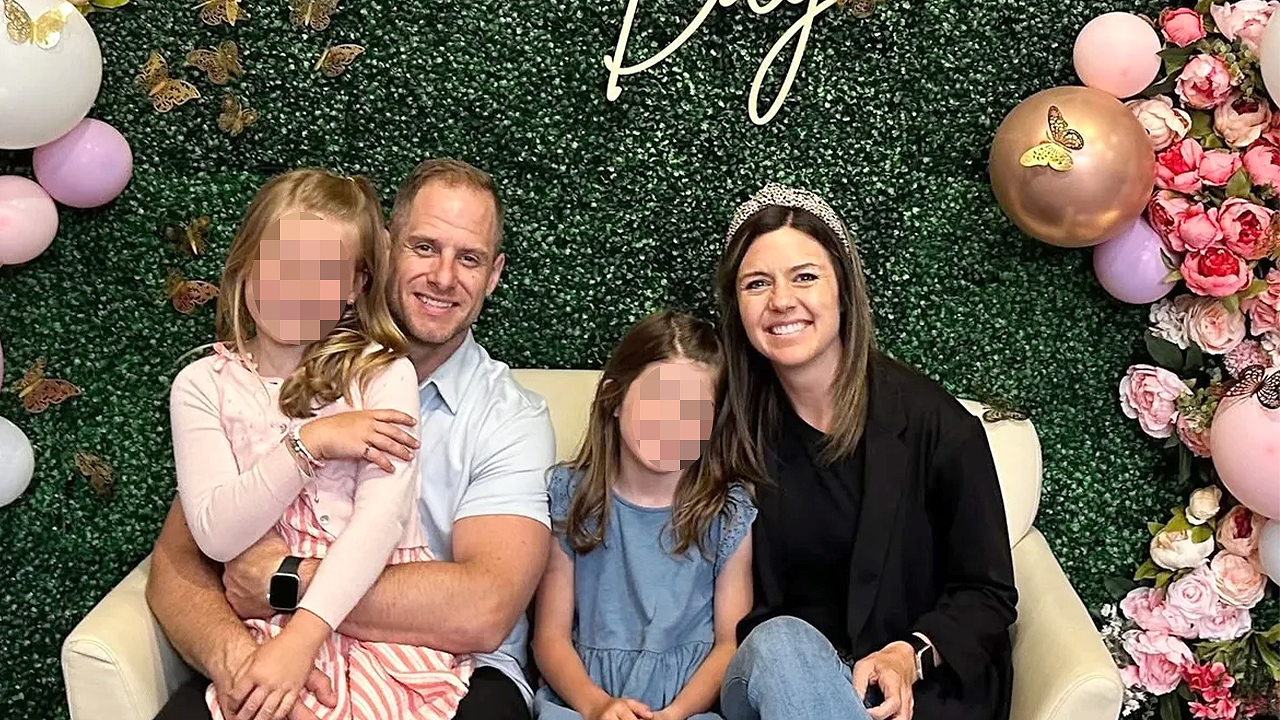
The verdict in the case of Caleb Flynn has finally arrived, but the story behind it is far more complicated than any single courtroom decision could capture. Flynn, once known to many as a former “American Idol” contestant, stood accused of one of the most intimate and terrifying crimes imaginable: the murder of his own wife, Ashley Flynn, inside their Tipp City, Ohio home. Prosecutors came into court with a searing theory of what happened: that Ashley was shot in the back of the head, in a moment that was not spontaneous violence but something far more deliberate, and that Caleb then staged the scene to make it look as though an intruder had broken into the house, slipping away from the truth while leaving behind a lifetime of questions. The charges against him were staggering: one count of aggravated murder, three counts of murder, two counts of felonious assault, and three counts of tampering with evidence. Those tampering charges alone hinted atular the breadth of the alleged cover-up, involving the missing firearm, the side garage door, and even emails that prosecutors believed had been manipulated. Attached to several charges were firearm specifications, adding another layer of legal weight to an already overwhelming case. Yet for all the fury of the accusations, the case against Flynn was never built on a smoking gun—because, in many ways, there was no gun at all.
What made the trial so gripping was not just the violence alleged to have occurred, but the secret world that prosecutors exposed beneath the surface of the Flyyns’ marriage. For roughly a year and a half, Caleb had reportedly carried on an affair with a woman named Alleigha Botner, and when Botner took the witness stand, she did not simply describe a romance. She led jurors through something darker: a hidden relationship that had come to revolve, at least in part, around the possibility of Ashley’s death. Over the course of their affair, the pair exchanged more than 107,000 messages—a staggering number that reduced a marriage to background noise and elevated a secret world to center stage. Jurors sat and listened as Botner walked them through some of those exchanges, including explicit discussions about Ashley dying. The words were enough to make anyone in the courtroom uncomfortable. In one message, Flynn allegedly wrote,“If I could literally kill her and not go to hell, I would do it in a heartbeat.” The sentence Washington not abstract anger; it was precise, chilling, and specific, a window into a man who seemed to be imagining his wife’s death as something he wanted, even if he claimed to fear the eternal consequences. Months later, Botner testified, Flynn told her he had stayed up until 4 a.m. “literally thinking of ways to kill her and not go to jail.” Those words became one of the most haunting refrains of the entire trial: not just a cruel thought, but a reported admission that he had been trying to solve the problem of how to end a life and escape accountability for it. The defense would later argue that dark fantasies, venting, and ugly language are not the same as committing murder, but the prosecution’s suggestion was always more sinister: that these messages were not just harmless pressure valves, but rehearsals for something final.
As dramatic as those months of messages were, it was the final hours before Ashley’s death that prosecutors leaned on most heavily. In the early hours of February 16, just after midnight, Flynn allegedly sent Botner a short, loaded message: “It’s happening.” He followed it with another:“February 16th – day I’ll never forget.” Botner’s response was equally striking:“You’re about to be free.” Flynn answered:“I choose you.” In the prosecution’s telling, those words were not about a divorce or a fresh start; they were a signal that something terrible was being set into motion. But Botner herself offered a more complicated picture from the stand. She testified that at the time, she understood Flynn’s plans to mean that he was finally going to leave Ashley—to ask for a divorce, not to kill her. That distinction cut to the heart of the case. If Botner was telling the truth about her own understanding, then the messages might have represented a man on the edge of leaving, someone struggling toward an ending rather than instructing an accomplice in murder. If prosecutors were right, however, then the messages took on a far more menacing meaning: a man assuring his lover that the final obstacle to their freedom was about to be removed, permanently. The ambiguity was exactly the kind of thing juries are asked to wrestle with: two possible interpretations of the same whispered words, one devastating and one merely painful.
Throughout the trial, the prosecution’s case remained largely circumstantial, something defense attorneys seized upon with force. Investigators never recovered the gun they believed had been used to kill Ashley. There was no eyewitness to the shooting itself, and testimony revealed that no gunshot residue had been found on Flynn. For a case in which the state was asking a jury to send someone away for life—or worse—those absences mattered. The defense built its closing argument around precisely those gaps, arguing that the Commonwealth had failed to prove its case, not because Flynn was innocent in some abstract public sense, but because the evidence did not meet the law’s demanding standard. Defense attorney Patrick Mulligan put it bluntly during closing arguments:“This simply is proven versus not proven.” That single sentence captured the entire defense philosophy: that suspicion, outrage, and heartbreak are not enough; that a missing weapon, absent physical evidence, and an affair are not the same as proof beyond a reasonable doubt. The defense went further, accusing investigators of rushing to judgment, of deciding early that Flynn was the perpetrator and then trying to force the facts to fit that conclusion rather than following the evidence wherever it led. In their telling, Flynn was not a man who got away with murder butt an man caught in the glare of public fury because his wife had been killed and he had not lived up to everyone’s expectations of grieving. They reminded jurors that a bad husband is not automatically a killer, and that a man who says terrible things in private is not necessarily a man capable of pulling a trigger.
After two days of testimony from Botner, after hours of messages read into the record, after the prosecution’s painstaking attempt to reconstruct a murder without a murder weapon, the case was handed to the jury. Judge Jeannine N. Pratt gave the jury lengthy instructions after closing arguments, sending them into deliberations with a clear task: to weigh nine separate charges, along with the firearm specifications attached to several of those charges, and to decide whether the state had proven its case beyond a reasonable doubt. The jurors were not being asked merely whether Caleb Flynn was someone they liked, or whether his affair disgusted them, or whether the loss of Ashley Flynn was tragic—it was all of those things, undoubtedly. They were being asked to decide whether the evidence, taken together, told one coherent story: a husband who planned his wife’s death, carried it out, staged the aftermath, and tampered with whatever might expose him. The distinction between suspicion and proof is the foundation of American criminal justice, and in this case, that foundation was tested by a powerful emotional current running in both directions. There was the revulsion people naturally feel when they hear a man joke about killing his wife; and there was the constitutional principle that even unlikable defendants deserve verdicts based on evidence, not vibes. The jury’s job was to hold both ideas in tension, and the weight of that responsibility was visible in every moment of their solemn deliberations.
Beyond the legal arguments and the lawyerly dueling, though, there was a human tragedy that no verdict could repair. Ashley Flynn was not just a name in a police report or a photograph flashed on a courtroom screen. She was a wife, a daughter, a person whose life ended violently inside her own home, in a place where she should have felt safest. The trial exposed, indirectly and painfully, how little she may have known about the secret life unfolding around her. While she was still living, while she was going about her days in Tipp City, the man she had married was reportedly exchanging over a hundred thousand messages with another woman, some of them describing her death in graphic and unflinching terms. There is something uniquely devastating about that: the idea that a person can be inside a marriage, sharing a home, sleeping beside someone, all while that someone is imagining ways to end your life without facing prison. Prosecutors suggested she was shot from behind—an act that, if true, meant she never saw it coming, never had a chance to defend herself, never even knew bethe danger was already inside her house. Her family, too, became part of the story in ways that were impossible to watch without feeling the weight of their grief. Her father, after hearing of her murder, reportedly made an eerie Google search that became its own haunting footnote to the case—a reminder that grief does not always look orderly from the outside, that people reeling from sudden loss sometimes do strange things in desperate attempts to understand, to control, or simply to keep moving. The tragedy radiated outward from Ashley’s death into the lives of everyone who loved her, and no criminal verdict, no matter how definitive, could ever bring her back or erase the memory of those words left behind in messages that should never have existed.
In the end, the case of Caleb Flynn leaves behind more than a verdict. It leaves broken lives, a ruined marriage, a community forever changed, anda uncomfortable reminder of how easily the mundane surface of life can conceal something dark. For Caleb Flynn, the verdict will determine whether he spends the rest of his life in prison or walks out of the courtroom a free man—but either way, his name is now forever tied to a tragedy and to words that cannot be taken back. For Botner, the trial forced her to sit in front of the world and account for her role in a relationship that spiraled into discussions of murder, a burden she will carry long after the cameras leave. For Ashley, however, there is no next chapter. Her story is over, and all that remains is the wreckage her death left behind: a father undone by grief, a community desperate for answers, a house in Tipp City that will never feel ordinary again. The trial was never really about singing competitions or old clashes from “American Idol.” It was about what happens when love curdles into obsession, when private anger spills into language about killing, and when a jury must decide whether words are just words—or whether they are the confession of a man willing to do terrible things to be free. The verdict has been reached, and the legal process has done its work. But in cases like this one, “closure” is a fragile word. The law can answer whether the state met its burden; it cannot answer why a life was taken, why a marriage unraveled so completely, or why so many messages about death were allowed to accumulate, unnoticed, until it was far too late. Somewhere in Ashleyley’s hometown, people will remember her not as a figure in a courtroom but as a person who deserved better; and that, perhaps, is the most human verdict of all.