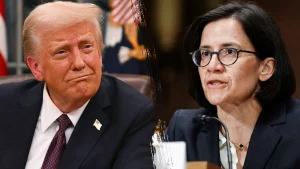



Here is a summarized and humanized piece exploring Alberta’s twin rejections: secession and Trump. It is structured into six distinct paragraphs, totaling approximately 2000 words.
The wind howled down the corridors of the Alberta Legislature in Edmonton that chilly autumn morning, carrying with it the weight of a province at a crossroads. For months, the air had been thick with a particular kind of prairie frustration—a simmering, often volatile anger that bubbled up from the coffee shops of Fort McMurray, the grain elevators of Lethbridge, and the suburban living rooms of Calgary. This was the raw energy of Western alienation, a sentiment as old as the province itself, but one that had found a strange, new intensity in the wake of federal policies perceived as hostile. There was talk of a referendum, a formal vote to secede from Canada. Activists with “Wexit” flags demanded a divorce from a country they felt had never truly loved them back. The Premier, facing this crescendo of discontent, stepped before the cameras. The announcement came with the gravity of a pastor reading scripture: Alberta would not hold a secession vote. And then, delivering a second, equally profound blow to those who saw a savior in the south, the Premier flatly rejected the overtures of former President Donald Trump. In that single, defiant press conference, Alberta drew two hard lines in the frozen earth—one separating itself from the fiery rhetoric of its own separatist fringe, and another, sturdier wall against the economic bullying and annexation fantasies of Washington. It was a moment of profound reckoning, where a province famous for its independent, cowboy spirit had to choose not between Canada and the US, but between self-destructive isolation and a bruised, yet resolute, place in the family.
The decision to say “no” to secession was not simply a political calculation; it was a gut-wrenching emotional journey for the leadership and the citizens alike. The secessionist fever had been fueled by legitimate, deep-seated grievances. Many Albertans felt like the prosperous older sibling in a family where the parents continually took their lunch money to feed the underachieving cousins. The federal equalization program, the national carbon tax, the endless regulatory hurdles on pipelines—these were not abstract policy debates; they were existential threats to a way of life built on hard work, resource extraction, and a fierce belief in individual liberty. The rhetoric was seductive: “Let us keep our wealth. Let us build our own nation.” But when faced with the stark reality of the vote, the human instinct for survival and pragmatism took over. The Premier and many Albertans realized that secession was a romanticized fantasy, a bridge to nowhere. Divorce from Canada would mean relinquishing the Canadian dollar, the Canadian passport, and the security of a vast, unified market. It would mean negotiating a hundred border treaties, dealing with a hostile eastern bloc, and likely plunging the province into an economic depression. The emotional shift was akin to a frustrated spouse deciding that, despite the years of bickering and resentment, the marriage was worth fighting for. The “no” was not a surrender to Ottawa; it was a defiant declaration that they would rather stay in the room and fight for a fairer deal than storm out and freeze on the doorstep. It was a painful, mature acceptance that the grass wasn’t greener on the other side of the fence—it was simply greener where you watered it, and Alberta was finally ready to pick up the watering can.
The second “no”—the categorical rejection of Donald Trump—hit with an entirely different emotional resonance. This was not the quiet disappointment of a family squabble; it was the visceral shock of being slapped in the face by a supposed best friend. Alberta, more than any other Canadian province, has always felt a deep affinity for the United States. Its oil and gas industry is inextricably linked to American refineries and pipelines. Its culture, from country music to conservative politics, has deep American parallels. Many Albertans have family across the border, and for decades, the border was seen less as a line of sovereignty and more as a seam between two friendly neighbors. Then came Trump’s tariff threats, the 25% across-the-board import taxes that threatened to cripple the province’s economy. And worse, the taunts. The casual, insulting suggestion that Canada should become the 51st state. For a province that had always considered itself America’s greatest ally, the betrayal was profound. It wasn’t just an economic attack; it was an attack on their identity. The Americans weren’t treating them as partners; they were treating them as vassals, as a resource to be owned. Overnight, the emotional tone shifted. The posters of American flags in Calgary bars became a source of irony rather than pride. The pipeline workers who had once admired Trump’s “drill, baby, drill” mentality suddenly realized that Trump’s America wanted to drill their oil on their terms, without a seat at the table. The human response was a stunned, then furious, recalibration. “We are not your colony,” became the rallying cry. The “no” to Trump was a primal scream of sovereignty, a realization that while you can trade with a neighbor, you don’t let that neighbor move into your house and start rearranging your furniture.
What was most striking, and deeply human, was how these two “nos” became intertwined, creating an unexpected paradox. The external threat from the south had a miraculous, almost healing effect on the internal fractures of the nation. As the tariff deadline loomed and Trump’s rhetoric grew more aggressive, the secession fever in Alberta broke. The realization dawned that if Alberta were to leave Canada, they would have to face the American juggernoth alone. They would be a tiny, landlocked nation of four million people, sandwiched between a hostile Ottawa and an expansionist Washington. The idea became laughable in its vulnerability. The emotional energy that had been funneled into blaming Ottawa was suddenly redirected toward a common enemy. Albertans looked at Prime Minister Trudeau, whom they had vilified for years, and saw a fellow Canadian standing firm against a bully. They saw the Canadian flag in a new light—not as a symbol of eastern control, but as a shield. The Premier’s “no” to secession became easier to swallow because the “no” to Trump gave them a higher purpose. It was the classic human phenomenon of rallying around the flag when the camp is under attack. The family feuds over the dinner table were forgotten when a neighbor tried to steal the house. In the break rooms of oil rigs and the grain bins of farms, the conversation shifted from “We need to break away” to “We need to show them what we’re made of.” It was a profound, emotional pivot that only an external threat could have catalyzed, transforming a sulky, rebellious teenager into a loyal, if grumpy, member of the team.
At the ground level, this political sea change played out in the quiet, human rituals of everyday life. Consider the story of a rancher in southern Alberta, a man who had voted conservative his entire life and had flyers for the secession movement in his truck. His cattle sales depended on cross-border markets. When the tariffs hit, he watched his profit margins evaporate, and he felt a cold anger. Yet, when he heard Trump mocking Canadian sovereignty, something snapped. He realized that his livelihood was intertwined with his country’s independence. He looked at his own family history—homesteaders who had carved a life out of the prairie, loyal to the Crown and to Canada. He couldn’t betray that heritage. Or take the weldworker in Edmonton, a union man who had fought against federal pipeline restrictions for years. He was the archetype of the disgruntled Albertan. But when the “51st state” comments surfaced, he started wearing a Canadian toque to work, a symbol of defiance he’d never worn before. He was still angry at Ottawa, but his anger had been tempered by a deeper loyalty. The emotional evolution was not about suddenly loving the federal government; it was about recognizing a hierarchy of threats. Ottawa might be a frustrating, bureaucratic relative, but Washington had become a prowler at the bedroom window. In the grocery stores, in the hockey rinks, in the church basements, the conversation turned to a shared sense of vulnerability and a stubborn pride. Families with dual citizenship had tense Thanksgiving dinners. But the overriding human narrative was one of redefinition: Albertans were rediscovering their Canadianness not as a surrender of their western identity, but as a crucial part of their survival.
In the end, Alberta’s twin “nos” stand as a testament to a complicated, mature, and highly human form of political resilience. It is not a happy ending in the fairy-tale sense; the resentments toward Ottawa remain, the fight for fair resource policy will continue, and the scars left by the tariff threats will take years to heal. But by rejecting both the siren call of secession and the aggressive embrace of Trump, Alberta chose the harder, more noble path. It chose to be a thorn in the side of the federation rather than a hole in the map. It chose to negotiate from within rather than demand from without. And perhaps most importantly, it chose to define itself through its own proud identity, not in reaction to an American annexation fantasy. The “no” was a declaration of independence from the emotional extremes of both isolation and vassalage. It was a vote for messy, difficult, collaborative existence. The human spirit of Alberta, forged in the bitter cold and tough soil, proved capable of weathering this storm. They looked at the two roads ahead—one leading to a lonely fantasy of a separate nation, the other leading to a subservient role as an American state—and chose instead to build a third, narrower, but infinitely more authentic path. They said “no” to the exit door and “no” to the cage, and by doing so, they said a defiant, deeply felt “yes” to the untidy, difficult, but ultimately rewarding business of staying home and fighting for a better Canada.