





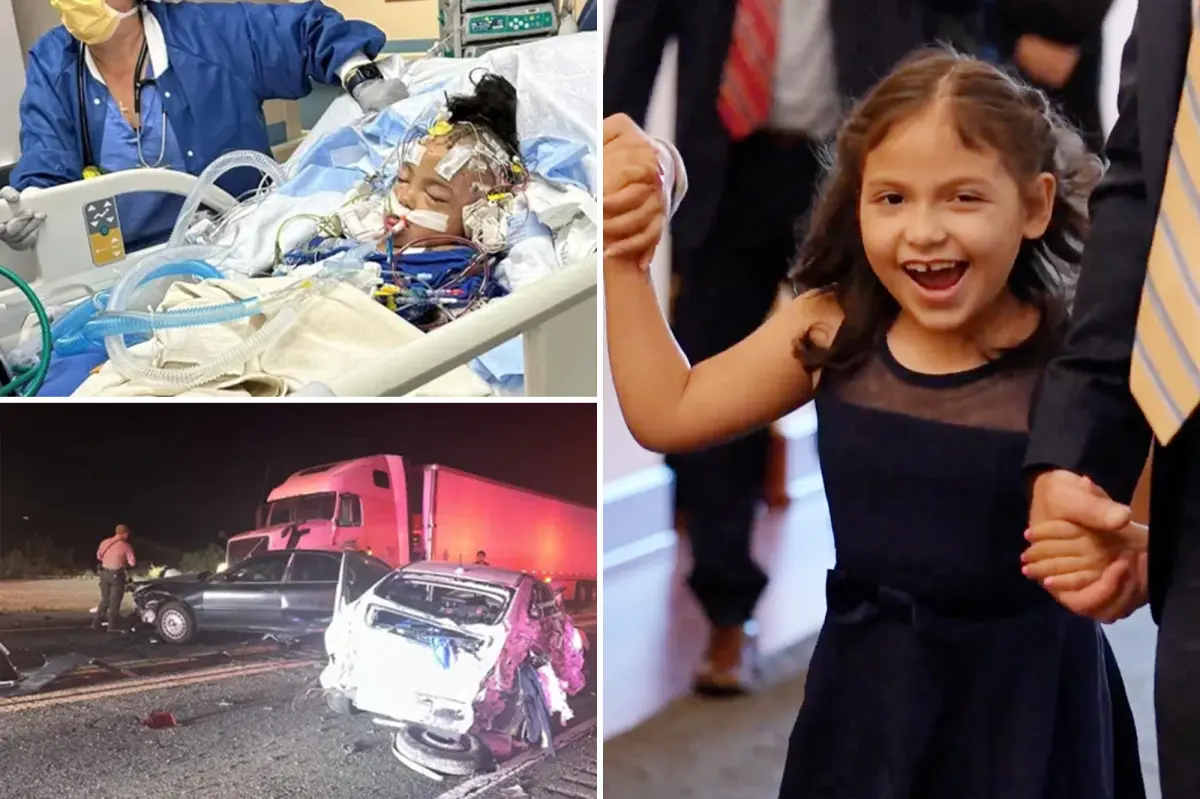
Nearly two years after a horrific highway crash nearly took her life, seven-year-old Dalilah Coleman walked into the formidable headquarters of the United States Department of Homeland Security, her small hand clutched tightly in those of her parents, Marcus and Ileana. The young California girl, whose childhood was violently interrupted by a preventable tragedy, was there to meet with Homeland Security Secretary Markwayne Mullin to receive a crucial update on the federal legislative push named in her honor. Seeing Dalilah in those austere federal corridors—a fragile yet resilient symbol of survival—brought an emotional gravity to a building more accustomed to dry policy debates and bureaucratic jargon. For her mother and father, the meeting was a deeply emotional milestone in an exhausting, uphill battle that began in a sterile intensive care unit and has since expanded to the highest levels of American government. Mullin sat down with the family not just as a policymaker, but as a father himself, listening to Marcus speak about what it means to rebuild a shattered family while simultaneously fighting to ensure that Dalilah’s Law becomes the new standard of safety on American highways, prohibiting undocumented immigrants from obtaining Commercial Driver’s Licenses.
The nightmare that catalyzed this national campaign unfolded on June 20, 2024, an ordinary summer day that became a demarcation line in the Colemans’ lives. Dalilah, who was only five years old at the time, was traveling with her family when a massive commercial truck driven by Partap Singh, an undocumented immigrant from India, slammed into their vehicle. Singh was speeding through a designated construction zone and failed to slow down or stop for the halting traffic, transforming his heavy rig into a devastating weapon of destruction. The physical devastation inflicted upon Dalilah’s tiny body was catastrophic; she was rushed to the hospital in critical condition, slipping into a deep coma that lasted for three agonizing weeks while her parents kept a sleepless vigil by her bedside, praying for any sign of neurological life. To save her brain from swelling, surgeons had to perform an emergency craniectomy, a radical procedure that left the little girl living without half of her skull for four incredibly vulnerable months. Healing was a slow, grueling process that required more than six months of continuous, intensive hospital care, and though she survived, the ramifications of the crash are permanent. Today, Dalilah lives with the lifelong diagnoses of diplegic cerebral palsy and global developmental delay, requiring continuous physical therapy just to navigate the basic coordinate points of daily life.
The administrative trail of how her attacker came to be behind the wheel of a massive commercial vehicle reveals a cascading series of systemic failures that the Coleman family is now desperate to expose. Singh had crossed the southern United States border illegally in October 2022, but rather than being detained or immediately deported, he was released into the country by federal authorities. He migrated to California, where state-level policies allowed him to bypass federal immigration status verifications to obtain a Commercial Driver’s License, a highly regulated privilege reserved for those operating vehicles that can weigh up to 80,000 pounds. This loophole essentially permitted an undocumented individual with no verified driving record in the country to pilot a massive semi-truck on public roads, creating a ticking time bomb that eventually went off in Dalilah’s path. It took more than a year after the crash, until August 29, 2025, for Immigration and Customs Enforcement to finally arrest Singh, who now remains in federal custody facing deportation proceedings and criminal charges, highlighting a delayed justice system that only reacted after an innocent child’s life was irrevocably altered.
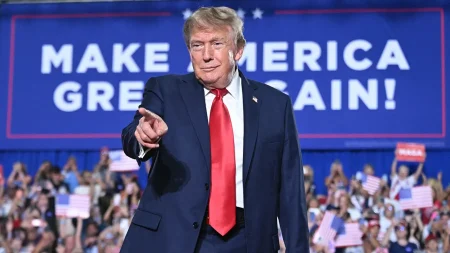
For Marcus and Ileana, the trauma of their daughter’s physical medical crisis was compounded by an isolating political cold shoulder from their own state representatives in California. In the lonely, terrifying months immediately following the accident, Marcus reached out repeatedly to the office of Governor Gavin Newsom, seeking comfort, resources, or at least an open dialogue on how the state could tighten its licensing laws to prevent similar tragedies. Their pleas were met with deafening silence, an experience Marcus later recounted on national television, recalling that they received absolutely nothing back from the administration—a dismissive attitude that made them feel as though their daughter’s suffering was being politically swept under the rug. However, their pain found a massive megaphone at the federal level, where the Trump administration championed their cause and brought their story to the national forefront. President Donald Trump even used his State of the Union address to urge Congress to immediately pass Dalilah’s Law, elevating the Coleman family’s private tragedy into a focal point of national security and public safety reform.
The legislative soul of this journey, Dalilah’s Law, seeks to create a uniform federal barrier that outright bans any state from granting commercial driving credentials to undocumented immigrants, recognizing that interstate commerce safety is a national concern. During their emotionally charged meeting at the Department of Homeland Security, Marcus outlined their proactive plan to bypass Washington’s gridlock by directly targeting state executives through a grassroots initiative called the “Dalilah Standard.” The Colemans plan to travel across the United States, asking governors of every state to pledge their administrations to this standard, thereby unilaterally closing the licensing loopholes and enforcing stricter regulations on the commercial trucking sector. Secretary Mullin lent his voice to this mission, emphasizing that Dalilah is just one of countless silent victims of unregulated commercial driving practices and asserting that the federal government must make it completely impossible for undocumented individuals to obtain these high-liability licenses. Through their advocacy, Marcus and Ileana are turning their righteous anger into a shield of protection, aiming to build a legislative safety net that protects other families from enduring the heartbreak of watching their child fight for survival in a suburban ICU.
As Partap Singh awaits his final legal fate in a federal detention center, the Coleman family continues to look toward the future with a mixture of raw grief and unyielding hope. Dalilah’s laughter and slowly progressing milestones serve as a daily reminder of the miracle of her survival, even as she faces a childhood mapped out in physical therapy sessions and medical evaluations. The story of Dalilah Coleman is no longer just a tragic statistic in the ongoing national debate over border security and state licensing laws; it is an active testament to the power of a family’s love to reshape national policy. By refusing to let their daughter’s suffering be in vain, Marcus and Ileana have ensured that her name will forever be associated with protection, accountability, and the preservation of innocent lives on the open road. Their journey from a chaotic highway crash site to the halls of federal power in Washington, D.C., stands as an inspiring narrative of resilience, proving that even the most devastating tragedies can be channeled into an unstoppable force for systemic change.