





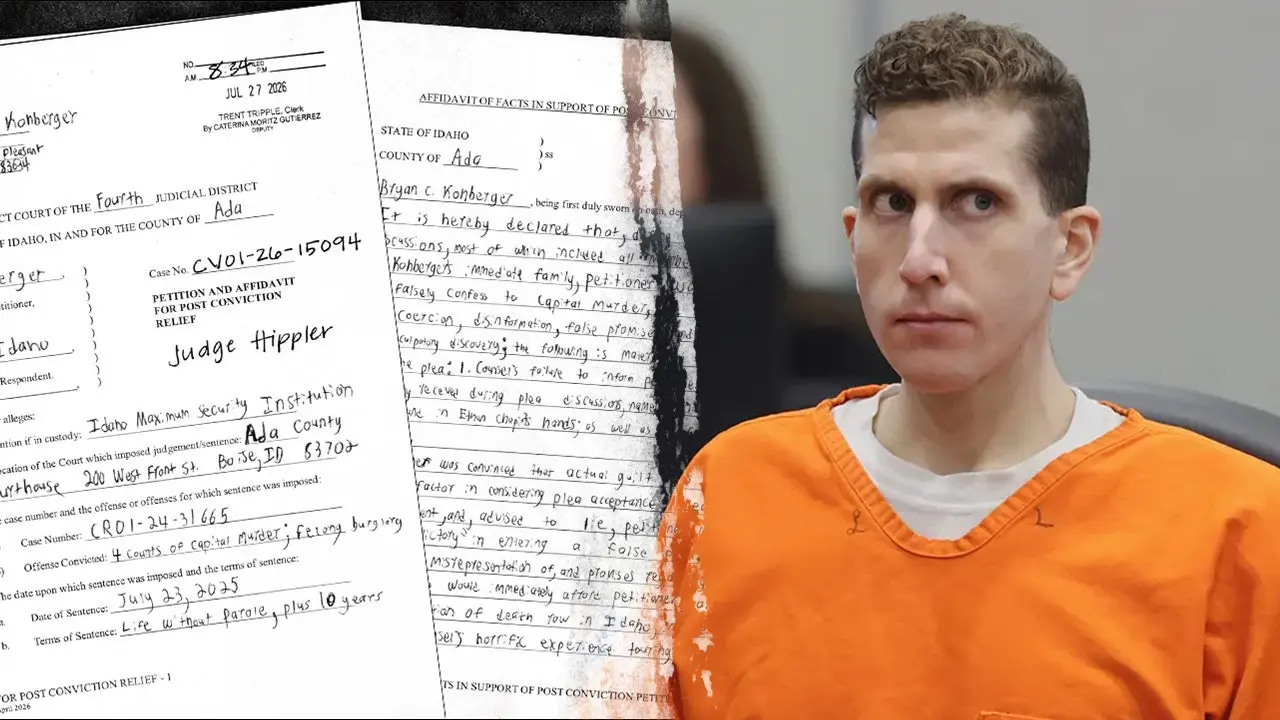
The quiet, tree-lined streets of Moscow, Idaho, were forever altered in the dark, early hours of November 13, 2022, when four vibrant young University of Idaho students—Kaylee Goncalves, Madison Mogen, Xana Kernodle, and Ethan Chapin—were brutally stabbed to death in their off-campus home. The senseless violence sent shockwaves of terror through the tight-knit university community and gripped the entire nation in a state of collective grief and morbid curiosity. Weeks of relentless investigation eventually led authorities across the country to Pennsylvania, where they arrested Bryan Kohberger, a PhD student in criminology at nearby Washington State University. For months, the public watched a grueling legal chess match unfold, culminating in a stunning resolution last year when Kohberger entered a guilty plea, a move that spared him the death penalty but seemingly closed the book on one of the most haunting mass murders in recent American history. However, the fragile peace established by that plea has now been shattered. In a dramatic and highly unexpected turn of events, Kohberger has filed a handwritten petition for post-conviction relief from his prison cell, seeking to completely withdraw his guilty plea and asserting that he was coerced into a false confession. This sudden legal maneuver has reopened raw wounds, thrusting the grieving families and an exhausted public back into a state of agonizing uncertainty as the ghost of a high-profile trial looms once more on the horizon.
At the heart of Kohberger’s newly filed petition is a deeply personal and emotionally charged revelation: the active involvement of his own immediate family in the high-stakes negotiations that led to his plea. According to the handwritten court documents obtained by Fox News Digital, Kohberger claims that members of his immediate family were physically present during highly sensitive, confidential attorney-client discussions where his life hung in the balance. The dynamic of a family rallying around an accused relative is a universal human experience, but in this instance, Kohberger alleges that this familial love and vulnerability were twisted into a tool of psychological leverage. His mother, who had publicly defended her son and referred to him as her “angel” while insisting that law enforcement had made a catastrophic error, was reportedly in the room as lawyers laid out the grim realities of his situation. Kohberger now argues that the presence of his loved ones during these agonizing sessions did not provide comfort, but rather amplified the overwhelming pressure to capitulate. He claims that the emotional weight of his family’s terror, combined with the aggressive posturing of his legal team, created an environment of intense coercion, ultimately convincing him to “falsely confess” to a crime he now maintains he did not commit, simply to spare his parents and sisters the unbearable trauma of watching him be sentenced to death.
Beyond the emotional pressure involving his family, Kohberger’s petition launches a scathing attack on the professional integrity of his high-profile defense team, which consisted of seasoned public defenders Anne Taylor, Elisa Massoth, and Bicka Barlow. The relationship between a defendant facing capital punishment and their legal counsel must be built on absolute trust, yet Kohberger paints a picture of a profound and systemic betrayal. He alleges that his attorneys actively withheld critical “exculpatory discovery”—evidence that could have potentially pointed to his innocence or at least cast reasonable doubt on the state’s case. According to his petition, this crucial evidence was never properly vetted, analyzed, or presented in a court of law, leaving him feeling defenseless and systematically blindfolded during the most critical decision-making moments of his life. By claiming that his own lawyers failed to investigate or share evidence that could have vindicated him, Kohberger is challenging the constitutional validity of his legal representation. He argues that his plea was not made knowingly, intelligently, or voluntarily, but was instead the desperate act of a man kept in the dark by the very people sworn to protect his constitutional rights.
Adding a surreal, true-crime twist to the legal proceedings is Kohberger’s reliance on a newly published book titled Broken Plea, authored by former FBI hostage negotiator and media commentator Chris Whitcomb. In his handwritten petition and in a subsequent message conveyed to the New York Times, Kohberger utilized the phrase “broken plea” to describe how justice was allegedly circumnavigated in his case. He claims that the book contains revelations about untested evidence—specifically concerning the DNA-laden knife sheath found at the crime scene—that his defense team failed to challenge in court. The irony of a convicted mass murderer using a commercial true-crime book to argue for his freedom has sent shockwaves through the media, prompting a swift response from the author himself. Whitcomb, speaking on the “Crime & Justice” podcast hosted by Donna Rotunno, expressed utter astonishment at being cited in Kohberger’s legal filings. Whitcomb made it explicitly clear that he has never had any communication, direct or indirect, with Kohberger or any member of the Kohberger family, and has no knowledge of how the defendant or his relatives obtained the book. This bizarre intersection of literature and litigation highlights the complex, often self-referential nature of modern high-profile criminal cases, where the line between courtroom reality and public narrative becomes dangerously blurred.
Perhaps the most visceral and chilling allegation in Kohberger’s petition is his claim that his defense attorneys utilized fabricated horror stories about Idaho’s death row to terrorize him into signing the plea agreement. He alleges that one of his attorneys went so far as to manufacture an elaborate, highly detailed story about personally “touring an actual 8-foot-by-8-foot death-row cell.” Kohberger asserts that this story was entirely fabricated, designed specifically to paint a claustrophobic, hopeless picture of his future if he dared to take his case to trial. The psychological impact of such vivid storytelling on a defendant facing the ultimate punishment cannot be overstated. The threat of spending decades in solitary confinement, waiting for execution in a concrete tomb, is a terrifying prospect that could break the resolve of almost anyone. Kohberger argues that this calculated manipulation was deliberately communicated to both him and his family to induce a state of panic, effectively forcing them to agree that a lifetime in prison was the only humane option. By framing his lawyers’ actions as a deliberate campaign of fear-mongering rather than objective legal counseling, Kohberger seeks to prove that his consent was obtained through psychological duress, rendering the entire plea agreement legally null and void.
As this new legal battle begins to take shape, the machinery of the justice system has already begun to shift in response to Kohberger’s explosive claims. Recognizing the severe conflict of interest that now exists between Kohberger and his original legal team, Ada County District Judge Steven Hippler quickly granted the defendant’s request for new, court-appointed counsel, directing the Idaho State Public Defender to assign a new attorney to represent him in all upcoming post-conviction proceedings. While Kohberger’s former defense team has remained silent, refusing to comment on the allegations of malpractice and coercion, the reaction from those who have suffered the most is one of weary determination. Cara Goncalves, the mother of victim Kaylee Goncalves, spoke out on behalf of her grieving family, stating resolutely that they are fully prepared to go to trial if Kohberger’s plea is indeed thrown out. For the families of the four slain students, this latest development is a cruel postponement of finality, dragging them back into the agonizing public eye and forcing them to prepare once again to face the man accused of stealing their children’s futures. As the legal community watches to see if a judge will allow Kohberger to undo his plea, the human cost of this tragedy continues to mount, serving as a stark reminder that behind the complex legal maneuverings and sensational headlines lie four empty chairs at family dinner tables and a community forever haunted by loss.