



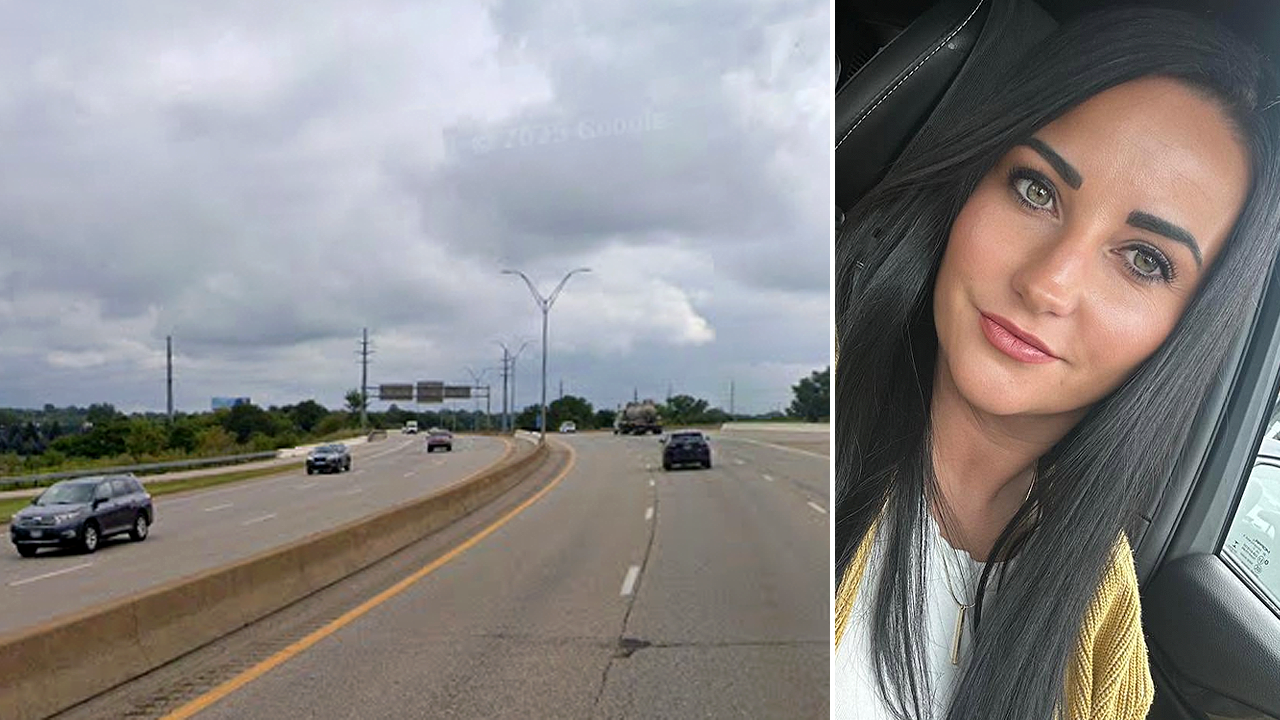
On a quiet Saturday afternoon in eastern Ohio, a routine drive came to a sudden, heartbreaking end. Bridget E. Reagan, a 35-year-old mother of three from the small town of Minerva, was behind the wheel of her 2023 Jeep Wagoneer, traveling west on U.S. Route 30 near Paris Township. It was just after 5:24 p.m., the kind of ordinary hour that usually marks weekend errands, sports practice, or a drive back home. But in a fleeting, violent moment, the world shifted for everyone who knew her. A massive tree, standing in a wooded area alongside the road, suddenly gave way and crashed directly onto her SUV. The impact was immediate and catastrophic. Emergency responders arrived, but there was little they could do; Reagan was pronounced dead at the scene. The lives she left behind—her three young children, her devoted family, her friends, and the entire community she had brightened—would never be the same. News of her death swept through Minerva with disbelief and a heavy, aching sorrow that so often follows when a beloved person is taken too fast, too randomly, too cruelly. She was not just another headline; she was a laughing voice, a supportive shoulder, a busy mother juggling the beautiful chaos of raising kids and caring for others. In the hours after the accident, the forest along Route 30 turned from a place of quiet green shade to the backdrop of an unbearable reminder of how little control humans have over nature, fate, and life itself.
The Ohio State Highway Patrol responded to the deadly incident and began investigating what could possibly cause a healthy-looking tree to fall directly onto a moving vehicle on such a clear day. There were no other vehicles involved, no reports of reckless driving, and no mechanical problems. The investigation pivoted naturally to natural causes: soaked earth, decayed wood, a hidden weakness that the human eye could never have spotted from the road. Lieutenant Johnnie Maier of the Ohio State Highway Patrol spoke about that eerie, unexplained quality of the accident. “We’re trying to determine whether or not the ground was saturated, if the tree was rotted or things like that—everything points to being an act of God,” he said in an interview. Maier’s humbling observation underscored just how impossible it is to protect against the unchecked forces of the world. He also voiced what many felt: “This could have happened to anybody, but in this case, it happened for a young lady with a family.” Those words framed the breath of tragedy. A single instant on a lonely road, carried by a tree that had likely stood for decades, suddenly stripped the world of a bright soul. For the drivers who saw the scene, for the officers who worked to untangle the metal and wood, for the rain falling on it all, there was no explanation. Only aftermath. It might offer some small comfort to know that nothing points to negligence—there was no one blinking into sun beaming, no one texting, no reckless mistake. It was not a choice. It was something far more uncomfortable: a random act that swept through a life in the milliseconds of a moment.
But Bridget Reagan was far more than an accident report or a set of timestamps. At home in the little town of Minerva, she was a pillar, a familiar face, and a person who had quietly poured her heart into the world around her. She owned Chic Haven, a beloved clothing and home décor boutique that had become a place of inspiration, not just shopping. Walking through faded items, sprays of candles, small knickknacks, comfortable pieces of clothing, and a vision of dreams, customers would normally feel a sense of belonging, particularly in a place crafted with special intention and care. Reagan herself had a simple way with people—a warmth that was noticed by everyone. She never drew a listening ear to herself, but she was always there for others. When a local shop owner needed a partner for an event, Bridget said yes. When a struggling mother shared newborn worries, Bridget had time and empathy. When someone left the store after a first visit, they were surprised by feeling they had not only bought something, but gained a friend. The Minerva Area Chamber of Commerce summed it up in a public statement that at once became the quiet anthem of the town’s grief: “Her presence touched so many people, and the impact she made throughout our community will not be forgotten.” They added that she brought an incredible amount of energy, warmth, and joy to those around her. Even the most measured words could not hide the reality that this was someone who had chosen to make life more beautiful, more kindly, more personal when the rest of the world was often busy, rushed, and distant.
Reagan’s giving nature went beyond her shop front. She donated her time, good will, and platform to causes that mattered. In a Facebook post during a birthday one year earlier, she had asked friends to donate to SAVE22 Veterans, an Ohio group dedicated to supporting returning veterans and raising awareness for veteran suicide—one of the darkest, quietest crises of our time. She wrote: “I’ve chosen this nonprofit because their mission means a lot to me, and I hope you’ll consider contributing as a way to celebrate with me.” It was a small request for the mark, announced with a simple message that revealed what kind of person she was: on a day curated around her, she used the attention to direct light toward those who carried tiredly. That same instinct of giving ran through her sister’s words after her death. In an emotional Facebook post shared with Chic Haven’s followers, sister, Kelly. He could not hide the wreckage of pain in her message: “There are no present words that could ever truly express the heartbreak and emptiness we are feeling.” But she also remembered who Bridget needed, saying proudly, “Bridget poured so much, many time, passion, and pieces of herself into this business, but even more importantly, she touched the lives of other people along the way.” The family promised to do what they could to keep her story alive. “We will do our best to honor her memory and the legacy she created,” the post said. In the midst of their own fragmented hearts, they still thought of the rare beauty and the deep meaning—a photographic example of the quiet trait to carry on, to preserve, to pass down love itself even when the love is no longer in the room.
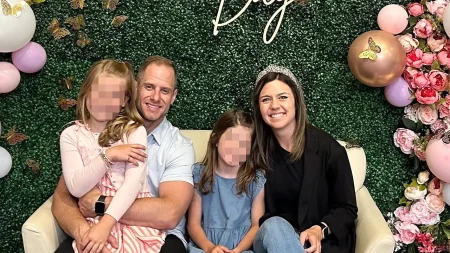
At the center of Reagan’s world were her three young children, who are now left searching for the shape of their lives with no mother. Friends and family described, with a tenderness that misdirect into pain, that her children were everything to her. They went to school in Minerva, they were part of local games and holidays, and they were cradled in the love of a woman who apparently took her mother seriously in the woman. In the days after the accident, a GoFundMe campaign set up by her sister came to storm as a lifeline for those children—funds raised for funeral expenses, memory costs, and a quieter future. It opened with the words: “Bridget was a loving mother to three young children, and they were the center of her world.” The message went on: “She was also treated as a daughter, sister, and friend. Her death has left an enormous space in the lives of so many people who cared about her.” That space was occupied quickly and openly by anyone who had seen her. On social media, friends and customers flooded the wreck with testimonies of her kindness. One mourner recalled that Bridget was never too busy to offer a new mother advice or a listening ear. Another said she had been welcomed into the community “with open arms.” People called her “a light in our little community” and remembered that she had “the kindest heart.” Step by step, are the collection of these remembrances, of the small moments that became eternal; a hand held at the register, a laugh that went through a store, a shared heartbeat of other people’s anxiety, ordinary things that felt very important when they were experienced, now absolutely necessary in that loss.
Now, in the depths of sadness, the community is doing what the people of Minerva do best: turning love into action. A local business, Gardner Candle Co., announced that it was creating a memorial candle with a fragrance that Bridget particularly loved. They promised that 100% of the profits from that candle would go to Reagan’s family, a simple but powerful sign that even after death, she continues to provide, continue to help them, continue to give of her community from beyond. In its announcement, the candle company wrote a little message that seemed to capture the heart of all mourners: “Some people leave a light behind that can never let it go. Bridget Reagan was one of those beautiful souls.” It is that light that will guide now her children, her sister, her parents, and her many friends along a road that has become hard and new. It may be the same light that wanders over Chic Haven, when the doors are closed and the little boutique feels quieter than it did before. It will be impossible not to think of her. The lesson in that grief is awkwardly a simple one: we must all take care of one another, because in one moment the ordinary can become the last, and the last can become a memory. The trees beside every road will continue to stand, eternal, lifeless, not often thought of. But for Minerva, every tree will now whisper the name Bridget E. Reagan, and every drive along Route 30 will hold a new story of a woman who was loved. There is no way to fill the huge spacetime left in the hands of her three children, but the community has promised they will pass on, over and over, the memory of a mother who hugged them too often, who certainly should have had more time, and who gave so much time. Her legacy become one to name in a shop, or a memorial candle, or a page of kindness: it is revealed in every mother who chooses to listen, every business owner who lifts up another, and every person who, on a normal day, stops to make the world a little warmer. That was Bridget Reagan. That is the light that will never be dimmed.