



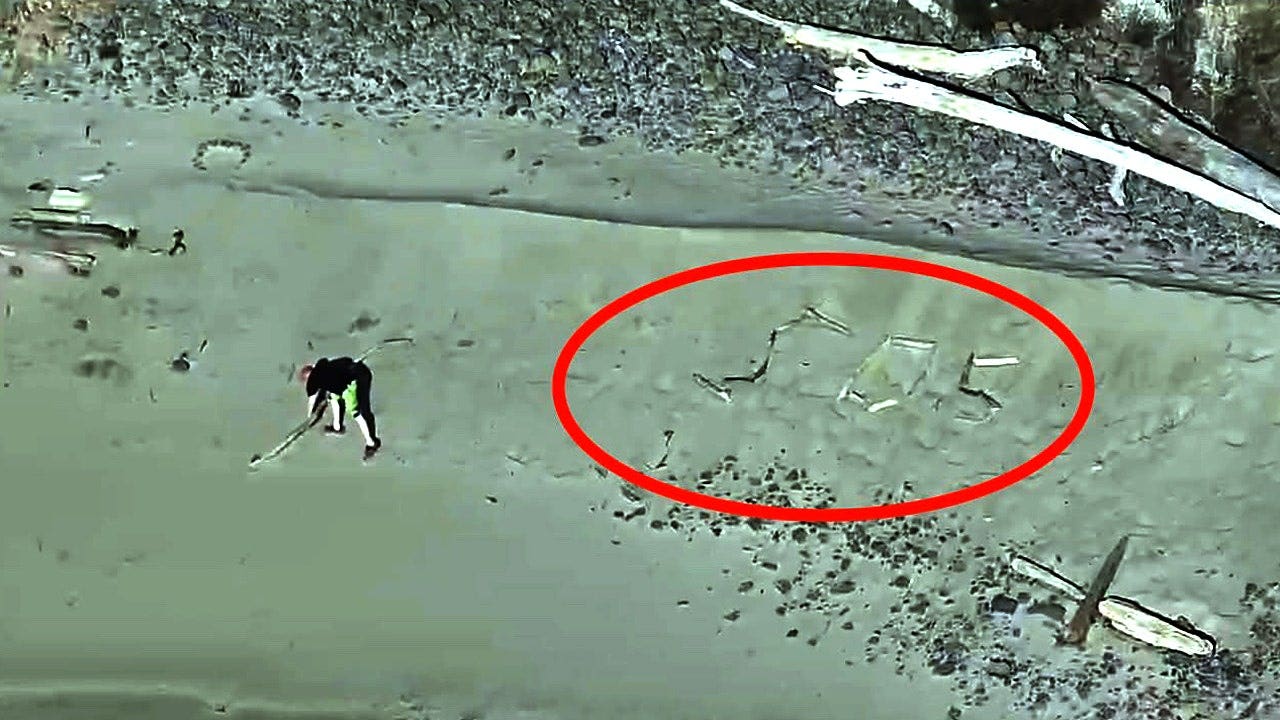
Along the northern Oregon coast, where the Pacific hammers cliffs into black art and the wind tastes like salt and eternity, there is a hidden cove with a name that whispers tragedy: Lost Boy Beach. On a Wednesday in September, three visitors—tourists whose names were never released—decided they wanted to stand on that famous stretch of sand and take the iconic photo that has lured so many others before them. They scrambled over rocky terrain, climbed down damp stone, and squeezed through a sea cave that is open at both ends, a natural passage that feels like stepping into another world. At low tide, the small beach in Tillamook County is almost impossibly inviting, a storybook pocket of sand tucked beneath a towering basalt cliff. But the same tide that reveals the beach is also the thing that guards it. As the afternoon sun slipped toward the horizon, the water began to rise, quietly erasing the sea cave’s exit and cutting the tourists off from the mainland. For five hours, they stood stranded, watching the ocean claim more and more of the land. Their cell phones had lost service at the bottom of the steep cliff, and the thought of being trapped overnight—or worse—must have been unbearable. Somehow, one of them remembered a feature buried in a modern phone: an emergency satellite signal. They contacted 911, and their message became the start of a rescue that would look, from above, like a scene from a movie. When the drone from the Netarts-Oceanside Fire District buzzed overhead, it found the three tourists on a shrinking patch of sand, shivering and exhausted, having spelled out the universally understood letters S-O-S using sticks. What had started as a simple attempt to capture beauty had turned into a raw and urgent plea for life.
Those who know Lost Boy Beach are not surprised that it can turn on visitors so quickly. Situated just south of a massive basalt cliff, between Short Beach to the north and Tunnel Beach—sometimes nicknamed Star Trek Beach—to the south, the cove is famous for two things: being beautiful and being unreachable. There are no stairways, no handrails, no obvious paths that lead safely down. The only realistic access occurs during extreme low-tide events that happen just a couple times a year, and even then, the journey requires clambering over wet rock and squeezing through the sea cave at exactly the right moment. The three tourists had almost certainly not planned for that. They had perhaps seen a photograph and believed that a beach is always there, the way a parking lot is always there. The ocean, though, has no obligation to make sense to humans. The Oregonian reported that the group had lost cell service at the base of the cliff and managed to connect with 911 only through an emergency satellite feature, a piece of quiet technology that proved more important than any camera they carried. Chief Jeff McBrayer of the fire district was not surprised by their predicament. “When people are stranded there, we may not be able to get to them,” he said. He was not exaggerating for effect; he was describing reality. The department initially considered doing what might seem most obvious: wait for the tide to drop, then simply walk the visitors out. But the surf was too rough, sneaker waves were rising out of nowhere and exploding across the rocks, and the stranded tourists were already wet and cold after five hours of exposure. Letting them stay any longer could have caused hypothermia or panic. Even waiting until the next low tide was a gamble, because the water might not retreat enough to make the cave passable. The safest option, it turned out, was also the most dangerous to carry out: send rescuers through the same churning water and bring the tourists back before the sea finished what it had started.
The rescue operation demanded a kind of bravery that is easy to overlook in an age of adrenaline-pumping action films. No helicopters hovered in the sky above the cove; no dramatic winch lifted the tourists from the rocks. Instead, firefighters from the Netarts-Oceanside Fire District did something quieter and, in many ways, more impressive. They studied the water until they understood how it was moving, then they clipped themselves into ropes anchored to solid ground and began a slow, deliberate traverse along the narrow strip of shore that still existed between the cliff and the tide. They hugged the terrain, testing each foothold, keeping their body weight over the rocks and away from the rushing foam. The ocean, indifferent to their courage, continued to send waves that smashed against the cliff with thunderous force. But the rescue team did not flinch. They reached the stranded tourists, assessed them quickly, and put life vests over their cold shoulders. They clipped each visitor securely to the same safety rope, positioned themselves around the group like guards, and guided everyone back along the same precarious route. For the tourists, that short passage must have felt like an eternity of crashing water and slippery stone. The waves were not the tall, curling surf seen on postcards; they were cold, chaotic surges that could knock a person off their feet in an instant. The firefighters moved with the patience of climbers, not the speed of action heroes. But the rope held, the hands held, and the rescuers held. When they finally reached a place where people could walk out on their own, all three visitors were still on their feet. Their injuries were limited to minor bumps and bruises. No one needed a hospital. No one had become part of the legend that hangs over the beach. They were wet, shaken, humbled—and alive. In a time when so much of life is virtual and detached, this was a rescue that mattered in the most direct, physical way possible. It was not simply about saving bodies; it was about preserving the future of people who had never imagined they would be in danger.
The name Lost Boy Beach has not always been there, but it has been there long enough to feel permanent. According to local folklore, the cove was named after a young boy who reportedly drowned after being trapped by the incoming tide. The story may or may not be historically true; nobody has been able to verify it. But for about a hundred years, the name has survived, and in a way, it functions as the beach’s own first line of defense. It warns visitors, as clearly as words can, that this place has already taken someone’s child. A hundred years is not long in the life of a coast, but it is enough for a warning to become part of the place. The neighboring beaches have their own stories. Short Beach, just to the north, was notorious for its slippery, treacherous cliff access; around the year 2000, the community finally built a stairway of about one hundred steps to provide some measure of safety. Tunnel Beach, to the south, is sometimes called Star Trek Beach because the area appeared in scenes from the original Star Trek series. Yet neither of those spots is as wild or as hidden as Lost Boy. There is no community-built staircase here, no official trail, no permissive handshake between civilization and nature. The beach sits in its own secret world, accessible only through natural architecture that changes with every season, every storm, and every tide. That is part of its appeal. But it is also part of its danger. In a society that has mapped nearly every corner of the Earth, Lost Boy Beach remains a place where the ocean is still in charge. It does not care that someone wants a photograph. It does not care that someone came from far away and will leave tomorrow. It only offers its sand for a few hours, and then it takes the door away.
Heading into the aftermath, Chief McBrayer had a simple request for all visitors to the Oregon coast. “You have to ask a local or check a tide app on a phone for tide information,” he said. The advice sounds almost too plain to be quoted in a news story, but it is exactly the kind of wisdom that could have saved the three tourists from their long and dangerous afternoon. Perhaps they did not know that tides along the Pacific Northwest coast can rise more quickly than many people realize. Perhaps they did not realize that the same sea cave that led them in would seal them out. Or perhaps they assumed that a beach with a name like Lost Boy was simply a romantic curiosity rather than an active hazard. Whatever the reason, they found themselves on the wrong side of nature’s schedule. It is an easy mistake to make, especially in an era when travel is often curated through social media feeds and the dangerous details are filtered out to fit a square frame. Social media turns wild places into backdrops, erasing danger from the picture. But the frame is not the hike. The frame is not the tide. The frame is not the cold water closing over your boots. The ocean is not a photograph. It is a live, roaring, breathing reality, and it does not care about anyone’s timeline. The human desire to explore wild places is ancient and valuable. It leads to discoveries, memories, and moments of transcendence. But it must be paired with preparation. A local person can tell you what beach is safe this week. A tide app can show you exactly when the water will turn. Those small pieces of information are cheap; a life is not. The tourists had been rescued, but they had also been given an enormous gift: an emergency that did not become a tragedy. The next visitor might not be so lucky.
At the end of the afternoon, after the ropes were packed away and the last wave had receded over the rocks, Lost Boy Beach went back to being what it has always been: a lonely cove with a sand floor and a warning carved into the cliffs. The three tourists would go home with minor bruises and a story they would tell for the rest of their lives. They would remember the drone, the sticks arranged into SOS, the cold surprise of the rising sea, and the hands that reached out to guide them to safety. And perhaps, when they think about it now, they also remember the name of the beach and the old story behind it. There are few places in the modern world where a person can feel genuinely small. Lost Boy Beach is one of them. It reduces people to exactly what they are: fragile creatures standing on a narrow piece of land at the mercy of a much larger force. But the rescue shows that there is another force at work, too, and it is just as powerful: human care. Strangers risked their own safety because other strangers were in trouble. Neighbors from the fire district answered a call that came from the edge of the continent. Equipment invented for a distant age of technology worked in the ancient shadow of basalt and salt. It was a storybook rescue, but it was real, and it belongs to all of us as a reminder that no one has to face the rising tide alone. The beach remains. The legend remains. And so does the lesson: check the tide, ask a local, respect the ocean, and never forget that every piece of coastline is gifted, not owned.