





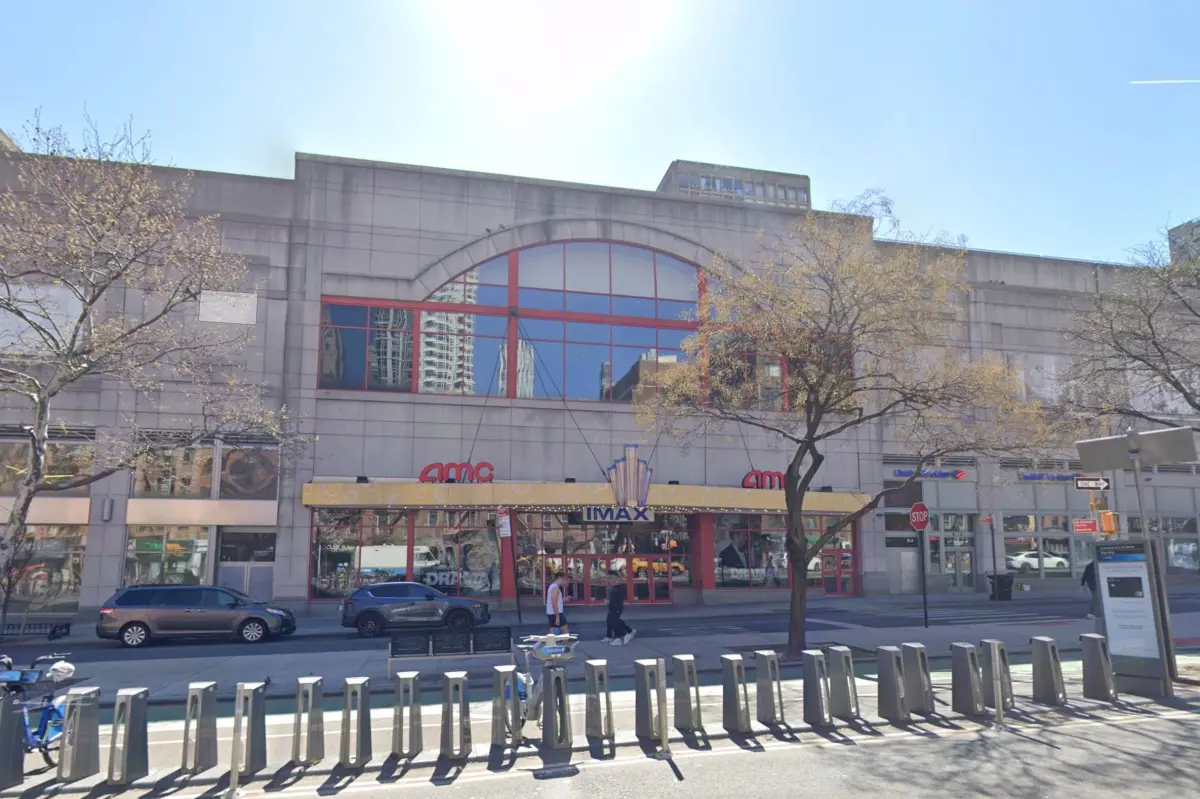
The news hit the Kips Bay neighborhood like a sudden blackout in the middle of a film’s climactic scene—unexpected, disorienting, and leaving everyone in the dark about what comes next. The AMC Kips Bay 15, a beloved cinematic sanctuary that has anchored the corner of Second Avenue for nearly three decades, is preparing to dim its marquee for the final time. There is no grand farewell tour, no celebratory retrospective of its greatest hits; instead, there is a quiet, almost bureaucratic unraveling. An AMC employee, speaking on the condition of anonymity, confirmed to The Post that no specific closing date has been etched into the calendar, yet the theater will cease operations by the end of the year. The most jarring detail, however, is the human one: even the theater’s own manager was reportedly left in the dark, unaware of the exact day they would be locking the doors for good. It is a stark reminder that in the corporate machinery of real estate and entertainment, the people who sell the popcorn and tear the tickets are often the last to know when the projector will stop spinning. The property owner has decided to terminate the lease before its natural expiration, and while “details are still being finalized,” the writing is on the wall, scrawled in the fading glow of the exit sign.
To understand the weight of this loss, one must rewind to 1999, when the theater first opened its doors with a modest five screens on Second Avenue, before relocating to its current sprawling 15-screen complex at 570 Second Avenue in 2006. For the residents of Kips Bay, Murray Hill, and the surrounding neighborhoods, this wasn’t just a place to watch movies; it was the neighborhood’s living room, a communal hearth where the magic of cinema was experienced shoulder-to-shoulder with friends, families, and strangers who became temporary allies in laughter and tears. It was the venue for first dates, where the darkness of the auditorium provided a safe cocoon for nervous hands to find each other. It was the destination for rainy Saturday afternoons, where the smell of buttered popcorn and the hum of the air conditioning provided a sensory escape from the city’s relentless pace. It was the only IMAX screen on Manhattan’s East Side, a colossal canvas that made blockbusters feel like immersive journeys rather than mere films. The theater has been an “important part of the Kips Bay community,” as the AMC spokesperson noted, but that corporate statement feels sterile compared to the lived reality of the thousands of patrons who have walked through its doors, each carrying their own personal reel of memories—the sold-out premieres, the sleepy matinees, the post-movie debates on the sidewalk outside.
As the news of the closure spread, a grassroots resistance began to form, not with picket signs and chants, but with a digital petition and a poignant website called “Save Kips Bay.” The site is not just a plea to keep a business afloat; it is a cry against the erasure of a neighborhood’s character. The website alleges that NYU Langone, the medical behemoth that already casts a long shadow over the area, is the force behind the lease termination, seeking to expand its institutional footprint yet again. “NYU Langone already dominates huge portions of Kips Bay. Now our neighborhood’s only movie theater, a 15-screen AMC and the only IMAX on Manhattan’s East Side, is reportedly threatened by yet another NYU medical expansion,” the site reads, capturing the frustration of residents who feel their community is being systematically hollowed out to make way for sterile, corporate medical spaces. The petition urges cinephiles to sign and voice their opposition, arguing that the block does not need another institutional building. The most devastating line on the website cuts to the heart of the matter: “Kips Bay did not lose its theater to streaming, or to a bad quarter, or to a landlord who couldn’t fill the space. It lost it because someone decided this block is worth more as something other than a neighborhood.” It is a damning indictment of the calculus that prioritizes square footage over shared human experience.
While the community mourns, the corporate parent company, AMC, operates on a different scale. As the largest theater chain in the world, with 860 locations globally, the closure of a single 15-screen theater in Manhattan might seem like a rounding error in a massive portfolio. Yet, the financial realities of the post-pandemic entertainment landscape are unforgiving. In a February earnings call, AMC’s Chief Financial Officer, Sean Goodman, candidly revealed that the company would be closing “underperforming locations” as part of a strategic realignment. The statistics are sobering: since 2020, AMC has shuttered 213 theaters while opening only 65 new ones, and since the start of 2025 alone, six more have been added to the closure list. This particular Kips Bay location, despite its loyal following, apparently falls into that category of underperformance, a victim of shifting consumer habits, the convenience of streaming, and the astronomical cost of operating a massive multiplex in one of the most expensive real estate markets in the world. The paradox is painful: a theater that was once a thriving community hub is now viewed by the corporate ledger as a liability, a piece of prime real estate that could generate more revenue as a medical facility or office tower than as a venue for cinematic art.
The uncertainty surrounding the theater’s future is perhaps the most unsettling aspect of this story. Neither NYU Langone nor the property owner, Kips Bay Development Limited Partnership, care of M.D. Carlisle Construction Corp., has publicly confirmed the medical center’s involvement. The Post reached out to NYU Langone for comment but received no response, leaving the neighborhood to speculate in a vacuum of silence. What is clear is that the property owner is ending the lease early, a move that signals a lucrative alternative use for the space. For movie lovers in the area, the alternatives are a cold comfort. While AMC has pointed to three nearby locations—the Empire 25 IMAX in Times Square, the Lincoln Square theater, and the AMC 34th Street 14—these venues lack the intimate, neighborhood-centric charm of the Kips Bay location. They are tourist destinations, crowded with visitors and lacking the familiar faces of local regulars. The Kips Bay theater was a place where you might run into your neighbor in the concession line, where the staff knew your usual order, and where the walk home was a short, pleasant stroll through familiar streets. Replacing that with a trip to the chaotic tourist gauntlet of Times Square is not a substitute; it is a punishment.
As the final credits prepare to roll on the AMC Kips Bay 15, the closure serves as a poignant metaphor for the changing nature of urban life and the fragility of communal spaces. We often take for granted the institutions that define our neighborhoods—the local bookstore, the corner diner, the neighborhood movie theater—until they are suddenly gone, replaced by something generic and soulless. The fight to save the theater is not merely about preserving a building with projectors and seats; it is about preserving the intangible magic that happens when a community gathers together to share a story. It is about the collective gasp during a horror film, the shared laughter during a comedy, and the comfortable silence during a drama. The Save Kips Bay petition may ultimately be futile in the face of a powerful real estate deal, but it represents a vital stand against the relentless homogenization of our cities. Even if the theater closes, its legacy will live on in the memories of the millions who found joy, solace, and connection within its walls. The curtain may be closing, but the stories told on that screen—and the stories of the people who watched them—will continue to play on in the hearts of the community, a reminder that while buildings can be demolished, the human need for shared wonder and collective escape can never be fully extinguished. The lights may dim, but the magic of the movies, and the fight to keep that magic accessible, will endure.