




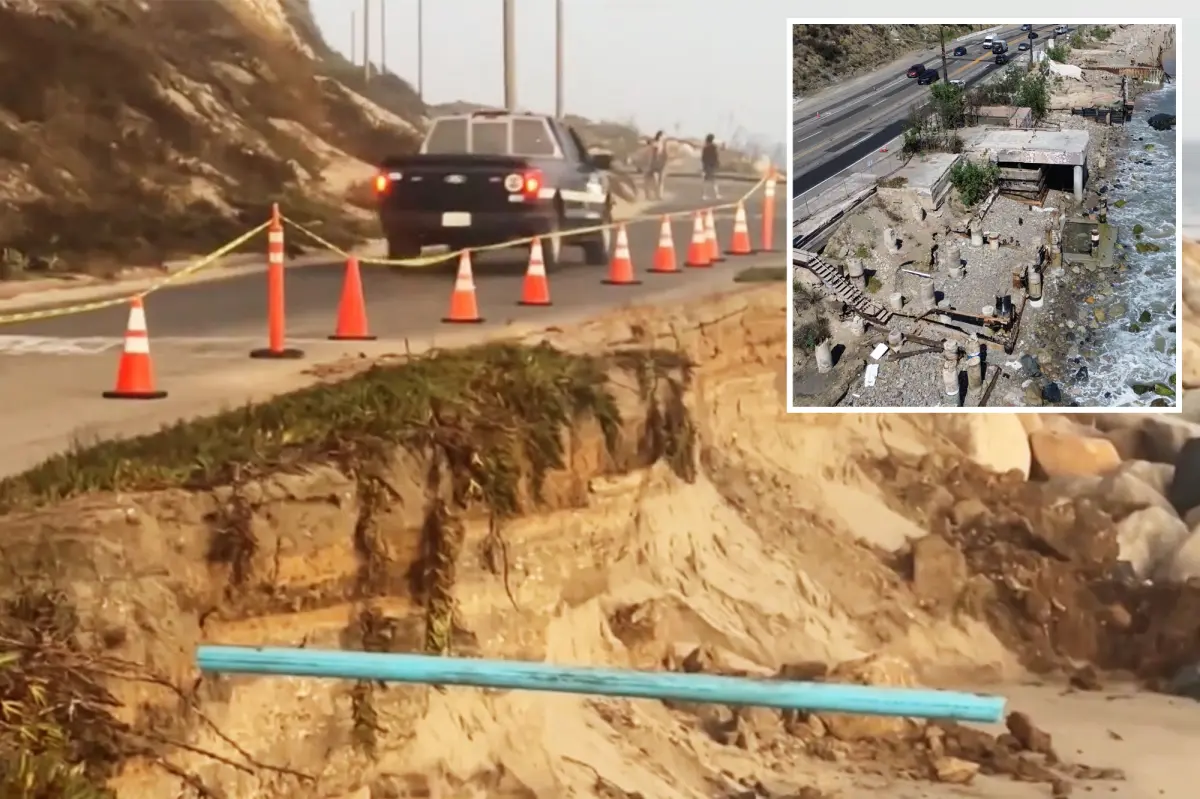
The iconic coastline of Malibu, California, has long lived in the public imagination as an idyllic, sun-drenched sanctuary of luxury, surfing, and pristine natural beauty. However, the raw power of the Pacific Ocean recently delivered a devastating reminder of nature’s supremacy, transforming the beloved Point Dume Beach into what onlookers and officials have described as a stark, apocalyptic landscape. Powerful overnight high tides, supercharged by distant tropical weather systems, aggressively battered the shoreline, clawing away massive swathes of the fragile bluffs and leaving behind sheer, unstable drop-offs that plunge nearly eight feet to the sand below. The sudden and severe erosion presented such an immediate threat to public safety that the Los Angeles County Department of Beaches and Harbors was forced to take drastic action, abruptly shutting down Westward Beach Road beyond the toll gate and completely closing the Point Dume Beach parking lot to all public access. For a community that thrives on its connection to the sea, the sight of locked gates, warning signs, and collapsing cliffs represents a deeply unsettling disruption to daily life. What was once a smooth, welcoming transition from sandy parking lots to the gentle wash of the tide has become a hazardous zone of crumbling sandstone, exposed roots, and unpredictable rockfalls. The county’s urgent safety advisories make it clear that the land beneath the area’s feet is actively failing, rendering the once-hallowed surf destination too dangerous for locals and tourists alike to tread.
To fully comprehend the emotional weight of this latest coastal crisis, one must view it not as an isolated environmental event, but as the latest chapter in a continuous cycle of trauma for a community that is still profoundly reeling from the aftermath of the devastating Palisades Fire. For the residents of Malibu, the physical environment has begun to feel less like a peaceful sanctuary and more like an unpredictable battleground where they are perpetually under siege by the elements. Having survived the terrifying ordeal of watching their hillsides burn, their skies fill with thick, choking ash, and their homes reduce to smoldering foundations, these homeowners are now forced to confront a threat coming from the exact opposite direction. The psychological toll of facing a dual assault from both fire and water is immense, leaving many residents with a lingering sense of vulnerability and exhaustion. There is a cruel irony in watching the very ocean that once served as a peaceful, therapeutic backdrop to their lives turn into an aggressive force that is actively eating away at the land they fought so hard to protect. This compounding series of natural disasters has forced the community into a state of perpetual vigilance, where the dream of quiet coastal living is constantly overshadowed by the reality of environmental instability.
At the very heart of this struggle is the deeply personal story of beachfront homeowner Carl Randall, whose ongoing journey to rebuild his life serves as a powerful testament to the sheer determination and physical exhaustion of Malibu’s displaced residents. Having lost his family home to the merciless flames of the Palisades Fire, Randall embarked on the rebuilding process with a sense of hope, only to find himself locked in a grueling, multi-front war against both bureaucratic red tape and the relentless forces of nature. The severe erosion of the fragile Point Dume bluffs has complicated his construction project from the very beginning, turning what should have been a triumphant story of recovery into a logistical nightmare. Randall’s construction crews are forced to work within an incredibly narrow, claustrophobic envelope of space, trapped precariously between the edge of a crumbling cliffside that threatens to collapse at any moment and the relentless, high-speed flow of traffic rushing along the adjacent Pacific Coast Highway. In a desperate bid to create a safer working environment and protect his property, Randall petitioned the city to move the highway further inland, seeking to reclaim just enough space to safely anchor his new home. Ultimately, the city granted him only half of the distance he requested, leaving his crew to perform a dangerous, high-stakes tightrope walk where a single miscalculation or a sudden shift in the soil could result in catastrophic failure. The process has been a relentless battle, requiring a dizzying array of specialized engineering reviews, structural reinforcements, and highly specific coastal approvals that make rebuilding feel less like home construction and more like an exercise in survival.
Randall’s personal trials are a vivid reflection of a much broader, quiet crisis unfolding across the entire Malibu community, as dozens of homeowners find themselves standing at a painful existential crossroads. More than a year and a half after the embers of the Palisades Fire finally cooled, only a small fraction of the destroyed beachfront properties have actually begun the physical process of reconstruction. The vast majority of these properties remain empty, charred monuments to what once was, as owners grapple with a paralyzing combination of skyrocketing construction costs, labor shortages, and an incredibly complex, slow-moving permitting process. Beyond the financial and bureaucratic hurdles, there is a deeper, more profound uncertainty hanging over the community regarding the very future of Malibu’s changing coastline. Homeowners are forced to ask themselves incredibly difficult questions: Is it wise to reinvest millions of dollars and years of emotional energy into building on a cliffside that science suggests is steadily disappearing? Should they cling to their beloved properties and fight the rising tides, or is it time to cut their losses, sell their ancestral plots of paradise, and move inland? This collective hesitation has cast a somber shadow over the region, as the long-held dream of coastal homeownership is increasingly challenged by the harsh, undeniable realities of climate change and geological instability.
The immediate, tangible consequences of this dramatic erosion are visible not just in the restricted access roads and empty parking lots, but in the basic public infrastructure that supports the area’s active beach culture. The relentless pounding of the waves did not merely wash away sand; it compromised the structural integrity of the earth beneath the beach, damaging a vital main water line that services the public restrooms. In a jarring and unglamorous contrast to Malibu’s reputation for luxury, county officials have been forced to install temporary chemical toilets and portable hand-washing stations along the restricted perimeter so that workers and emergency personnel have access to basic sanitation. This sudden degradation of public facilities serves as a stark, humbling reminder of how quickly modern convenience can be stripped away when human engineering clashes with the raw power of the ocean. The ultimate catalyst for this sudden, destructive erosion was a series of powerful southerly swells generated by Hurricane Genevieve, a massive tropical system spinning far off the coast. Although the hurricane itself never made direct landfall in Southern California, it sent a series of massive five-to-seven-foot waves marching across the ocean, accompanied by treacherous rip currents and severe coastal flooding that acted as a hydraulic battering ram against Point Dume’s weakened bluffs, demonstrating how global meteorological events can manifest as deeply disruptive, hyper-local disasters.
As crews from the Los Angeles County Department of Beaches and Harbors, along with structural engineers from Public Works, continue their meticulous, slow-moving assessments of the damaged cliffs, there remains no official estimate for when the roads will reopen, when the water lines will be repaired, or when the public will once again be allowed to step onto the sands of Westward Beach. The indefinitely closed gates stand as a silent, somber monument to an uncertain future, forcing a profound reckoning with the reality of coastal living in the modern era. The story of Point Dume’s battered shoreline is ultimately a deeply human narrative about the limits of our ability to control the natural world, the enduring power of community resilience, and the bittersweet determination of those who refuse to abandon the places they love. As the ocean continues its slow, relentless encroachment and the land beneath Malibu continues to shift, the residents of this iconic coast are left to play a quiet, tense waiting game, wondering if their paradise can ever truly be reclaimed, or if the sea will ultimately have the final, decisive word.